Home•Stories•Insightful Articles
Why Egypt's Growth Isn't Helping Those Who Need It
Despite Egypt's booming economy, deep-rooted inequality and poor social safety nets leave the most vulnerable struggling in poverty.
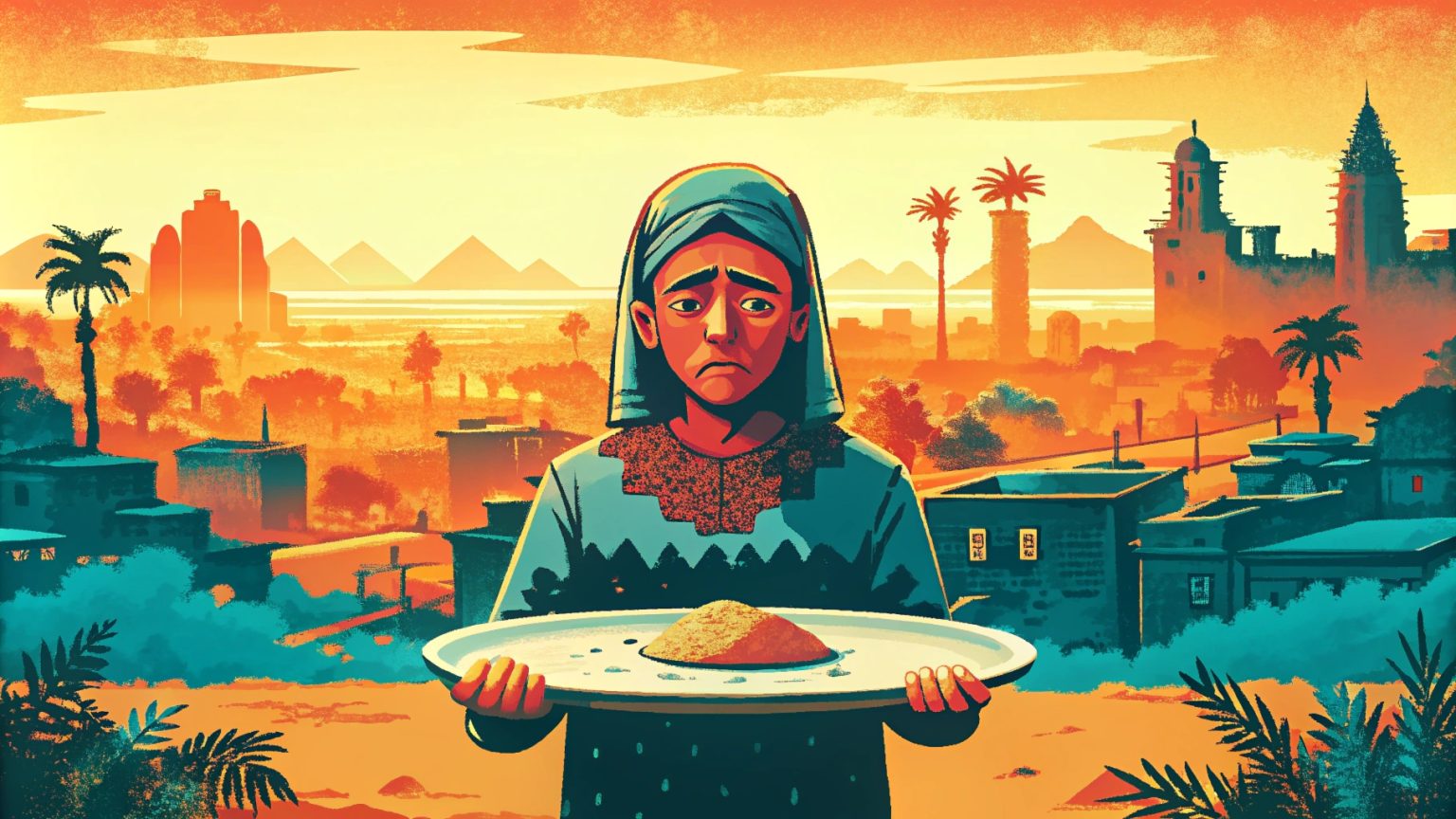
Prosperity's Shadow: Hidden Poverty
While headlines tout Egypt's impressive economic growth, few discuss the deepening poverty crisis that undermines this narrative. Food security remains a significant challenge for the Egyptian government, with availability and consumption notably declining during times of upheaval, such as the years following the 2011 uprising. Egypt's GDP growth rate dropped from 7% in 2006 to 5.1% in 2009–2010. Between 2010/2011 and 2012/2013, there was a 2,100 Egyptian pound annual decrease in per capita income, despite the yearly per capita income being $26,000. The most significant reduction in poverty rates occurred in 2017–2018, with a per capita annual income of 5,900 pounds compared to 3,900 pounds in 2015. However, the absolute poverty line was 491 pounds per month in 2017–2018, while the per capita poverty line was 736 pounds per month, or 8,827 pounds per year.
Geographically, the least impoverished regions in Egypt include Port Said, Western, and Damietta in the north, with respective poverty rates of 7.6%, 9.4%, and 14.6%, respectively. Conversely, the poorest sub-prefectures are concentrated in the south. A major contributing factor to Egypt's high poverty rate of 4.7% has been the implementation of economic reform programs during the same period. The average household income in 2004–2005 was 13,460 pounds; it increased significantly to 20,000 pounds in 2008–2009 and remained almost unchanged during 2010–2011 and 2012–2013. Growth in household income was estimated at 1,000 pounds in 2015, rising to 44,190 pounds in 2016 and recovering to 5,885,000 pounds in 2017–2018.
Of the 1,000 poorest communities in Egypt, 941 are in Upper Egypt, with the remaining 20 settlements spread throughout the north. Compared to the 5.9% for all of rural Egypt, the poverty gap index was a stark 35.3%. The poverty rates have shown a steady increase over the years: 16% in 1999/2000, 21.6% in 2008/2009, 25.2% in 2010/2011, 26.2% in 2012/2013, 27.8% in 2015, and 32.5% in 2017/2018.
Egypt's inflation stems from a complex interplay of factors. Higher government spending leads to price increases due to demand-pull inflation. High population density worsens the situation, as demand for goods and services outpaces supply. This effect differs between wealthy and developing nations, with the former's population driving inflation more significantly.
Poor supply management, combined with rising oil prices, increases food costs through supply-side inflation. The higher cost of oil, used in various forms such as gasoline and diesel, raises the overall price of goods and services. In Egypt, this has made transporting goods, including food, more expensive. Exchange rates also contribute to inflation. The Egyptian pound's depreciation against the US dollar makes importing goods and services costlier, leading to import inflation. Monetary factors, such as interest rates and money supply, further influence inflation rates.
Egypt's GDP growth rate and unemployment rate show distinct patterns across three periods: 1990 to 1999, 2000 to 2010, and 2011 to 2023. The data reveals significant fluctuations in the GDP growth rate. Contractionary fiscal and monetary policies, part of the economic reform program initiated in 1991 with support from the World Bank and the International Monetary Fund, targeted various short-term monetary imbalances. While these policies temporarily resolved some issues, they did not benefit economic expansion. The GDP growth rate averaged 6.7% annually from 1980 to 1989 but declined to roughly 4.5% annually during the 1990s. Despite a notable increase to 7.2% in 2008, the rate fell again due to the global economic crisis, averaging about 5% annually by 2010. Political, security, and economic instability following the January 25 Revolution in 2011 caused a sharp decline in GDP growth to 1.8%. However, after political and economic stabilization in 2014 and a monetary reform program in 2016, GDP growth gradually rose, averaging about 3.9% annually from 2011 to 2023.
| The Period | (GDP) Growth Rate % | Unemployment Rate % |
| 1990–1999 | 4.5 | 9.5 |
| 2000–2012 | 5 | 9.8 |
| 2011–2023 | 3.9 | 11 |
| 1990–2023 | 4.4 | 10.1 |
The Egyptian economy saw a notable increase in unemployment during the 1990s due to economic reform programs and the government's privatization efforts. While these measures aimed to achieve high economic growth rates, they did not create sufficient job opportunities. The unemployment rate increased from 8.6% in 1990 to 11.1% in 1993 before slightly declining to 8.1% in 1999. In the early 2000s, the unemployment rate fluctuated, reaching 10.2% in 2002, 11.2% in 2005, 8.7% in 2008, and 9% in 2010. The ongoing economic reform initiatives and reduced public and private investment contributed to job losses, with 2.3 million people unemployed on average between 2000 and 2010, an annual unemployment rate of 9.8%. Following the political instability of the January 25 and June 2013 revolutions, unemployment rates increased further, peaking at 13.2% in 2013. However, improved economic conditions and a monetary reform program implemented in 2016 gradually reduced the unemployment rate to roughly 7.6% in 2023, averaging 11% annually from 2011 to 2023.
Multiple global shocks have intersected with Egypt's long-standing issues, resulting in a foreign exchange crisis, historic inflation, and pressure on the country's fiscal and external accounts. The growing macroeconomic imbalances in Egypt reflect both global challenges and domestic issues such as slow growth of foreign direct investment and non-oil exports, limited private sector activity, job creation challenges (particularly for women and young people), and high public debt levels. According to official estimates for 2019, nearly thirty percent of Egypt's population, or over 105 million people, live below the national poverty line. This below-potential revenue mobilization further reduces the fiscal space needed to advance human and physical capital for this population.
In response to these challenges, the Egyptian government has implemented several policy changes. These include increasing key policy rates, allowing significant currency depreciation since March 2022, and implementing social mitigation measures such as raising pensions, providing food subsidies, and expanding cash transfer programs to partially protect the vulnerable. The 46-month IMF Extended Fund Facility, approved in December 2022, aims to enhance competitive neutrality for better private sector participation and support structural reforms to restore macroeconomic stability gradually.
Both domestic supply constraints and overlapping global shocks have negatively impacted economic activity; growth fell to 4.2% in FY23 (July 2022–June 2023) from 6.6% the previous year. In August 2023, food inflation reached 71.7%, with overall inflation in double digits since March 2022, peaking at 37.4%. Despite a rebound in overall foreign exchange resources, the supply of hard currency remains a significant obstacle. As of August 2023, these resources were last reported to be worth US$42.9 billion.
Egypt's macroeconomic environment is predicted to face challenges during fiscal year 2023/24 due to simultaneous global shocks and domestic macroeconomic imbalances. However, as the nation progresses with stabilization and structural reforms, the macroeconomic environment should improve over time. Fiscal space must still be created to advance Egypt's human capital. Notably, persisting in trade policy reforms, effectively implementing the State Ownership Policy, encouraging competition, strengthening governance and the rule of law, and improving the broader business environment can unleash the private sector in higher value-added and export-oriented activities essential for job creation and improved living standards.
Growth Without Trickle-Down
Egypt's economic growth masks a persistent poverty problem that defies conventional wisdom. Despite notable economic advances, the nation struggles to translate this prosperity into better lives for its most vulnerable citizens. A stark disconnect between national wealth and individual well-being persists, rooted in systemic issues that hinder equitable distribution and inclusive growth.
Economic gains in Egypt remain highly concentrated. A small elite controls a substantial portion of the nation's wealth, contributing to one of the highest rates of income inequality globally. The World Bank reports that the top 10% of the population captures more than 50% of the national income, while the bottom 40% subsists on less than 15%. This disparity widens the wealth gap and entrenches poverty.
Structural barriers prevent marginalized groups from reaping the benefits of economic growth. Limited access to healthcare, education, and employment opportunities severely restricts social mobility. Rural and marginalized communities suffer from inadequate infrastructure and social services. For instance, the disparity in access to basic sanitation between rural and urban households is well documented, showing a general trend that rural areas lag behind urban areas in terms of access to essential services. Discrimination based on gender, ethnicity, and geography further entrenches these disparities, perpetuating cycles of poverty.
The informal sector, employing around 50% of the workforce, is characterized by low productivity, lack of job security, and minimal access to social safety nets. Workers in this sector often lack legal protections and benefits, leaving them vulnerable to economic shocks and excluded from national healthcare schemes and pension systems.
Corruption and rent-seeking behavior undermine the efficacy of economic policies and institutions, diverting resources away from productive endeavors. Egypt ranks 108th out of 180 countries on the Corruption Perceptions Index, indicating a high level of corruption. Nepotism and crony capitalism stifle innovation and competition, creating an environment where inclusive growth remains elusive. Public procurement processes are often marred by favoritism, diverting funds from essential poverty alleviation programs.
Government policies have historically prioritized macroeconomic stability and attracting foreign investment over inclusive growth strategies. While these policies have contributed to GDP growth, they have not ensured equitable distribution of benefits across society. Significant foreign direct investment has flowed into sectors like construction and real estate, primarily benefiting the affluent while doing little to improve the livelihoods of the poor.
Insufficient government spending on social services, healthcare, and education has hindered poverty reduction efforts. In 2020, Egypt allocated only 4.15% of its GDP to healthcare, significantly below the global average of 6%. This underinvestment limits access to quality services, perpetuating poverty across generations. In rural areas, inadequate educational facilities and resources contribute to high dropout rates and low educational attainment.
Regulatory and bureaucratic obstacles impede business growth and employment opportunities. Complex regulations and red tape make it difficult for businesses to operate and expand, limiting job creation. The labor market's informality leads to low wages and unstable working conditions. The World Bank notes that Egypt's labor force participation rate is only 42%, significantly lower than the global average of 60%, highlighting the barriers to employment.
Corruption and lack of transparency in government institutions diminish the effectiveness of poverty reduction policies. Resources intended for poverty alleviation are often misallocated due to rent-seeking behavior and favoritism, reducing the impact of these programs on the intended beneficiaries.
Bridging the Prosperity Gap
Egypt's economic paradox demands a fresh look at policies that can foster inclusive growth. Several key strategies could bridge the gap between national prosperity and individual well-being.
Investing in human capital is crucial to developing a skilled labor force and raising productivity. Increased funding for healthcare and education, especially in rural and underserved areas, can significantly impact economic growth. Expanding vocational training programs tailored to local industry needs can equip the workforce with relevant skills, improving employment rates and productivity. South Korea's substantial investments in education have led to significant economic advancements, demonstrating the potential impact of such policies in Egypt.
Stronger social protection programs, including food assistance, cash transfers, and health insurance, can soften the blow of poverty and vulnerability. Targeted social safety nets for the most marginalized groups ensure resources reach those in dire need. Brazil's Bolsa Família program has successfully reduced poverty and inequality through direct cash transfers to low-income families, conditional on school attendance and health check-ups. Similar programs in Egypt could provide immediate relief to vulnerable households and contribute to the long-term development of human capital.
Promoting small and medium-sized enterprises (SMEs) and entrepreneurship can diversify the economy, create jobs, and foster innovation. Providing SMEs with access to capital, business development services, and market connections is crucial. Egypt could emulate successful models of incubators and accelerators found in Silicon Valley, which have significantly boosted tech startup growth. Establishing microfinance institutions can offer financial services to underserved entrepreneurs, enabling them to start and grow their businesses.
Infrastructure investment in energy, water, and transportation is vital for raising living standards and promoting economic growth. Prioritizing projects in underprivileged areas and sectors can foster inclusive development. Efficient public transportation systems in rural regions can improve access to markets, education, and healthcare services, enhancing economic opportunities for these communities. China's extensive infrastructure development, which has lifted millions out of poverty, signals the transformative potential of such investments.
Strengthening governance, transparency, and accountability is essential for promoting inclusive growth and reducing corruption. Reforms to enhance public service delivery integrity, expand access to justice, and streamline public institutions can build trust and ensure effective resource utilization. Rwanda's successful anti-corruption measures, including strict enforcement of laws and public sector reforms, have significantly improved governance and economic performance. Egypt could benefit from adopting similar strategies.
Targeted cash transfer programs can provide immediate assistance to vulnerable households, reducing poverty and improving living standards. These should focus on the most vulnerable groups, such as the elderly, people with disabilities, and low-income families. Mexico's Oportunidades program, which provides conditional cash transfers, has successfully reduced poverty and improved educational and health outcomes.
Funding labor market programs, such as job training, skill development, and employment placement services, can enhance employability for the poor and vulnerable. These initiatives should target underserved populations, including women and youth, and align with local labor market needs. Germany's vocational training system, combining classroom instruction with on-the-job training, has effectively reduced youth unemployment and ensured a skilled workforce.
Supporting community-based development initiatives, such as microfinance, self-help groups, and community savings schemes, can empower marginalized communities and promote self-reliance. India's Self-Help Group movement has enabled millions of women to access microcredit, start small businesses, and improve their socio-economic status.
Developing integrated social protection systems that combine food subsidies, cash transfers, social pensions, and other forms of assistance can provide comprehensive support to vulnerable populations. South Africa's social protection system, which includes child support grants, old-age pensions, and disability grants, has significantly reduced poverty and inequality.
By coordinating these policies and strategies, Egypt can address its economic paradox and promote inclusive growth that benefits all segments of society. Effective investments in human capital, enhanced social protection, support for SMEs and entrepreneurship, infrastructure development, governance reforms, targeted cash transfers, labor market programs, community-based initiatives, and integrated social protection systems can collectively contribute to a more equitable and prosperous Egypt.
Egypt's Economic Crossroads
Egypt's economic growth fails to reach those who need it most. Despite positive economic indicators like GDP growth and increased foreign investment, the benefits have not trickled down to the broader population, leaving many trapped in poverty.
Several factors fuel this disconnect. Weak social safety nets, limited access to quality healthcare and education, barriers to employment, and widespread corruption in government all play a role. To tackle these issues, Egypt needs comprehensive policies that prioritize inclusive growth. This means investing in people, strengthening support systems, and ensuring everyone has a fair shot at opportunities.
Decision-makers and society must recognize that real progress can't happen without addressing the root causes of poverty and inequality. By creating a more balanced economic environment, Egypt can unlock its full potential and build a better future for all its citizens.
As we examine Egypt's economic puzzle, we must remember that true progress isn't just about numbers on a spreadsheet. It's about improving lives and preserving dignity for every person. A nation's real wealth lies in the well-being of its people. While pursuing economic growth, we can't lose sight of this essential truth. Inclusive growth isn't just good economics; it's the right thing to do.
Written By
Adetola Adetayo is a contributing writer at Susinsight, exploring systems and progress across Africa.
Filed Under