Home•Stories•Insightful Articles
Can Nigeria Keep Its Patients From Flying Abroad?
As medical tourism drains $1.1 billion a year, new investments promise to make Nigeria a destination, not a departure point.
The Great Medical Escape
Around $1.1 billion leaves Nigeria every year because patients choose to get treated abroad. Medical tourism is a booming, multibillion-dollar industry riding on the globalisation of healthcare. Across Africa, the sector is valued at $4.5 billion as of 2023 and could grow by 12% between 2024 and 2029. Countries like South Africa and Tunisia are already cashing in, attracting patients from across the continent.
Nigeria is still playing catch-up. Yet, in classic Nigerian fashion, the country refuses to “carry last.” It has staked its claim as West Africa’s health tourism hub, even while wrestling with outdated infrastructure and slow development.
Recent years have brought a new wave of investment. Through initiatives like the National Health Renewal and Investment Initiative (NHRII) and the Nigeria Sovereign Investment Authority (NSIA)–Healthcare Expansion Programme, plans are in place to retrain 120,000 frontline health workers. Facilities like the African Medical Centre of Excellence (AMCE) signal ambition, not resignation. The question now is about to follow-through. Can these moves shift Nigeria from a nation exporting patients to one drawing them in? The next few years will tell.
Medical tourism has been around for centuries. In earlier times, people crossed borders to seek the skill of spiritual healers or renowned physicians. The destinations have changed, but the idea remains the same—today’s medical tourists travel in search of treatments they can’t easily access, afford, or trust at home. Some go for organ transplants or cardiac procedures. Others seek cancer care, fertility services, dental work, or cosmetic surgery.
There’s a distinction worth noting. A patient referred abroad by a local doctor for specialist treatment is not quite the same as someone who books a flight for an elective procedure. Medical tourism is usually a choice, not an emergency.
Across Africa, millions leave each year for care abroad, spending as much as $7 billion in total. The reasons are rarely surprising: hospitals without the right equipment, chronic underfunding, too few skilled professionals, long waits, and a deep distrust in the system made worse when national leaders seek care overseas. As a recent Vanguard article puts it:
“A leader’s medical choices speak volumes about the state of their country’s healthcare."
The fallout is visible. Money flows out, morale drops, and investments in local care stall. Some hospitals, budgeted and half-built, are left to decay. In Ogun State, a 250-bed facility meant to serve the community now sits abandoned, a silent reminder of stalled promises. Kayode Adesola, President of the Association of Nigerian Private Medical Practitioners, once pointed out the irony: many of the doctors Nigerians fly out to see are Nigerians themselves.
“We produce good doctors, nurses, and health workers; however, we don’t have good facilities. It’s very paradoxical.”
Reversing the Medical Tide
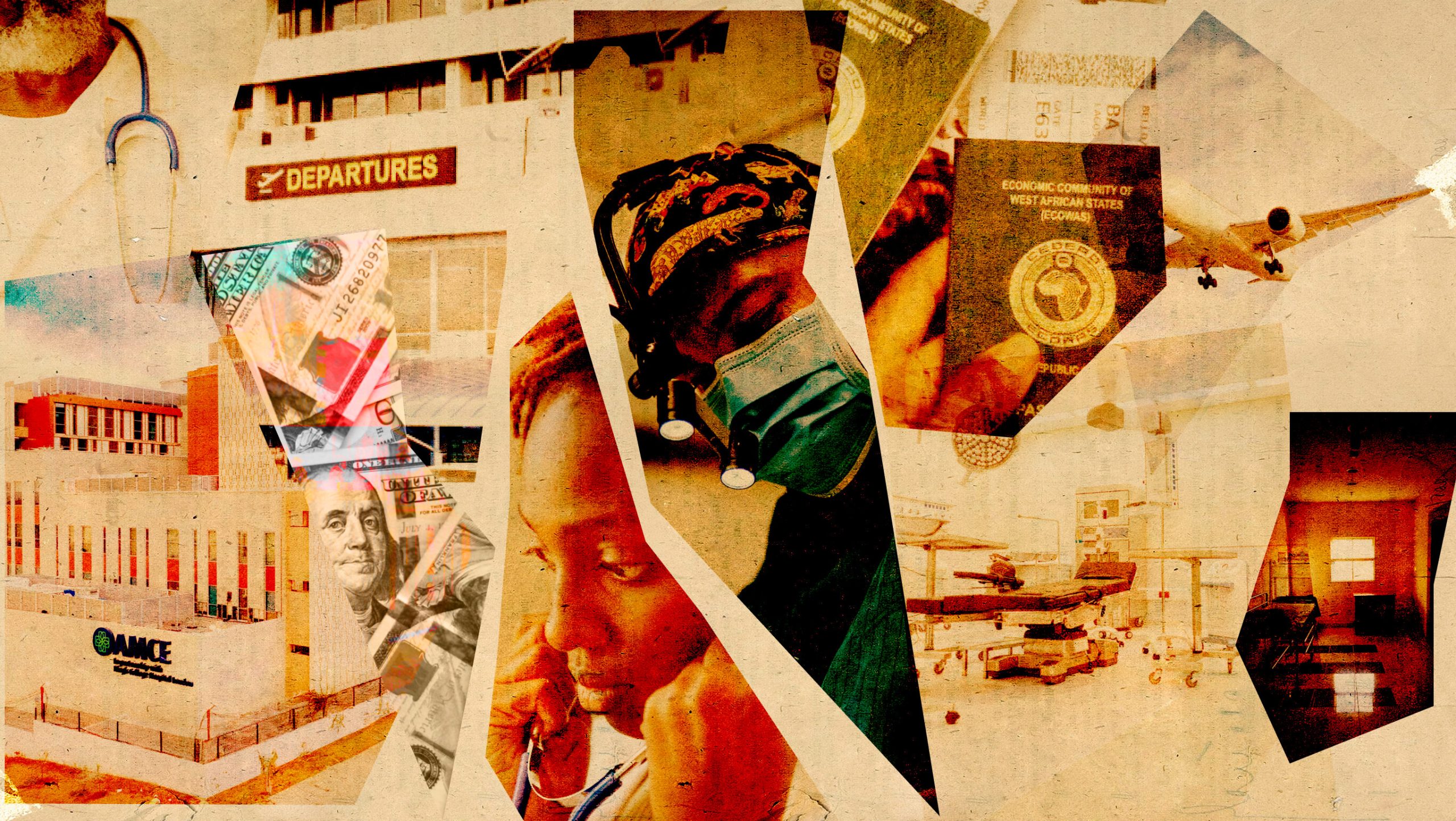
That paradox sits at the heart of Nigeria’s medical tourism story—talent without the tools to match. It’s exactly what the African Medical Centre of Excellence (AMCE) in Abuja is trying to address. Officially opened on 5 June 2025, the facility stands as Nigeria’s most advanced and ambitious hospital project to date. Built with a $300 million investment by the United Kingdom’s King’s College Hospital in collaboration with the African Export–Import Bank (Afreximbank), the centre focuses on oncology, cardiovascular diseases, haematology, and other blood disorders such as sickle cell anaemia, which is common in West African populations.
With 170 beds, AMCE is now the largest private hospital in the region. Its facilities include five operating theatres, 15 stem cell treatment isolation rooms, and a 20-bed intensive care unit. Afreximbank says plans are in place to expand capacity to 500 beds. Technology is at the heart of the project. The hospital is equipped with a 3T MRI, PET or SPECT with CT, bone marrow transplant units, and a Cyclotron medical facility. Afreximbank Managing Director Oluranti Doherty has also confirmed plans for a medical and nursing school within the centre. This will feed into its role as a teaching and research hospital, allowing African medical professionals to design treatments that reflect the realities of local populations.
The ambition is large-scale. Framed as a blueprint for reversing capital flight in Nigeria, the AMCE aims to serve 350,000 patients within five years, create 3,000 jobs, and eventually replicate the model in other African regions. The promise is simple: give Nigerians access to the kind of advanced procedures that often push patients to India or the UK, without the cost and stress of leaving the country. Afreximbank President Benedict Oramah puts it in broader terms:
“Our vision for the African Medical Centre of Excellence is not just to provide top-notch healthcare, but to serve as a catalyst for the transformation of the African health sector… making a bold statement to the world.”
Brain drain has long been part of Nigeria’s vocabulary, but in healthcare, it feels like an open wound that never quite heals. The Nigerian Medical Association estimates that about 2,000 doctors leave the country each year. More than half of the nation’s licensed doctors and nurses now practice on other continents. Higher salaries, job security, and safer, better-equipped work environments pull them away, leaving behind a system already stretched to breaking point.
Nigeria has only one doctor for every 4,000 to 5,000 people. The World Health Organisation recommends one for every 600. This gap affects survival rates. Maternal and infant mortality remain high. Life expectancy improvements move at a crawl. In a country of over 200 million people, the number of radiologists, neurologists, and oncologists can be counted in the hundreds. Patients face misdiagnoses, delayed treatments, and sometimes no treatment at all.
There are attempts to reverse this. Diaspora-led programmes and facilities like the African Medical Centre of Excellence are making a play for talent. Better pay, housing allowances, research opportunities, and career growth are part of the package aimed at keeping skilled professionals in the country and luring some back.
At the AMCE’s commissioning in June, President Bola Ahmed Tinubu tied these efforts to wider policy moves. He cited the Nigeria Health Sector Renewal Investment Initiative, which has secured over $2.2 billion in health sector commitments. Targets include renovating 17,000 primary health centres, training 120,000 frontline workers, and doubling health insurance coverage within three years.
The National Health Insurance Act, passed in 2022, sets an even broader aim: full health insurance coverage for all Nigerians by 2030. Since then, the National Health Insurance Authority has been reshaping its approach. The focus now includes public–private partnerships, better access to care, and incentives designed to make the idea of returning home more appealing for doctors and nurses working abroad.
Turkey’s rise in health tourism shows how quickly a country can build a profitable niche. In just one year, revenue jumped from $2.2 billion in 2022 to $3 billion in 2023. Patients fly in for everything from hair transplants to reconstructive surgery, drawn by competitive pricing and a strong reputation for quality. Geography helps—positioned between the Middle East, Europe, and Asia, Turkey is an accessible hub for millions.
Nigeria holds its own advantages. Its central West African location makes travel easy for regional and international visitors. With English as an official language, communication is straightforward for much of the world. The country also has a large diaspora—around 15 million people—many with strong emotional and cultural ties to home. Some of them already return for family visits; offering quality, affordable medical care could give them another reason. Considering the $1.1 billion lost each year to outbound medical tourism, this is an urgent economic incentive.
Other African nations offer lessons worth studying. South Africa has been a global medical leader since performing its first heart transplant in the 1960s. Its healthcare index is among the highest in Africa, and it attracts patients for specialised procedures such as orthopaedic surgery and breast augmentation. Kenya leads East Africa’s medical tourism scene, welcoming around 5,000 patients annually from other African countries. Its growing private hospital investments and established tourism industry give it appeal beyond the region. Egypt, despite not ranking high on the Medical Tourism Index, is known for excellent hospitals and skilled doctors. Morocco, on the other hand, combines affordable, efficient care with cultural and linguistic advantages for Francophone and Arab visitors.
A common thread among these markets is their ability to blend medical services with recreational tourism. Visitors often schedule surgery alongside a holiday, or recovery in a scenic location. For a country like Nigeria—home to vibrant cities, rich history, and diverse cultural attractions—pairing healthcare with leisure could turn a medical trip into a fuller, more memorable experience. The challenge is building the facilities and trust needed for patients to book that ticket.
Elite Medicine, Mass Impact?
The growth of medical tourism in Africa, and in Nigeria in particular, raises questions about who truly benefits. Across the continent, modern private hospitals cater to foreign patients and the local elite, while many citizens still rely on underfunded facilities with peeling walls, outdated equipment, and too few staff. Critics describe this as a new form of neo-colonialism, one that deepens the existing two-tier healthcare system in most developing countries.
When asked about treatment costs at the African Medical Centre of Excellence, CEO Brian Deaver admitted that:
“Some of the care can be expensive,” clarifying that “for the most part, we’re not treating malaria, we’re not treating typhoid. We’re treating and curing very serious diseases.”
To address affordability, the hospital’s board has created a foundation to raise funds, intending to subsidise certain patients. They also support expanding health insurance in Nigeria and medical aid schemes to ease costs for citizens facing emergency procedures.
Private hospitals in Africa often defend their model by arguing that higher standards, advanced equipment, and well-trained staff will, over time, lift the entire healthcare system. While this holds some logic, the benefits often take years to reach the wider population. Cross-subsidisation—where a portion of services are allocated to local patients at reduced rates—could make that impact more immediate. Tiered pricing, diaspora-specific discounts, and stronger public–private referral systems could also better connect medical tourism with local healthcare needs.
Public hospitals, however, cannot be left behind. Investment in infrastructure, essential equipment, and trained personnel remains the backbone of healthcare access for most citizens. Without these, the gap between those who can afford private care and those who cannot will only widen. Well-planned integration of public and private initiatives offers a path where medical tourism can grow without leaving the majority behind.
Medical tourism is one of the fastest-growing industries in the world, drawing millions of patients who want affordable, high-quality care outside their home countries. Turkey has shown what’s possible, earning $3 billion in 2023 alone. Kenya, South Africa, and Morocco have also grown their health tourism sectors, attracting steady streams of foreign patients.
Nigeria still loses significant revenue and talent each year, yet the push to change this is visible. Projects like the African Medical Centre of Excellence, combined with targeted training and retention of specialists, signal intent. The goal is to reverse the medical outflow and position Nigeria as a leading hub for healthcare in Africa.
For that to happen, government action is essential. Regulatory standards and patient safety oversight must be strengthened. Mid-tier health infrastructure needs targeted investment. Expanding National Health Insurance Authority (NHIA) coverage to include more access to private facilities would also make a difference.
Investors could play their part by creating vertically integrated systems—from diagnostics to surgery to recovery lodging—and funding platforms that connect diaspora patients with accredited Nigerian hospitals. The 15 million-strong Nigerian diaspora can contribute as investors, patients, consultants, or visiting practitioners, helping to restore trust from the outside in. The opportunity is clear. Turning it into reality depends on decisions made now, not years from now.
Written By
Thelma Ideozu is a contributing writer at Susinsight, exploring systems and progress across Africa.
Filed Under