Home•Stories•Insightful Articles
E-Commerce Took Over Fashion. Can Trade Policy Bring Local Manufacturing Back?
South Africa’s crackdown on duty-free imports hints at a blueprint for protecting jobs, the environment, and regional trade.
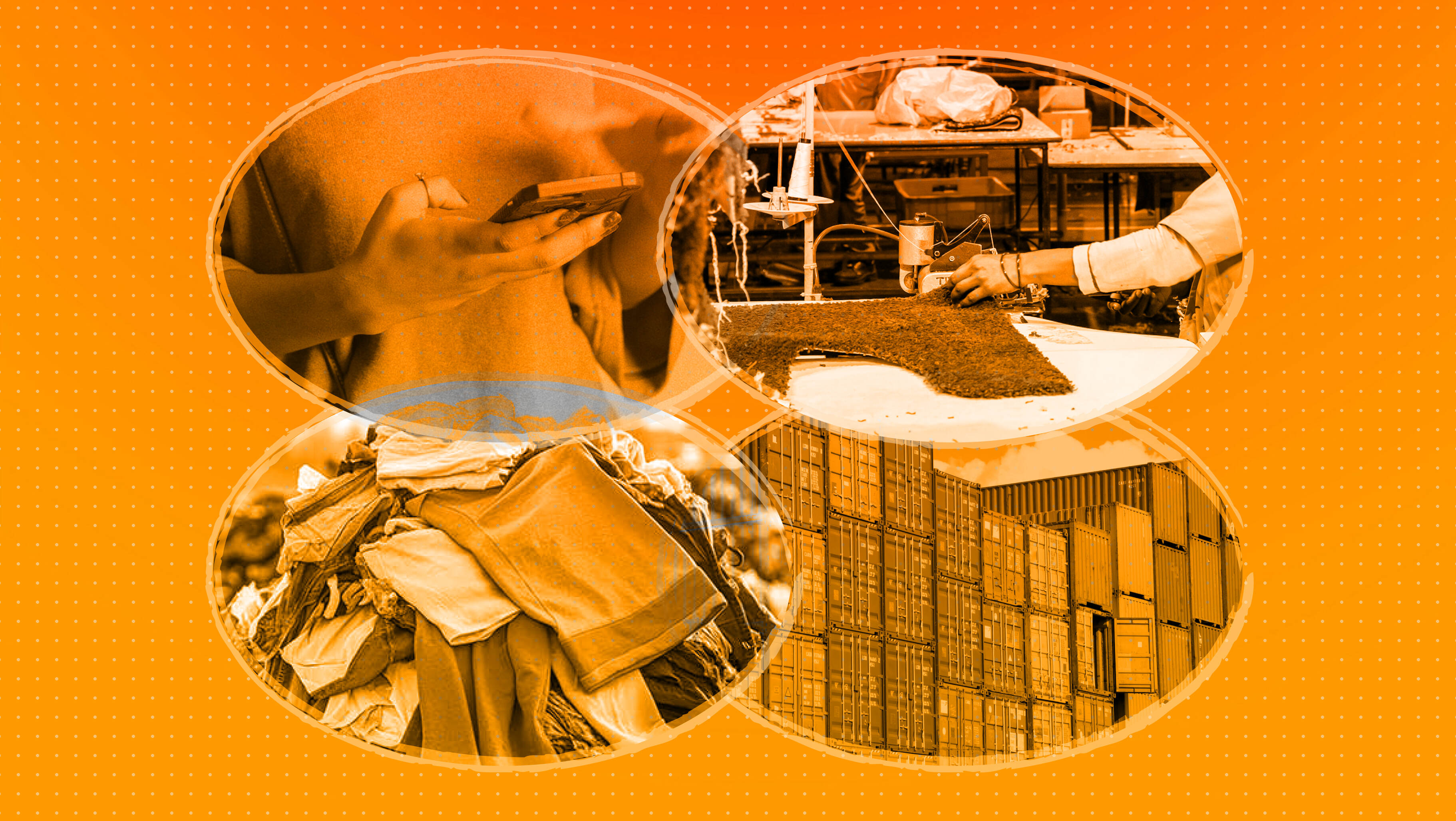
Shopping at What Cost?
Fast fashion thrives where rules blur. In South Africa, shoppers have been buying earrings for R42 and shoes for R188 from online stores that somehow manage to sell them cheaper than local retailers can buy wholesale. For years, this was made possible by the R500 de minimis rule, a tax exemption that allowed imports below that value to enter duty-free. E-commerce giants like Shein and Temu took full advantage of this gap, flooding the market with low-cost products and reshaping consumer habits.
Then came June 2024. The South African Revenue Service (SARS) ended the free ride, imposing a 45% import duty and VAT on all online imports, effectively closing the loophole. Before that crackdown, SARS reported monthly import values of around 4.2 million rand, with China as the main supplier. Shein and Temu together held 3.6% of South Africa’s clothing, textile, footwear, and leather (CTFL) market—about 7.3 billion rand ($405 million) in 2024 alone. That scale revealed how a single trade rule had opened a door wide enough for billions in duty-free imports.
Local manufacturers and unions welcomed the new policy, calling it a lifeline for struggling industries. Yet, the celebration quickly turned reflective. Shoppers faced higher prices, businesses recalculated, and policymakers were left balancing fairness, affordability, and employment. Across Africa, similar pressures echo. In Nigeria, Temu’s rapid rise mirrors the same challenges. The question now is how nations choose to shape economic resilience in a connected world.
E-commerce’s rapid spread across Africa feels like a wave that no one fully saw coming. The rise of “platform consumerism” has redefined how people buy, sell, and even imagine access. Platforms like Shein and Temu now dominate timelines and shopping carts, reshaping retail from Johannesburg to Lagos. Their success depends on speed, data, and precision—real-time analytics guiding production, logistics, and pricing. Temu’s launch in Nigeria showed how powerful that model can be. Within weeks, it became the country’s most downloaded app before moving south into new markets, making Africa its fastest-growing region.
According to Afreximbank’s African Trade and Economic Outlook, the continent imported goods worth over US$719 billion in 2024, with China providing 18.3% of that total. Meanwhile, intra-African trade was just US$208 billion. That gap shows how global trade patterns keep many African economies tied to external supply chains instead of regional ones. Platforms like Temu and Shein are not just riding this current; they’re amplifying it.
Their appeal is simple: affordability, access, and speed. For many consumers dealing with rising inflation and low disposable income, buying a R100 dress online feels like a small victory. With Nigeria’s 219.3 million mobile subscriptions (an 85% penetration rate) and South Africa’s 118.6 million connections, digital access has become the new storefront. TikTok and Instagram now serve as both runway and marketplace, with billions of global users turning scrolling into shopping.
Yet the economic cost behind these clicks is steep. The Localisation Support Fund (LSF) estimates that Shein and Temu’s growth may have cost South Africa over 8,000 potential jobs in five years, including 2,818 in manufacturing and 5,282 in retail. The report calculates R960 million in lost local manufacturing sales between 2020 and 2024. If unchecked, up to 34,000 additional jobs could disappear by 2030.
The same pattern appears elsewhere. In Nigeria, National Bureau of Statistics (NBS) data shows platform imports in textiles surged 297.8%, from N182.53 billion in 2020 to N726.18 billion in 2024. Local producers simply can’t compete. In Kenya, small apparel factories have been forced to shift toward B2B services or close entirely.
The environmental footprint is equally troubling. Fast fashion relies on low-quality fabrics, excessive packaging, and single-use cycles. According to Earth.Org, 92 million tonnes of textile waste end up in landfills out of 100 billion garments produced yearly. That figure could climb to 134 billion tonnes by 2030, contributing 10% of global greenhouse gas emissions.
Taxing More Than Parcels
The crackdown on ultra-fast fashion imports marked a turning point in how South Africa manages its trade flow. When SARS ended the R500 de minimis rule in June 2024, the decision signaled an attempt to restore balance in a system that had quietly tilted toward foreign e-commerce players. The rule, introduced in 2007 to ease customs backlogs, once seemed practical. Small parcels below R500 were taxed at a flat 20%, a shortcut meant to keep online trade moving. Yet, over time, that convenience turned into a loophole that helped Temu and Shein sell cheaper than local stores that faced a 45% import duty and 15% VAT on bulk orders.
For years, that imbalance defined South Africa’s retail struggle. Anthony Thunström, CEO of The Foschini Group (TFG), described the change as overdue, telling Reuters that ending the loophole had “significantly slowed down international e-commerce sales into South Africa.” His comment reflected what many in local manufacturing had long felt but few could prove: global platforms were operating with an advantage that domestic retailers could never match. The Competition Commission later echoed this concern, warning that prolonged dominance by such players could hollow out the local textile base.
The decision won quick approval from major retailers like TFG and Pepkor and textile producers who viewed the new import regime as a reprieve. Rael Levitt, CEO of Inospace, described the reform as essential to “give local businesses a fair chance to compete.” SARS positioned the change not just as a tax adjustment but as an economic safeguard.
Early projections suggest the policy could shift some consumer spending back to local brands and strengthen job stability in manufacturing. It may also limit the inflow of ultra-cheap, disposable garments that feed the country’s growing landfill problem. Still, affordability remains a difficult trade-off. For millions of South Africans struggling with high unemployment—Bloomberg estimates 8.2 million people—affordable online fashion provides short-term relief.
SARS’s partnerships with international couriers and new automated customs systems aim to make enforcement more efficient. Random audits and data-sharing with e-commerce firms are also being developed to curb misdeclaration and parcel splitting.
The clampdown on fast fashion imports hints at how economic policy can quietly shape climate outcomes. South Africa’s move to tighten import rules opens space to rethink how trade connects to environmental justice and resource use. This isn’t only about taxes or tariffs; it’s about linking economic resilience with ecological accountability in ways that feel practical, not abstract.
Fast fashion remains one of the most resource-intensive industries worldwide, responsible for about 10% of global carbon emissions and 20% of industrial water pollution. A cotton T-shirt demands roughly 2,700 litres of water, enough to meet one person’s drinking needs for over two years. The United Nations reports that producing a single pair of jeans requires 7,500–10,000 litres, about a decade’s worth of drinking water for one individual. These numbers tell a simple truth: cheap clothes come at a steep environmental cost.
Imports from online platforms like Temu and Shein magnify this burden. Their garments are often worn only a few times before ending up in landfills that South Africa, Ghana, Kenya, and Nigeria are struggling to manage. Across West and East Africa, nearly 40% of second-hand clothing imports are unsellable, leaving piles of textile waste that release methane as they decay. With only 1% of textile waste recycled, the scale of the problem feels almost circular—a system that consumes far more than it reuses.
Trade reform now carries environmental weight. Closing the de minimis loophole does more than raise revenue; it curbs carbon leakage and nudges production toward local eco-manufacturing models. South Africa’s approach shows how policy can encourage circular practices, promote innovation in textile recycling, and shift incentives toward more durable design. The conversation around trade is slowly expanding from profit margins to planetary limits.
Shifting from environmental concerns to economic design, the next question becomes how Africa can turn trade policy into an engine for creativity, innovation, and fair growth. The continent’s strength doesn’t lie in copying China’s mass-production model but in developing its own formula—one grounded in human talent, local craftsmanship, and resource efficiency. Across cities in Africa, young designers already experiment with upcycling and small-batch manufacturing, using locally sourced fabrics. Trade frameworks that intentionally support such efforts could protect producers, attract investment, and keep value circulating within African economies.
Governments and ecosystem actors play a central role in this vision. Their policies shape who benefits from trade and who is left behind. With active coordination, governments can drive job creation that multiplies along supply chains, expand vocational pathways for textile and digital artisans, and encourage small enterprises to produce eco-conscious goods that meet both local and export demand.
South Africa’s decision to close the de minimis loophole has shown what decisive policy can do. It also sets a marker for continental dialogue on fairer trade enforcement. Countries like Nigeria and Kenya, whose fast-growing youth markets now power Temu and Shein’s success, face tougher choices. Temu’s rise as Nigeria’s most downloaded app reflects a hunger for affordability and access, but that same trend is eroding domestic manufacturing. Neither country has yet moved to protect producers or regulate the flood of ultra-cheap imports.
Africa’s e-commerce market is projected to hit $75 billion by 2025. That growth could spark regional coordination under the African Continental Free Trade Area (AfCFTA), harmonizing tariffs, building shared digital systems, and encouraging trade within the continent. Incentives for “Made in Africa” brands and circular manufacturing could amplify this momentum. Without such direction, the region risks deeper dependency, talent flight, and rising waste. The decisions made now will determine if trade policy fuels resilience or repeats extraction in new digital forms.
The Hard Trade-offs Ahead
Debates around South Africa’s import crackdown reveal how no trade policy exists in isolation. Every tariff or tax carries ripple effects that touch consumers, producers, and even the unemployed searching for affordable essentials. The biggest question now is about trade-offs—who gains protection, and who pays the price for it?
Consumer advocacy groups argue that raising import duties risks penalizing the poor. With unemployment sitting at 32%, around 8.2 million South Africans face limited choices. For many, platforms like Temu and Shein provide a sense of relief, offering clothing and shoes at prices that local stores can’t match. Surveys consistently show that affordability and convenience keep consumers loyal to these apps, even when they know the quality won’t last. For a family managing on a tight budget, low prices often outweigh concerns about durability or origin.
On the other side, customs authorities face a logistical maze. Tracking millions of small parcels across ports, airports, and postal systems requires technology and manpower that most agencies lack. Daily shipments pour in by the hundreds of thousands, stretching already thin resources. Smuggling, mislabeling, and undervaluing goods have become common ways to dodge taxes. Add in modern tactics like drop-shipping and split payments, and enforcement becomes even harder. Poorly executed regulation could end up raising costs without reducing the volume of cheap imports.
Trade policy sits between economic growth and consumer need, yet neither can exist without the other. Raising taxes may support local manufacturing, but it risks alienating low-income buyers if domestic supply remains too costly or limited. Allowing unchecked imports, however, threatens job creation and climate goals tied to responsible production.
Balancing these forces requires more than tariffs. Governments can strengthen customs infrastructure, invest in skill development, and expand access for small local designers. Aligning policies through AfCFTA could also create consistency, ensuring customs agencies protect consumers while supporting fair, regional competition.
South Africa’s experience shows that trade policy can evolve into something more than economics—it can become a design tool for shaping fairer markets and smarter growth. When regulation meets innovation, economies begin to work for people and the environment at the same time.
Through the AfCFTA, African governments can use trade reform to move from short-term reactions to long-term industrial strategy. They can support green manufacturing, back youth-led enterprises that merge technology with local craftsmanship, and create innovation hubs that connect public and private effort.
The larger question remains: will Africa define its own trade model or continue importing others’ blueprints? The continent has the talent, the creativity, and the urgency. What’s missing is the collective will to turn policy into purpose.
Written By
Gloria Edukere is a contributing writer at Susinsight, exploring systems and progress across Africa.
Filed Under