Home•Stories•Insightful Articles
What Happens When Women Control the Money? Africa Is Finding Out
Evidence shows that when women gain financial agency, poverty drops and communities grow stronger. Here’s how it’s happening.
The Inclusion Illusion
Financial inclusion isn't always progress—it can also be a trap. Many African women now have access to mobile money accounts. On paper, that looks like progress. But when 17% fewer women than men in Sub-Saharan Africa use mobile money and most of them don’t use traditional bank accounts at all, the numbers start to feel less like a win and more like a warning.
Access alone doesn't guarantee empowerment. Women often receive loans they can't repay, or open accounts they barely understand, without gaining any real financial control. In some places, cultural norms still decide who manages the money. Even the UN says we’re falling short. About $360 billion more is needed every year to close the gender equality gap.
Fintech is changing habits. In 11 Sub-Saharan countries, more adults rely on mobile money than on banks. But real financial inclusion means more than digital access—it means having safe, affordable tools to save, invest, and grow. When we talk about inclusion, we should ask: inclusion into what, and on whose terms? Otherwise, we risk replacing exclusion with illusion.
The gap between access and actual agency runs deep. You can give a woman a mobile money account, but if she doesn’t know how to use it or is discouraged from using it by family or community, then what’s really changed?
African Development Bank describes financial inclusion as making formal financial services available, accessible, and affordable to everyone, especially women. But access alone doesn’t guarantee that women can actually use those services in ways that help them plan, grow, and thrive. That’s where the tools matter: not just credit, but savings options, insurance, digital payment systems, and financial literacy.
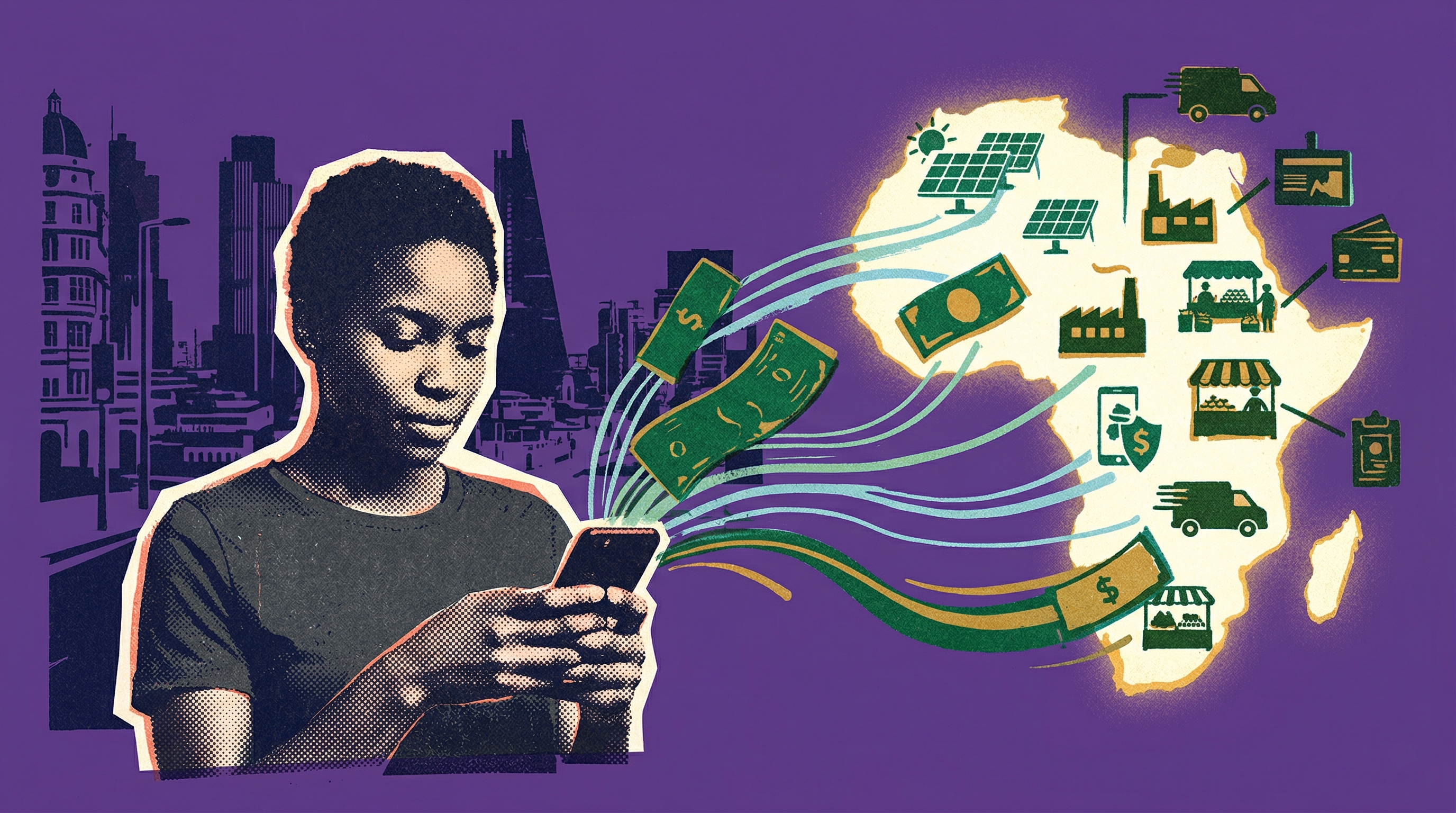
In 15 countries across Sub-Saharan Africa, at least 20% of adults depend only on mobile money. In seven of them, women use mobile money at equal or higher rates than men. Ghanaian women used mobile money to handle household finances during the pandemic. In Uganda, it helped women access credit. In Tanzania, it supported savings and business growth. In Kenya, mobile money reduced poverty for 9% of women and led to an 18.5% increase in their spending.
M-Pesa in Kenya is one of the clearest examples. Women make up over half its user base and drive 40% of transactions. That kind of reach changes what’s possible when it works. Having a regular income go into a mobile or bank account makes borrowing easier. That transaction history becomes proof of trustworthiness in a system that often overlooks women.
Platforms like HerVest show how digital finance and education work together. They’ve trained 5,000 women farmers and delivered $750,000 in blended finance. These are practical steps toward control. People like Mary Njoki, a retail business owner in Kenya, are using mobile tools to simplify payments and track their earnings. That visibility matters. Without it, growth stalls.
Why Permission Still Matters
In many African households, men still hold formal control over property, business registration, and key financial decisions. A woman can be running a successful business and still need her husband's name on the paperwork—or worse, his permission—to move forward. It’s not always about ability or ambition. Sometimes, the system doesn’t see her at all.
Only 33% of African women have formal bank accounts, compared to 43% of men. Part of the reason? Some cultures see no need for women to have their own accounts. One family account, often managed by the husband, is considered enough. But shared control often leads to limited access. Personal savings disappear into household needs. Financial histories never build. And when women try to grow, the records just aren’t there.
Banks and policymakers often don’t design services with women in mind. Documentation demands can be unrealistic, especially for those starting small. High fees, complex terms, and required collateral put formal loans out of reach. Land is the most valuable asset in Africa, responsible for generating 70% to 90% of all wealth. But less than 10% is owned by women.
This reality becomes evident when someone like Yeo, a farmer in the Ivory Coast, walks into a bank. She couldn’t access a loan to expand her farm—no land, no collateral, no deal. And it doesn’t end with denied loans. Many widows lose everything when their husbands die. Homes, land, income, gone overnight. With no legal claims and no safety net, they’re left to start over with children to feed and nothing in their name. The system isn’t just hard to access. For many women, it disappears the moment they need it most.
For many women, exclusion doesn’t always look dramatic—it shows up in the small, frustrating gaps that build up over time. Nearly half of all businesses (48%) in Africa are owned by women. That number sounds promising, but the reality behind it is more complicated. These women face unstable income, limited access to capital, and little support from formal lenders. Even when they turn to microfinance, the system doesn’t always meet their needs.
Take a closer look at how some of these programs actually work. Loans often push women toward low-profit, oversaturated trades like small-scale selling or tailoring. Competition is fierce, and the margins are thin. When income doesn't match loan expectations, some women are forced to cut back on food or healthcare just to stay afloat.
Sometimes the loan isn’t even theirs in practice. A man applies using a woman’s name. She carries the risk. He uses the money. In some households, this has caused tension or even withdrawal of support. That kind of financial pressure turns access into a burden.
Microfinance programs often ignore how power works at home. Loan sizes given to women can be smaller than what men receive, reflecting broader gender biases. And still, programs rarely address the root issues—cultural control, financial illiteracy, or lack of digital access.
Women also struggle to use mobile financial tools without help. While mobile phone ownership among African women stands at 60%, only 18% use the internet. This digital gap makes a difference. Even where mobile money ownership reaches 75%, many women don’t feel confident navigating the platform alone. About one-third need assistance just to manage basic transactions.
Low financial literacy plays a big part. Across Sub-Saharan Africa, only 32% of people are financially literate. Without better education and design that centers real needs, access stays just that—access. Not power. Not progress.
When Women Design Finance
Even with Africa holding the highest share of female enterprises globally—26%—many women are still left out of the rooms where decisions happen. Policies often miss the mark, not because women aren’t involved in business, but because they aren’t part of the conversations shaping how finance works for them.
In Kenya, the government capped interest rates, which sounded like good news. Cheaper credit should mean more women can borrow. But that’s not how it played out for everyone. Some entrepreneurs found that banks responded by tightening who could qualify for loans, shutting out the very people those rules were meant to help.
Banks that pay attention to women’s realities often adjust in ways that work. KCB Bank in Kenya started tracking gender data among its micro and small business clients. That simple shift led to a big one—now, 51% of their loans go to women.
Approaches that move away from collateral and focus on cash flow work better for low-income borrowers. That’s what Women’s World Banking and Diamond Bank did with the KWIK Loan, designed for women using BETA Savings accounts. It’s a model that responds to real needs, not assumptions. Some solutions are tech-driven. TymeBank in South Africa uses AI chatbots to explain financial topics simply. When you’re new to savings, loans, or interest rates, that kind of support matters.
Legal systems also shape what’s possible. In Kigali, women now own most registered land plots, helped by a Rwandan law granting equal inheritance rights. That kind of shift changes the rules of ownership. Efforts like African Development Bank's Affirmative Finance Action for Women in Africa (AFAWA) and Africa Digital Financial Inclusion Facility (ADFI) support this work at scale. But it’s not just about programs or policies. The question is always: who benefits, and how? That’s where attention is still needed.
This means looking beyond access to who gets to shape the rules and who’s visible at all. Too often, women aren’t seen in the design of financial products. Marketing materials rarely show them as clients. Many senior leaders still don’t have the training or tools to build services that reflect women’s lives. So, financial systems continue to serve one version of a customer, usually male.
But women have always found ways to lead in the spaces they can control. Across Africa, Rotating Savings and Credit Associations (ROSCAs) have allowed women to manage money together, build trust, and support one another. These groups are more than savings tools. They reflect shared responsibility and leadership. In Nigeria, many women still prefer saving through informal groups like Ajo, even with mobile money widely available.
ROSCAs have helped women grow small businesses, gain financial confidence, and escape poverty. In Malawi, joining a savings group has given women more than income. It’s built self-esteem and helped them step into new roles—leaders, organizers, decision-makers.
Agriculture is still a key source of income for many African women. Cooperatives provide access to resources they would otherwise struggle to get like markets, tools, or fair prices. A survey of women farmers in Kenya, Tanzania, and Uganda showed striking results. Members of agricultural cooperatives increased their production by 84% and saw incomes rise by 186%.
These numbers tell a bigger story. When women are trusted to make decisions and lead, they don’t just adapt, they create lasting change across entire systems. This type of shift needs more than policy talk or statistics. The United Nations' Agenda 2030 calls for women to be fully involved in politics, society, and the economy. The fifth goal points directly at gender equality, not as a side issue, but as a requirement for economic progress.
Sub-Saharan Africa has seen the rise of mobile money, which has opened doors. Still, gaps remain. Digital and financial literacy barriers continue to block many women from using these tools with confidence.
Some countries are trying new ways. In Sierra Leone, legal reforms now give women the right to access bank loans. Women like Maryann Kaikai are going further combining fashion, education, and partnerships with groups like the World Bank to teach financial skills in creative formats. In Nigeria, Arese Ugwu’s Smart Money Woman, a financial literacy comedy-drama series, uses storytelling to empower women with practical money lessons.
This is what real inclusion looks like. When women are financially equipped, entire communities grow stronger and the impact doesn’t stop with them. It lasts.
Written By
Jessica Ireju is a contributing writer at Susinsight, exploring systems and progress across Africa.
Filed Under