Home•Stories•Insightful Articles
Mental Health in Mining Is Becoming a Survival Issue in the DRC and Grassroots Action Is Responding
Millions depend on artisanal mining, but conflict and poor conditions are driving distress. Local organisations and peer groups are offering practical support.
Where Conflict Follows the Cobalt Underground
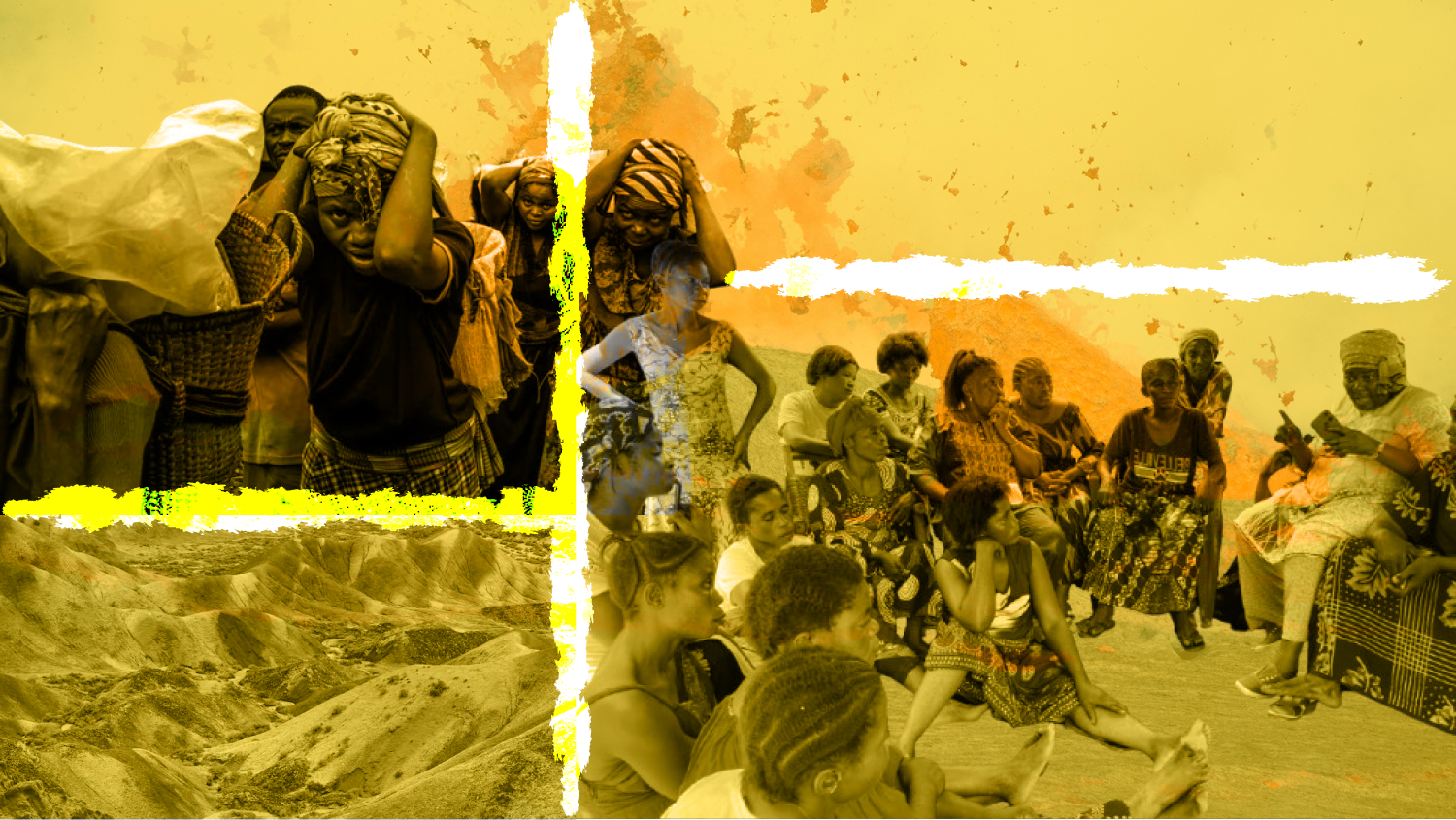
A 49-year-old widow climbs a muddy slope with a 30 kg sack of mining debris on her back. Maman Soki does this work at the Pangoyi mine in Mangaredjipa, North Kivu Province in the Democratic Republic of Congo (DRC). A few dollars come at the end of the day. Four children depend on that money for food.
Armed fighters linked to the Islamic State forced her to flee her village. Mining became the only work she could find. Many women in eastern DRC share a similar path into artisan mining. Days involve hauling heavy sacks, sorting debris, and waiting for buyers who pay little. Mental strain follows the physical labour. Women often face discrimination, harassment, and the lowest-paying tasks at mine sites, similar to many miners in the region.
Small support groups now meet in parts of eastern DRC. Miners gather to talk, share coping methods, and help each other manage stress. Community members run these circles. Their work slowly influences how some employers think about worker wellbeing in mining communities, especially as the mental health crisis in the region deepens.
Conversations inside those small circles begin to make more sense once you look at the history surrounding the mines. Armed conflict has shaped daily life across North Kivu and South Kivu for decades. Violence linked to the region’s mineral wealth did not begin yesterday. The current cycle traces back to 1996, two years after the genocide in neighbouring Rwanda in 1994. Rebel movements followed. Groups such as M23, CODECO, and the ADF continue to clash with government forces and with each other, often in areas where illicit mining fuels violence.
Displacement spreads across the country. A report from the UN Refugee Agency counts more than 6.9 million internally displaced people across the Democratic Republic of Congo. Eastern provinces carry most of that weight. North Kivu, South Kivu, and Ituri together host more than 5 million displaced people. Many families move again and again when fighting shifts location and when new DR Congo emergencies unfold.
Mining sits inside that same conflict story. The sector contributes heavily to the national economy, yet many sites fall under the control of armed groups. Workers often pay illegal taxes just to keep digging. Long shifts, collapsing pits, and limited protective gear remain common, reinforcing the challenges faced by workers.
Children appear at some of these sites too. Recent data places about 40,000 children in cobalt mining across the DRC. Some begin work at seven years old. A typical day can stretch for hours while earnings stay below 2 dollars per day. Child labour contributes up to 30% of cobalt production.
Physical risk tells only part of the story. Miners describe symptoms linked to post-traumatic stress disorder, depression, and anxiety. Long hours, harsh supervision, unstable childhoods, and community stigma make recovery difficult, as seen among war victims in Goma.
Mental health care remains scarce. Fewer than 60 neuropsychiatrists serve the country, roughly one psychiatrist for more than 6 million people, and around 50 practice in Kinshasa. Only 3% of primary care facilities include mental health services. Six recognised psychiatric hospitals operate nationwide, alongside about 30 faith-based and private centres, most also located in Kinshasa.
When Miners Become Each Other's First Responders
This shortage explains why community groups keep appearing across mining towns. Small circles meet regularly. People sit together, speak about stress, and share ways they cope with daily pressure. Conversations move slowly at first. Someone mentions sleepless nights. Another talks about panic after hearing gunfire. A miner might describe anger that rises after a long shift underground. Others listen. Peer support drives these meetings, echoing peer-based training models in other mining regions.
Psychoeducation sits at the centre of many gatherings. Members learn basic ideas about mental health. Simple explanations replace silence and shame. A person who once feared speaking about anxiety starts to recognise the feeling and say the word out loud.
Several organisations help keep these groups running. Humanity and Inclusion supports psychosocial assistance and rehabilitation care across North Kivu. Teams work with vulnerable populations and train community agents. Those agents then speak with neighbours and co-workers about mental health risks and available services.
Médecins Sans Frontières, MSF, also runs mental health activities in the Democratic Republic of Congo. Theatre sessions open discussion in public spaces. Counsellors offer therapeutic support for trauma-related problems. Imani Stanley works with MSF as an Assistant Administrator. He describes how counsellors come from the same communities as their clients. Familiar accents, shared memories, and daily realities shape those conversations. He explains, “As counsellors, we help our clients by listening to them, but we can also connect with them over their shared experiences.”
Community groups also organise around gender and age. ALEFEM, an association supporting women and children in artisanal gold communities in Kamituga, runs programs for families affected by mining. RENAFEM works with women who want more control over their working lives. Some cooperatives pool money and tools. Others create spaces where women talk freely about harassment, grief, and fear after conflict, addressing layers of environmental injustice in their communities. Conversations often continue long after the meeting officially ends.
Conversations that start in support groups often travel back to the mine itself. Work conditions shape what miners carry home at night. Employers in the mining sector have started paying closer attention to mental well-being at work. Heavy labour and isolation place pressure on miners. Absenteeism rises when stress builds. Morale drops. Safety inside pits weakens when workers arrive exhausted or distracted.
Dr Mark Deady from the Black Dog Institute speaks plainly about this point. Psychological safety deserves the same attention given to physical safety. Mining companies already enforce helmets, gloves, and pit inspections. Mental strain asks for similar attention, as part of broader employee wellness strategies.
Research from South Africa adds another piece of evidence. A study on psychological distress across four mining sites recorded 29% of workers reporting high levels of distress. Nearly a third of the workforce faces serious strain. Absences grow under those conditions. Productivity follows the same direction.
Some cooperatives inside the Democratic Republic of Congo experiment with practical responses. The Mining Cooperative for Community Development of North Kivu, known as COMIDECONOKI, works with Pact and a local partner called BEPAT through the Responsible Sourcing Project. Training reached more than 7,200 miners. Sessions covered safety practices, hygiene, and first aid. Organisers also explained parts of the 2018 DRC Mining Code connected to artisanal and small-scale mining, ASM. Meetings discussed the rules in plain language so miners could use them in their daily work. Mushoga, an artisan miner from COMIDECONOKI, remembers those lessons clearly. He said, “With this and other safety measures, my colleagues and I are now safe from dangers inside our pits.”
Changes also appeared inside safety committees. Some Occupational Health and Safety groups added regular psychosocial check-ins to their routines, backed by first aid training and outreach. Emergency funds for medical and psychosocial care also took shape. Mr Emmanuel, secretary and mining operations manager of the mining cooperative COMIDC, described the purpose of the training. He explained that the program would “enable the monitoring and resolution of OHS-related issues and accidents.” Conversations around safety slowly widened to include stress and emotional strain.
Distress Is Rising Faster Than Care Can Follow
Safety discussions also bring another reality into view. Mining keeps a large part of the Democratic Republic of Congo running. Around 70% of the world’s cobalt reserves lie in the country. Large industrial mines extract most of the mineral. Artisanal mining still produces between 10% and 20% of national cobalt and copper output. Artisanal and small-scale mines, often called ASM, remain a major source of income for families across the country. The World Bank estimates that about 10 million people in the DRC depend on this work for their livelihood.
Much of the cobalt comes from the southern copper belt. Katanga province sits at the centre of that activity. Around 200,000 people work there in artisanal copper and cobalt mining. UNICEF reports another difficult figure. More than 360,000 children work in artisanal mines across Lualaba and Haut Katanga.
Numbers like these help explain the pressure miners carry. Action Against Hunger tracked a sharp rise in distress during 2024. Reports of suicidal thoughts rose from about 5 cases per month early in the year to more than 120 per month. Camps around Goma also recorded a rise in people seeking psychosocial help. January to June 2024 saw that number climb from 6,600 to more than 20,000. The increase passed 200% compared with the same months the previous year.
Mental health care slowly spreads through parts of eastern DRC. Integrated services now operate in 51 of the country’s 519 health zones. Work focuses mostly on Nord Kivu, Sud Kivu, Ituri, and Tanganyika. Stakeholders working in mental health care agreed on shared guidelines during 2021.
Mining communities often create their own solutions when services remain distant. Groups of miners collect small weekly contributions. Funds help cover basic medical care or psychosocial support when someone falls ill. Formal care still struggles to keep pace with demand. The country has 6 recognised psychiatric hospitals and around 30 faith-based centres. Population estimates reached 122 million in 2024. Ratios remain thin. Around 0.1 psychiatrists, 0.25 mental health nurses, and 0.02 clinical psychologists exist per 100,000 inhabitants, most located in Kinshasa. In some areas, miners use collective approaches to pool funds for health costs.
Numbers around care also reveal how thin support still feels on the ground. Eastern DRC continues to live with conflict, displacement, and daily uncertainty. Mental strain grows under those conditions. Many victims move through the crisis with little professional help available. Life inside camps for internally displaced people, IDPs, adds another layer of pressure. Crowded shelters, limited privacy, and constant worry shape daily routines, and the mental health crisis deepens. A parent searching for food may also carry memories of violence or loss. Those experiences rarely fade quickly.
Aid groups try to respond, yet demand grows faster than available services. Support teams listen, run counselling sessions, and organise referrals. Still, many people wait or simply move on without help. Another tension appears inside mining economies built around survival. Some employers treat mental health as a “luxury issue.” Workers notice that distance. A miner finishing a shift may feel exhausted, angry, or numb, then face supervisors focused only on production numbers.
Research points to another side of the conversation. Strong attention to mental well-being often improves productivity, workplace safety, worker retention, and long-term profitability. Operations ignoring psychosocial risks often see turnover rates between 30% and 50%. Evidence also appears in smaller studies. Research among artisan and small-scale miners in Ghana measured links between work stress and personal health. Results showed roughly a 12% relationship between work-related stress and self-rated health, influenced by anxiety and depression.
Large companies experiment with broader programmes. AngloGold Ashanti, one of Africa’s largest gold producers, runs a worker wellness programme across mines in South Africa. The initiative includes counselling, resilience training, and outreach in nearby communities.
Company records link the programme to a 30% drop in occupational diseases. Managers also report stronger morale and improved retention among workers. Mental health support sits directly inside occupational health and safety protocols. International frameworks also appear in mining discussions. Sustainable Development Goals such as SDG 3, SDG 8, and SDG 16 often guide these conversations. IRMA, the Initiative for Responsible Mining Assurance, connects responsible mining standards with those goals.
Conversation about responsible mining naturally returns to the people doing the work. Support groups inside Eastern DRC mining communities show a quiet cultural shift. Grassroots circles that began with miners helping one another now influence how some employers think about safety and productivity.
Peer solidarity, basic psychoeducation, and collective care guide these groups. Miners lead most of the effort themselves, often with little formal support, even while conflict and economic pressure surround daily life. Those meetings show a form of resilience that rarely appears in company reports.
So you might pause here, because workers in one of the hardest mining environments on earth already treat mental health as part of survival. Employers elsewhere can learn from that. Governments, mining companies, and global partners could place mental health directly inside occupational safety rules and operational policies. Miners deserve protection wherever extraction happens.
Written By
Blossom Amena is a contributing writer at Susinsight, exploring systems and progress across Africa.
Filed Under