Home•Stories•Insightful Articles
Can Solar and Wind Keep Namibia's Taps and Hydrogen Plants Running?
New models show how renewable-powered desalination could ease water stress while fueling the green hydrogen economy.
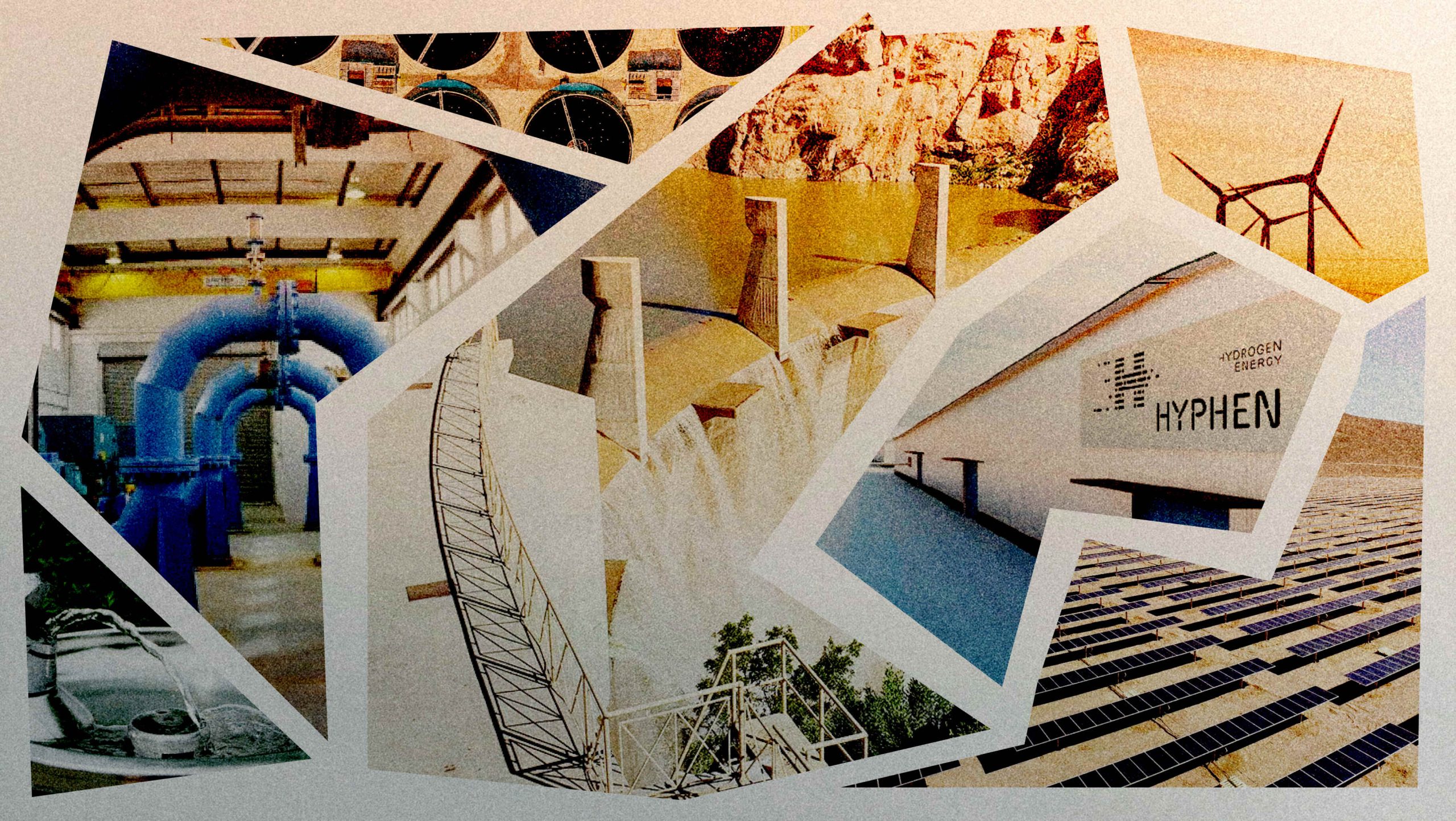
Two Dreams, One Country
In one of the driest corners of sub-Saharan Africa, demand for water keeps rising. It’s expected to nearly double by 2025 and reach 772 million cubic metres a year by 2030. Desalination seems like an obvious solution—but not a cheap one. Reverse osmosis systems alone use between 3 and 5.5 kilowatt-hours per cubic metre. Multiply that by millions, and you start eating into the country’s energy plans fast.
Now add another layer: Namibia’s green hydrogen push. The country plans to generate 70% of its electricity from renewables by 2030. That same electricity is also meant to power the future of green hydrogen production. So what happens when the electricity needed to make seawater drinkable is competing with the electricity needed to create a new export economy? What’s clear is that desalination isn’t just about water, and green hydrogen isn’t just about energy. In Namibia’s case, they’re part of the same challenge. Choices made now could ripple far beyond the country’s borders.
This tension between energy supply and demand becomes real when looking at how Namibia has responded to drought. The country’s arid conditions aren’t new. Rainfall barely reaches 250 mm per year in the south-west, and even in the wetter north-east, it stays under 650 mm. The national average is around 475 mm—just half of the global average. In recent years, the situation worsened. By 2019, Namibia faced its most severe drought in 90 years. The government had to declare multiple national emergencies. Looking ahead, projections suggest rainfall will decline further toward the second half of the century. That doesn’t leave much room for delay.
So desalination entered the picture. In 2010, the first plant opened in the Erongo region. It was built by Orano, a French company, mainly to supply water to the Trekkopje uranium mine. But over time, its role grew. The process is energy-heavy: filtration, reverse osmosis, high-pressure pumping, and energy recovery. Still, the result is clean water fit for both people and industry. Water travels from the plant to a NamWater pipeline, then flows to Swakopmund’s base reservoir, before reaching regional towns and mines. Since its launch, this single facility has delivered over 123 million cubic metres of potable water. On-site labs make sure the output meets both NamWater and WHO standards.
At the same time, the country is looking to become a major player in green hydrogen. The Hyphen Hydrogen Energy project is part of that strategy. It’s not small. The goal is to produce 2 million tonnes of green ammonia every year before 2030, using only solar and wind power. That puts more pressure on Namibia’s already limited clean energy supply.
The challenge is obvious: both desalination and green hydrogen production depend on energy that Namibia doesn’t yet have in surplus. You can’t run both at scale without asking tough questions. I’ve looked at the numbers, and what stands out is how tightly linked water and energy have become. The urgency of one could easily slow down the other. People need water. The economy is betting on hydrogen. And both are reaching for the same outlet.
Competing for Watts
The pressure on the grid has real consequences. Desalination helps meet Namibia’s water needs, but it comes with a heavy energy bill. Most plants around the world rely on either thermal desalination or reverse osmosis. In Namibia, reverse osmosis is the preferred choice, not because it's cheap, but because it uses less energy than thermal systems. Still, it’s far from light-duty. Pushing seawater through semi-permeable membranes takes a lot of force, and force means electricity.
At Erongo, the process starts with screen filtration, then moves through ultrafiltration, reverse osmosis, limestone contact, and finally chlorination. Once treated, the water enters a NamWater pipeline that feeds into the broader supply network. Compared to groundwater or surface water treatment, which often stays under 1 kWh per cubic metre, reverse osmosis demands more, typically between 2.5 and 3.5 kWh per cubic metre. That’s triple the energy, just to get the salt out.
Most of this electricity still comes from fossil fuels. Around 60% of Namibia’s energy use is fossil-based. Over half the country’s electricity—about 59%—is imported. Renewables only contribute about 21%, not even a third of the total energy. That means desalination doesn’t just strain the grid, it adds to emissions too. There’s also the waste to consider. Brine discharge is part of the process, and if poorly managed, it can raise salinity and chemical levels in coastal waters.
But not all the news is bad. The Erongo plant partnered with InnoSun Energy through a Power Purchase Agreement and introduced an energy recovery system. That move cut electricity use by over 40% and slashed greenhouse gas emissions by 30%—the equivalent of 9,722 tonnes of CO₂ a year. Costs dropped too.
That same pressure shows up again when you look at Namibia’s push into green hydrogen. The country has sun and wind almost year-round, which makes it well suited for large-scale renewable energy projects. Using that energy to split water into hydrogen and oxygen, without releasing carbon emissions, is more than a technical process—it’s the backbone of Namibia’s green hydrogen ambitions.
The Hyphen Hydrogen Energy initiative is central to this. Construction began in January 2025, backed by $10 billion in investment. The plan is to produce 125,000 tonnes of green hydrogen by the end of 2026, scaling up to 300,000 tonnes annually before the decade closes. According to the developers, the project could help avoid 5 to 6 million tonnes of carbon dioxide emissions each year. The Namibian government signed a Feasibility and Implementation Agreement with Hyphen to guide this development. There’s also backing from the European Union and its Global Gateway Initiative. Funding has come from Invest International and the European Investment Bank to support Namibia’s equity role and broader industry development.
There’s a national Green Hydrogen and Derivatives Strategy too. Released in 2022, the document outlines steps to grow the sector, from scaling up renewables to building regulatory frameworks and attracting private partners.
The economic benefits look promising on paper. Royalties, land rentals, and taxes could generate an estimated $35 billion. Job creation is another draw. Around 15,000 temporary roles are expected during construction, and 3,000 permanent jobs during operation. Hyphen claims 90% of these will be filled by Namibians.
Finding the Sweet Spot
The Hyphen project alone is expected to use 5 to 6 gigawatts of renewable electricity, with 3 gigawatts allocated just for electrolysers—a scale that doesn’t yet exist in Namibia. By comparison, desalination may require 100 to 200 megawatts depending on the method and recovery rate, but even that is a meaningful share of capacity when energy is limited. Engineers have flagged this before. The GreeN-H2 Namibia feasibility study pointed to weak grid infrastructure and flagged water availability as a key constraint. A 1 GW hydrogen facility alone would need between 1.576 and 2.44 million cubic metres of deionised water each year.
Local civil society voices have also raised concern. With Namibia relying heavily on groundwater, they’ve questioned how increased water demand for hydrogen will affect drinking water supplies. Their call is simple: transparent allocation, clear priorities, and water security that doesn’t come at the public’s expense.
Others have pointed to possible synergies instead of conflict. The International Energy Agency noted that using renewables to power desalination specifically for hydrogen production could work. They estimate Namibia may need up to 20 million cubic metres of purified water annually by 2030, just for green hydrogen. That figure could surpass current municipal water needs by 2050. If the water is drawn from the ocean and powered by renewables, both sectors can move forward without undercutting each other.
But there’s still a gap where policy should be. Namibia doesn’t yet have an integrated energy-water planning framework. Without one, it’s hard to align electricity generation with the needs of both desalination and hydrogen. That opens the door to conflict, inefficiencies, and missed opportunities.
This problem is already showing. Since its original proposal in 1998, Namibia’s second desalination plant has seen delay after delay. Now expected to be operational in 2027, the plant will add 20 million cubic metres per year. But getting there took far too long, and in the meantime, water demand kept growing.
There are ways to move forward without forcing tradeoffs. Experts have pointed to integrated planning as the clearest path. One recommendation has been the development of dedicated solar installations built specifically for desalination, easing pressure on the main grid.
The University of Namibia, together with the University of Turku in Finland, has already built a working model. Their fully solar-powered desalination system runs on 100% renewable energy and needs no batteries. It produces 3,500 litres of potable water per hour directly from seawater, with zero energy costs. That kind of solution feels useful—not just for the coast, but potentially for remote communities too. Smart energy zoning has also been proposed to prioritise solar power based on real-time demand and capacity.
Another approach comes from Cornell University. A research team developed a hybrid solar distillation–water electrolysis (HSD-WE) device that produces clean hydrogen and drinkable water from seawater at the same time. The prototype generates 200 millilitres of hydrogen per hour using sunlight, with an energy efficiency of 12.6%. The researchers believe this tech could bring green hydrogen costs down from $10 per kilogram to $1 within 15 years. It’s still early, but it offers a glimpse of what's possible.
Others are looking at how facilities are located. Building desalination and hydrogen plants near each other and using shared seawater pipelines could help reduce costs and simplify infrastructure needs. Israel and Jordan offer a clear example. Israel is planning to build solar PV plants in Jordan and will supply desalinated water in return, up to 200 million cubic metres. The collaboration includes 600 megawatts of solar energy and aims to help Israel reach 30% renewables by 2030.
Namibia could adapt similar methods. The proposed desalination plant near Walvis Bay includes a 15-kilometre seawater intake and a 70-kilometre freshwater pipeline to inland storage—showing just how complex the logistics can get.
Policy support is already shaping up. The Green Hydrogen and Derivatives Strategy proposes VAT and customs exemptions, a feed-in tariff scheme (REFIT), and an Infrastructure Development Fund to support both renewable desalination and green hydrogen infrastructure. Namibia’s Quality Infrastructure Policy adds another tool. It encourages energy and water planning to happen together, not in separate silos. These strategies don’t just address the problem—they shift how the problem is defined.
The country is navigating a real tradeoff, not a theoretical one. Green hydrogen and desalination both demand serious energy. The challenge isn’t just technical—it’s about making choices that don’t pull the country in opposite directions.
Meeting both needs could ease water scarcity and create new economic value. But the bigger impact lies in how Namibia handles the tension. Most countries facing the same pressures still treat energy, water, and climate as separate tracks.
This is a chance to try something different. If Namibia can build coordination into its decisions—through smart infrastructure, fair policy, and honest public dialogue—it could become a working example for others to follow. What’s at stake isn’t just success. It’s who gets to define what progress looks like when resources run tight.
Written By
Blossom Amena is a contributing writer at Susinsight, exploring systems and progress across Africa.
Filed Under