Home•Stories•After Independence
Burkina Faso Lives in Sankara's Shadow. Can His Unfinished Revolution Guide Its Future?
Nearly four decades after radical reforms collapsed, citizens and communities are searching for ways to turn memory into lasting institutions.
The Price of Impatience
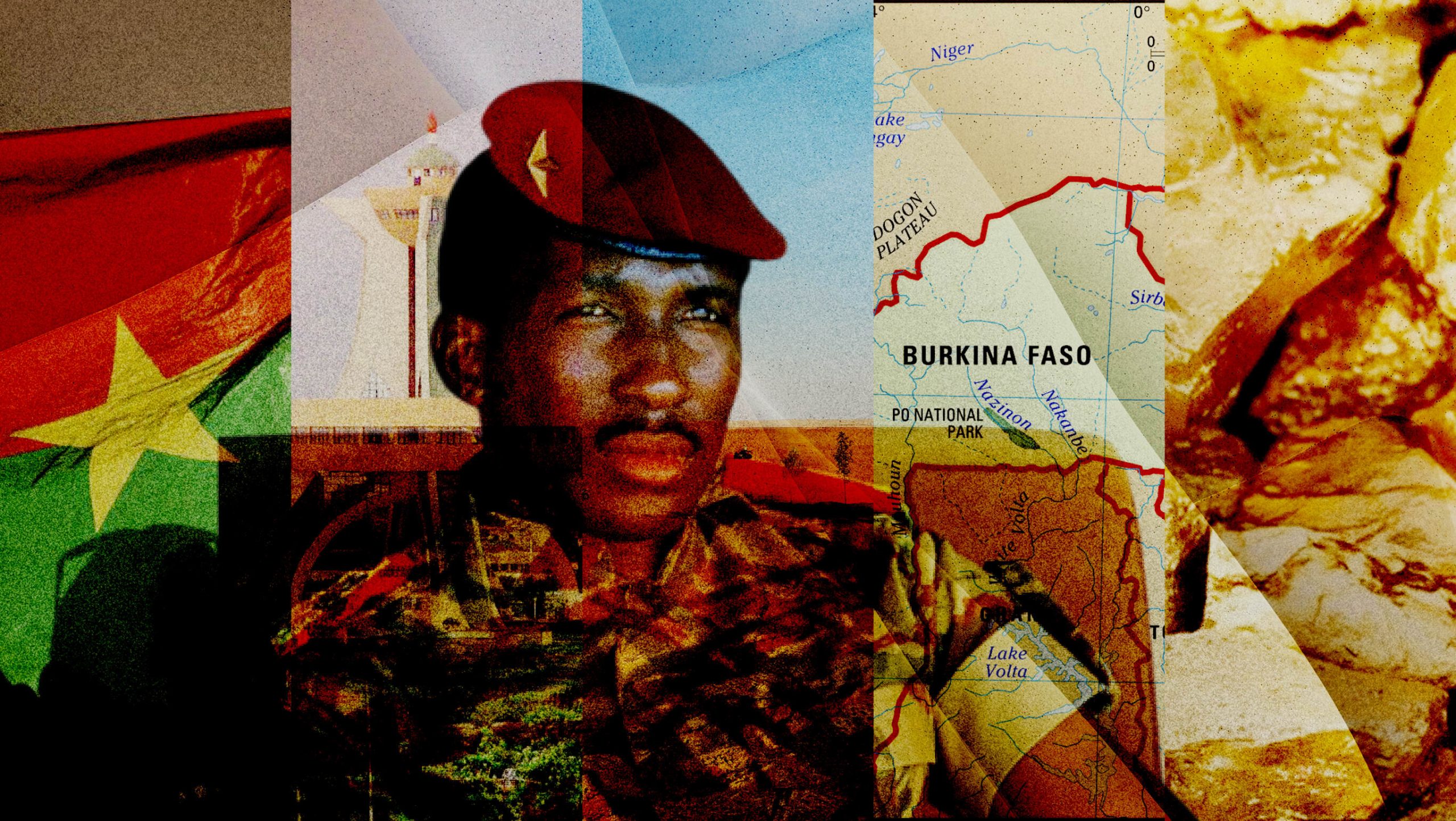
A land once reborn in revolutionary fire now smolders under the weight of its own fragility. In the mid-1980s, Thomas Sankara rose to power in Burkina Faso with a vision that electrified not just his people but much of Africa. He championed mass literacy, launched nationwide vaccination campaigns, planted millions of trees to fight desertification, advanced women’s rights, and gave the country a new name that meant “land of upright people.” His leadership was bold, impatient, and deeply personal, relying on a mix of grassroots committees and uncompromising rhetoric.
That fire was extinguished in 1987 by a coup that ended his life and left the structures he had started to build without the depth to survive him. In the decades since, Burkina Faso has cycled through instability, but the past ten years have been especially brutal. Armed groups linked to Al-Qaeda and the Islamic State now hold up to 40 percent of the country’s territory. More than 26,000 civilians have been killed, millions displaced, and state authority shrinks with every passing month.
Military takeovers have become almost routine. The most recent, in September 2022, saw Traoré replace a fellow coup leader in the name of restoring security. Disillusioned with France, its former colonial ruler, the country has turned to Russia for arms, military trainers, and promises of energy infrastructure, including plans for a nuclear plant.
Burkina Faso’s struggle is a warning. Sankara’s revolution offered sweeping change but never hardened into resilient institutions capable of weathering conflict and succession. The absence of that foundation has left governance vulnerable to force rather than consensus. Today’s crisis is more than political—it is existential, reflecting the dangerous gap between revolutionary ambition and the slow, often unglamorous work of building systems that can endure.
Sankara’s four years in power, from 1983 to 1987, were a period of relentless experimentation. His rise in August 1983 marked the renaming of Upper Volta to Burkina Faso, a declaration that the country belonged to the “land of upright people.” That symbolism was matched by sweeping reforms under what he called a “democratic and popular revolution.” Land once controlled by traditional chiefs went to the peasantry. Literacy rates jumped from 13 percent in 1983 to 73 percent by 1987, thanks to mass campaigns that reached the most remote villages. Over 10 million trees were planted in 15 months to slow the march of the desert, and millions of children received vaccinations against meningitis, yellow fever, and measles.
His rejection of IMF and World Bank loans was absolute. He warned African leaders that debt was a modern chain of neocolonialism, calling creditors “technical assassins” and urging united resistance across the continent. The push for food self-sufficiency helped ease famine, with reforms favoring local production over imported dependency.
Women’s emancipation was woven directly into state policy. Female leaders took senior government roles, forced marriage and female genital mutilation were outlawed, and women were encouraged to serve in the military and lead agricultural projects. These measures were radical for the region and period, altering public life in ways that still provoke debate.
Yet the revolution’s machinery relied heavily on committees for revolutionary defense, centralized directives, and rapid mobilization driven by Sankara’s own authority. Structures for participatory governance, legal safeguards, or civic education were weak. Without trained institutions to carry the work forward, momentum collapsed after his assassination in 1987. Successor regimes dismantled much of what had been achieved. The symbols endured—Burkina Faso’s name, painted murals, and annual commemorations—but the systems that could have preserved those reforms never took root.
Power Without People
Blaise Compaoré’s long tenure from 1987 to 2014 emerged from the assassination of Sankara and carried the country in a sharply different direction. Over 27 years, he dismantled most of the radical programs, opened the economy to market reforms, and aligned closely with France and international financial institutions. While his rule brought relative stability, it was marked by authoritarian control, corruption, and the steady erosion of the revolutionary ethos that had defined the early 1980s. He altered constitutional term limits, an approach that maintained legal cover but deepened public resentment.
That resentment reached a breaking point in 2014. When Compaoré moved to change the constitution again, hundreds of thousands flooded the streets. The demonstrations, driven largely by young people invoking Sankara’s memory, forced his resignation and exile. It was a rare moment of unified civilian action, rejecting both the neoliberal drift and the idea of indefinite personal rule.
The aftermath did not bring the institutional renewal many hoped for. In 2015, amid an escalating jihadist insurgency, the military ousted the transitional civilian government. The following years saw an unbroken cycle: in early 2022, Lieutenant Colonel Paul-Henri Sandaogo Damiba took power promising to restore security; by September that year, Captain Ibrahim Traoré removed him, accusing him of failure. Traoré, the youngest leader in Burkina Faso’s history, leaned heavily on Sankara’s image to justify his rule.
Military dominance has remained constant, but unity within the armed forces is fragile, often shaped by patronage networks rather than coherent strategy or discipline. Civilian oversight is minimal, corruption endures, and insurgent violence continues to weaken state authority. Without robust mechanisms to manage power transitions or integrate civilian governance with military capacity, the same vacuum left after 1987 persists. Coups have become the default reset button, reinforcing a militarized political order that struggles to escape its own cycle.
The dismantling of Burkina Faso’s Independent National Electoral Commission (CENI) in July 2025 came without public consultation and marked one of the most consequential decisions of Captain Ibrahim Traoré’s rule. Responsibility for elections shifted to the Ministry of Territorial Administration, justified by the junta as a cost-saving move. The CENI’s annual budget of about $870,000 was labeled wasteful, while the change was presented as a step toward “sovereign control” over electoral processes and a way to reduce foreign influence. Notably, in May 2024, the transition to civilian rule was pushed to 2029, granting the military five more years in power beyond the initial deadline.
The language of sovereignty has become central to Traoré’s narrative. His government expelled French diplomats, closed French military bases, and embraced Russia as a strategic partner for military support and energy cooperation. This alignment is framed as advancing African self-reliance and shielding the country from neocolonial pressures. In official statements, the suspension of elections and tighter controls are depicted as necessary for survival against jihadist insurgencies that remain active in large parts of the country.
Behind this rhetoric lies a climate of deepening repression. Since 2022, arrests of activists, journalists, and opposition figures have increased sharply. Several high-profile civil society leaders have disappeared without explanation. Media outlets critical of the government have been shuttered, and information is tightly managed to limit exposure of abuses. Human Rights Watch reported that between January and July 2024, Burkinabè forces and allied militias unlawfully killed at least 1,000 civilians, including 223 in the villages of Nondin and Soro where 56 children were among the dead.
Amnesty International has documented arrests and enforced disappearances, alongside the suspension of independent newsrooms and revocation of broadcast permissions. The junta has also pursued legal repression through measures such as a revised family code criminalizing homosexuality and plans to reinstate the death penalty. In August 2025, the expulsion of Carol Flore-Smereczniak, a senior UN official, following a report on more than 2,000 cases of child recruitment, killings, and abuse show how far relations with rights monitors have deteriorated. These tactics echo the authoritarian habits of previous regimes but come with the added justification of war and sovereignty.
Public sentiment is divided. Some citizens, weary of violence, tolerate Traoré’s concentration of power in the hope of stability. Others see the postponement of elections and silencing of dissent as proof of a militarized state consolidating itself under the shield of anti-imperial language. Sankara's name appears often in speeches, yet the participatory spirit he encouraged is absent from the current political order. What remains is a sovereignty that serves those in uniform more than those in the streets, prolonging a cycle in which power is retained through control rather than shared through accountable governance.
Moscow's African Gambit
France’s departure in early 2023, ending its five-year deployment of around 400 special forces troops, left Burkina Faso facing the dual challenge of ongoing insurgency and an abrupt shift in alliances. The junta’s one-month deadline for French withdrawal was interpreted domestically as a rejection of lingering neocolonial authority, yet on the ground, jihadist groups quickly capitalized on the absence of foreign military support, significantly expanding their territorial control. That vacuum is no abstraction—villages have been overrun, roads cut off, and state presence in vast rural zones reduced to little more than a name on a map.
Russia moved in rapidly. Since January 2024, about 100 personnel from the Africa Corps, successor to the Wagner Group, arrived in Ouagadougou, with expectations of expansion. Their role is twofold: bolstering Captain Ibrahim Traoré’s security and providing military training to forces engaged in the fight against insurgents. Moscow’s assistance also extends into wheat shipments and a contentious nuclear power project, signaling interests that go beyond counterterrorism into long-term economic and strategic positioning.
The junta casts this partnership as grounded in mutual respect, contrasting it with France’s more prescriptive engagement. Government officials have been vocal in stating that Russia “suits” Burkina Faso better, a line that resonates with those seeking to revive Thomas Sankara’s anti-imperial legacy. Yet there are undercurrents of doubt—critics question if this is genuine alignment or simply a shift toward dependency on a different global power.
Public opinion is fractured. Large anti-French protests have been matched by state-driven pro-Russia messaging, amplified through coordinated media narratives and targeted disinformation. Some citizens believe Russian backing will address gaps France left behind; others warn that the trade-off might be sovereignty for a subtler form of foreign influence. The country’s real challenge lies in navigating between these poles without replacing one form of external control with another, all while confronting the armed groups that still dictate life in much of Burkina Faso’s countryside.
Gold remains the centerpiece of Burkina Faso’s economy under Captain Ibrahim Traoré’s junta, accounting for about 15% of GDP in 2023, with other estimates placing it closer to 18%, alongside more than 75% of exports and over 20% of government revenue. State control of key mines has only recently tightened, with the junta nationalising five gold assets under the Société de Participation Minière du Burkina (SOPAMIB), but artisanal mining—still largely unregulated—continues to channel wealth away from public coffers. From 2012 to 2021, illicit financial flows from the sector reached nearly USD 5 billion, a staggering loss in a country where basic services remain strained.
Economic growth reached 4.9% in 2024, up from 3.0% in 2023, fueled by agriculture and services, while higher gold prices eased external pressures, though the gains feel distant for communities outside urban and mining hubs. Corruption, fraud, and entrenched illicit trade networks continue to divert funds, especially in conflict-affected regions where jihadist attacks have displaced millions and severely disrupted agricultural production. Displacement has forced families onto already stressed farmland, while insecurity has accelerated deforestation and environmental degradation, driven by wood fuel demand and bushfires.
The junta speaks of “sovereignty” and economic self-reliance, yet implementation lags behind the rhetoric. Strategic investments exist, but initiatives that echo Thomas Sankara’s vision—support for local food systems, renewable energy, and ecological justice—remain limited. Conflict and governance constraints slow progress in agriculture, infrastructure, and basic service delivery, leaving the broader socio-economic structure exposed.
Short-term economic statistics present a picture of resilience, yet they mask deeper vulnerabilities. Mineral wealth is substantial, but without addressing the ongoing insecurity, resource capture by elites, and environmental harm, the promise of shared prosperity remains out of reach for much of Burkina Faso’s population.
Sankara’s record during the years of his leadership still looms over Burkina Faso, a reminder of how fast radical change can happen and how quickly it can collapse. Literacy rose by 60%, millions of children were vaccinated, reforestation programs expanded, and women gained new rights through unprecedented legal protections and broadened political participation. Those achievements carried extraordinary weight, but they were not anchored in institutions strong enough to survive his assassination in 1987. The country slipped back into fragility, leaving space for authoritarian militarism and repeated coups.
Captain Ibrahim Traoré rules in that shadow. He cites Sankara’s name, but democratic transition is postponed and freedoms curtailed. Without accountable governance, grassroots participation, or independent oversight, sovereignty is claimed in rhetoric but rarely practiced in daily life. This disconnect has left citizens confronting the same question generations before them faced: how to secure power that lasts beyond a single leader.
A practical path forward exists. Real sovereignty would mean community-led management of gold wealth so that the percentage of GDP generated by mining is felt locally instead of disappearing into private hands. It would mean cooperative agriculture rooted in Sankara’s food self-sufficiency campaigns, where displaced families and small farmers share in production rather than being pushed aside. Decentralized energy systems could reduce reliance on external partners, while transparent resource governance would ensure mining revenues support schools and hospitals.
Burkina Faso’s civil society, which forced change in 2014, shows that popular energy for participatory democracy remains alive. Groups like Balai Citoyen ('Civic Broom'), the Mouvement Burkinabè des Droits de l'Homme et des Peuples (MBDHP), and newer coalitions such as the West Africa Democracy Solidarity Network (WADEMOS) continue to press for accountability despite repression. Their work illustrates that even in constrained spaces, citizen action still challenges unchecked authority and keeps the possibility of participatory democracy within reach.
The broader African challenge mirrors this. Liberation dreams often stall at independence, leaving ideals unanchored in durable systems. Burkina Faso’s fractured revolution demonstrates both the danger of neglecting reform and the possibility of building something lasting. Sankara’s legacy is not only memory. The materials for renewal still exist, waiting for institutions capable of carrying them forward.
Written By
Filed Under