Africa’s Digital Data Fuels Global AI. But Who Owns the Value It Creates?
New policies, research networks, and open-source AI projects are working to turn Africa’s data into local innovation instead of digital extraction.

Gold Yesterday, Data Today
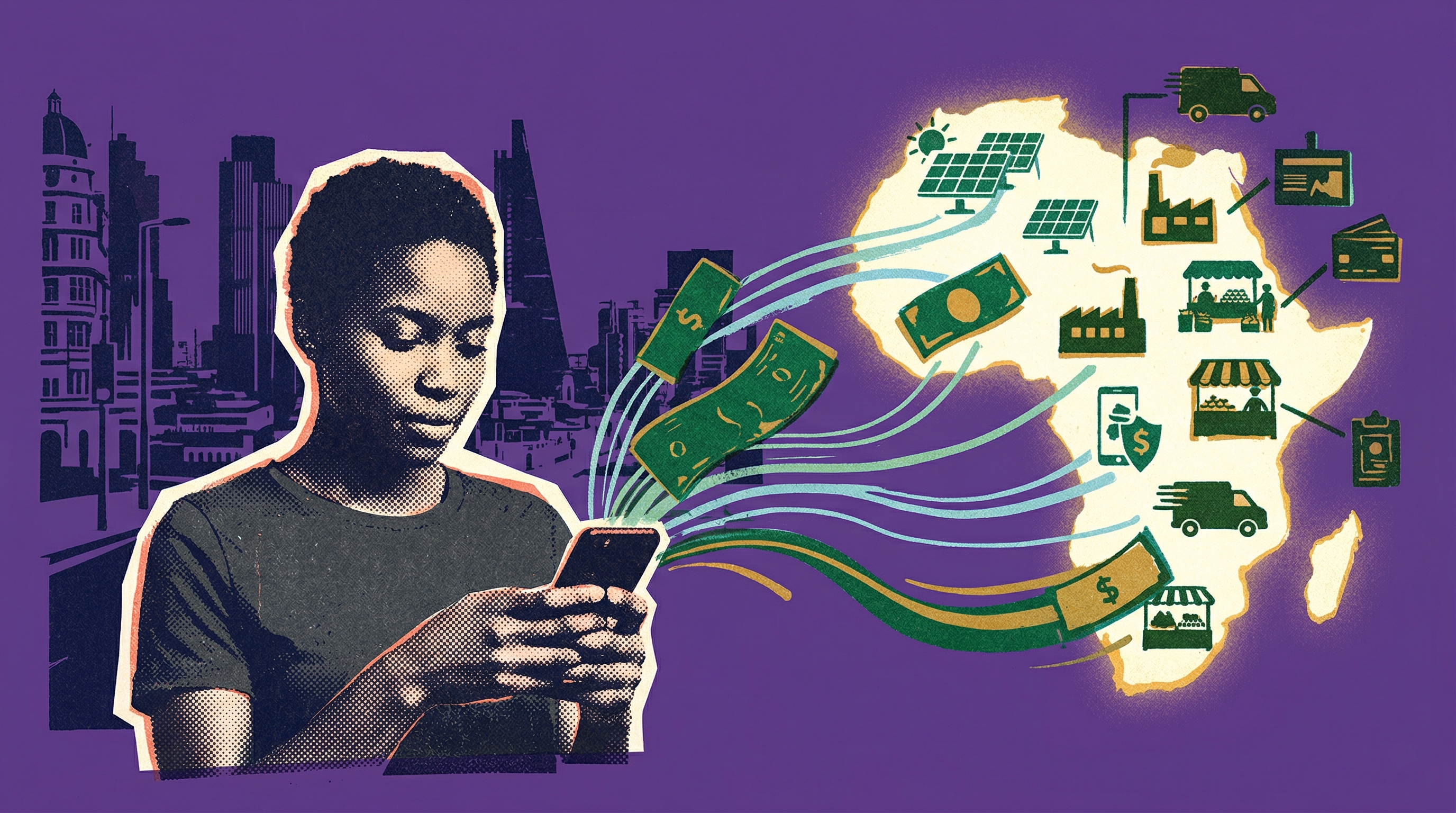
Africa’s data is being mined in ways that echo an older history of extraction. During the late 20th century, Africa’s minerals and raw materials powered Europe’s industrial revolutions, while the continent remained impoverished and outsiders accumulated wealth. A similar pattern now appears in digital form. Each time Africans use mobile money, log hospital visits, or speak indigenous languages online, they generate datasets that train artificial intelligence systems. Benefits from this digital wealth rarely return to the people who produce it.
Africa holds over 19% of the world’s population, yet produces less than 1% of global AI research outputs. African data feeds translation apps, credit scoring tools, and health diagnostics abroad, often without consent, recognition, or reinvestment. Linguistic data shows the gap clearly. More than 2,000 languages are spoken across the continent, yet around 88% of African languages are severely underrepresented or absent from mainstream NLP corpora. Existing datasets often contain serious quality and labeling problems.
Such patterns reflect a digital economy that treats African datasets as raw materials. Decolonizing AI calls for examining sovereignty, governance, and control over the data Africans generate.
That call to examine control over data leads back to an older pattern of control over resources. Africa’s relationship with exploitation did not begin with code or servers. Colonial administrations removed gold and diamonds, oil, and agricultural products to advance European industrialization, while African societies were left underdeveloped. Extraction without fair return became normal. Many scholars now describe the digital version as data colonialism, the large-scale appropriation of personal, social, and cultural data without meaningful consent or equitable benefit.
The logic feels familiar. Resources leave. Value accumulates elsewhere. Health records gathered in African hospitals often fail to reflect local disease profiles and demographics. Medical AI systems designed and trained on non-local data can misdiagnose patients or perform poorly in African clinics. Smallholder farmers generate agricultural data that flows into digital agritech platforms. Investment in the sector grows, yet adoption remains low, and many farmers lack access to, or effective benefit from, the predictive tools built from their own data. African languages face a similar pattern. Global tech companies use them to train translation apps and voice assistants. Many of those systems struggle with so-called low-resourced African languages because data is sparse, non-standardized, and local linguists remain marginal to development processes.
Data carries cultural context and lived experience. When datasets move abroad for processing and monetization, economic gains and technical authority often move with them. Control over minerals once shaped political power. Control over data now raises similar questions about ownership and direction.
When Algorithms Inherit Colonial Logic
Control over data shapes who benefits from AI systems and who absorbs the risk. Bias appears quickly when African realities sit outside training datasets. Medical AI tools built on Euro-American patient data show reduced accuracy for African populations, which increases the risk of misdiagnosis and unequal care. Credit scoring algorithms follow a similar path. Systems trained on Western financial histories often classify African borrowers as high risk, not because of behavior, but because local financial data is missing. Exclusion then becomes automated.
Language data shows the scale of absence. Africa has more than 2,000 languages, yet around 2% of languages, roughly 42, are supported across major language models. Over 98% remain unsupported in large natural language processing corpora. Access to digital services shrinks when a language is missing from the system. Cultural records stored in speech and text struggle to survive in digital form.
Google Translate once struggled with Yoruba, producing inaccurate translations linked to data scarcity and limited local linguistic validation. Speech recognition systems reveal another pattern. Models trained mainly on Western-accented English perform nearly twice as poorly for African-accented or non-Western English speakers. One study reported average word error rates of 35% for African American voices compared to 19% for white speakers across major systems.
Economic value follows data. The digital economy is projected to contribute over $15 trillion dollars to global GDP by 2030. Africa captures only a fraction, even though datasets from agriculture, healthcare, fintech, and mobile money transactions in East Africa support global models. Reinvestment in local communities remains limited.
When training data excludes African contexts, local developers rely on imported systems that rarely fit daily realities. Dependency then becomes technical, financial, and institutional.
Dependency at the technical and financial level raises a deeper question about ownership. Decolonizing AI begins with reframing African data as a right tied to sovereignty, justice, and identity. Governance then has to rest on ethical principles that reflect African thought and international standards.
Ubuntu offers one foundation. The idea, often expressed as “I am because we are,” centers collective well-being and interconnectedness. CARE Principles for Indigenous Data Governance add another layer: Collective Benefit, Authority to Control, Responsibility, and Ethics. These principles treat community data as a collective right, not a private asset. Datasets carry cultural memory, social norms, and shared histories. Governance models that ignore this reality reduce data to numbers and detach communities from decision-making.
Policy discussions across the continent reflect this shift. The African Union’s Digital Transformation Strategy 2020 to 2030 calls for data sovereignty and harmonized regulation so Africans control how data is collected, stored, and used. 36 of 55 African countries have enacted data protection laws, and others are drafting legislation. Legal frameworks now exist that recognize datasets as rights-bearing entities rather than open resources.
AUDA NEPAD and the Pan-African Parliament are working toward continental standards that link data governance with human rights and development goals. Authority, consent, and equitable benefit move to the center of the conversation. Control over data then becomes a matter of political choice and collective agency, not technical design alone.
Who Writes the Rules Writes the Future
Collective agency becomes visible in practice across the continent. Researchers, activists, and policymakers are not waiting for external validation. They are building systems that place local ownership and innovation at the center.
Masakhane offers one clear example. This pan-African movement of researchers works on natural language processing for African languages. Members create open datasets and translation models for dozens of underrepresented languages. Their work challenges the dominance of Western technology firms in language AI research. Masakhane shows that African-led teams can design, train, and publish models that respond to local linguistic realities.
Deep Learning Indaba provides another space for agency. Since 2017, the initiative has trained thousands of African researchers in machine learning. Training is only one part of the effort. Networks formed through Indaba connect researchers across countries and institutions, placing African voices inside global AI discussions. Technical knowledge grows alongside conversations about context and responsibility.
National governments are also drafting formal strategies. South Africa, Nigeria, and Rwanda have introduced AI roadmaps that refer to responsible innovation, capacity building, and data sovereignty. Rwanda’s strategy frames AI as a tool in health and education policy while placing ethical use within official planning documents.
Universities and research centers add depth to these efforts. The University of Lagos AI Hub and the African Institute for Mathematical Sciences produce research shaped by African conditions. The African Observatory on Responsible AI focuses on ethics in deployment and governance.
These initiatives show coordinated work across grassroots groups, academic institutions, and governments. African actors are designing systems, setting priorities, and shaping research agendas in real time.
This growing momentum also raises tension around how far sovereignty should extend. Some scholars caution that strict localization rules could fragment research networks. Cross-border data sharing in scientific and public health fields often speeds up discovery and crisis response. OECD reports note that heavy restrictions on cross-border data flows can limit cooperation. Studies on digital sequence information warn that overly rigid sovereign control may reduce benefit sharing rather than expand it.
Concerns about protectionism surface as well. A narrow focus on ownership can encourage governments or corporations to hoard information. Silos then replace collaboration. African AI researchers have voiced another worry. Without fair data sharing agreements, African institutions could be excluded from global innovation cycles.
A rights-based approach does not require isolation. CARE Principles and the African Union Digital Transformation Strategy 2020 to 2030 both refer to equitable sharing, collective benefit, and local authority over consent. These frameworks outline terms for partnership rather than closure. Communities retain authority while still engaging across borders.
International policy spaces show room for African influence. UNESCO’s Recommendation on the Ethics of AI and the EU AI Act establish rights-oriented governance models and call for inclusivity and diversity. African experts from Cameroon, Egypt, Ghana, Morocco, Rwanda, and South Africa served on the 24-member expert group that drafted the UNESCO Recommendation. Participation at that level signals direct input into global standards.
Data sovereignty then becomes part of a negotiation over terms of exchange. African policymakers and researchers enter debates not as observers but as contributors, shaping how fairness, equity, and collective well-being are interpreted in practice.
Negotiation over standards brings the argument back to a familiar pattern. Africa’s past of mineral extraction now echoes in digital form, with data replacing gold and oil. Data carries identity, language, and collective memory. Treating African datasets as commodities repeats older injustices in updated code.
Reframing data as a right tied to sovereignty and justice changes the terms of exchange. Africans generate digital wealth through daily transactions, research participation, language use, and innovation. Fair benefit must follow that contribution.
Examples already exist. Masakhane builds language models from within. The African Union advances a continental strategy. Ethics labs across universities test governance in practice. These efforts show capacity, not dependency.
A clear choice lies ahead. Africa can remain a supplier of raw data for external algorithms, or assert control over how datasets circulate, who profits, and how value returns home. Policymakers, researchers, and global partners share responsibility for that direction. AI will reflect the rules people write around data.
Written By
Adetumilara Adetayo is a contributing writer at Susinsight, exploring systems and progress across Africa.
Filed Under
Region:
Countries:
Series:
World Days:
Tags