Home•Stories•Insightful Articles
The U.S. Says It Wants Trade, Not Aid. Africa’s Response Could Redefine Both.
As the Lobito Rail Corridor rises, tariffs hit South African jobs hard. Across the continent, leaders are betting on regional trade and AfCFTA integration as the real long-term fix.
Mixed Signals from Washington
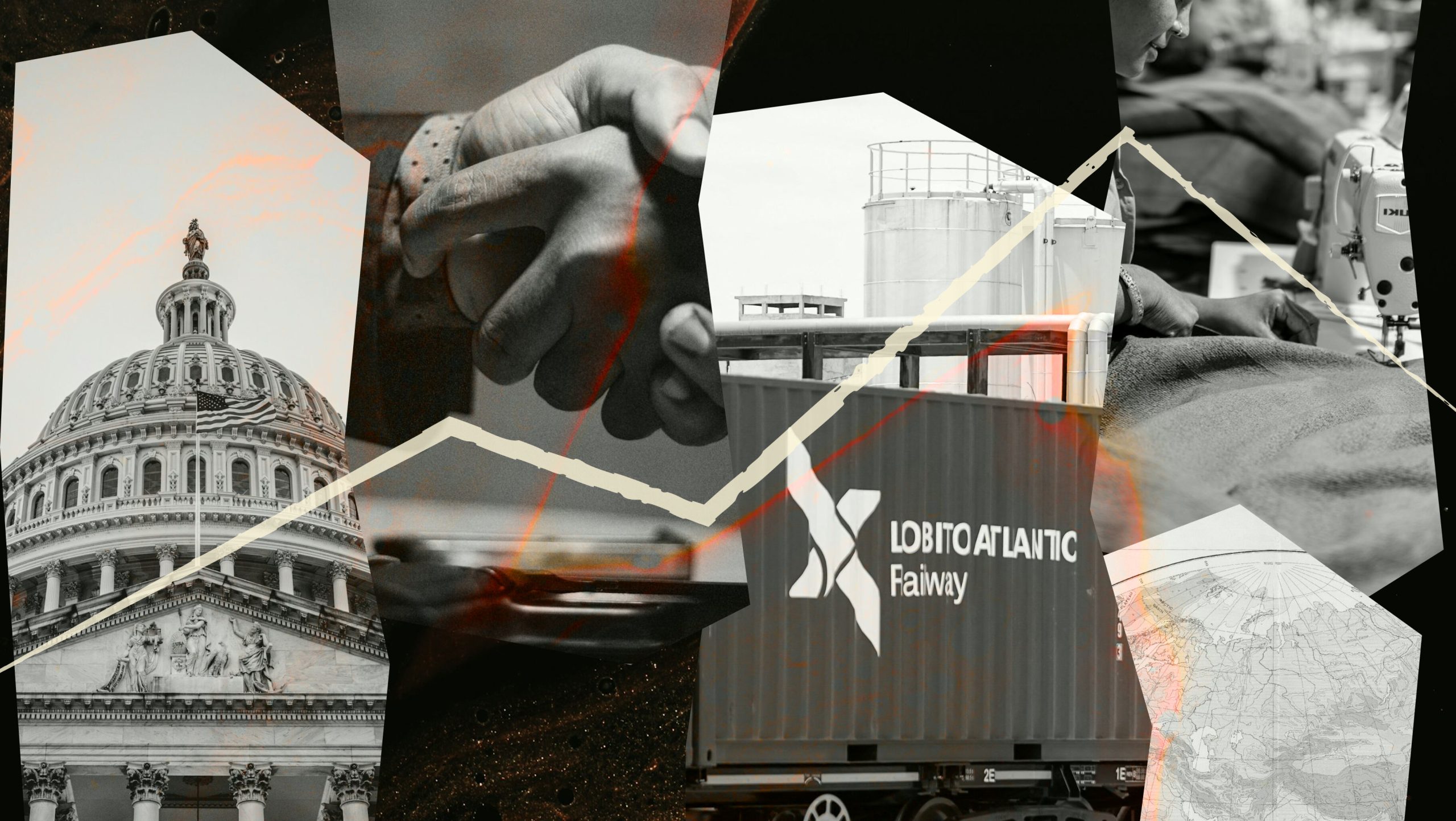
Trade has replaced aid as the centerpiece of America’s engagement with Africa. Washington’s recent $550 million commitment to the Lobito Rail Corridor captures this shift in striking detail. The project seeks to modernize a 1,300-kilometer railway from Angola’s Lobito port through the Democratic Republic of Congo’s Copperbelt, with plans to extend into Zambia. Backed by U.S. loans and managed by a consortium that includes Trafigura, the line is projected to expand freight volumes sixfold by 2035. Advocates believe this corridor could fuel activity far beyond mining, stimulating agriculture, manufacturing, and even tourism in the region. The effort mirrors broader U.S. and the Group of Seven (G7) strategies to counter China’s Belt and Road presence by linking infrastructure with commercial diplomacy and trade reform.
This pivot, however, arrives alongside policies that complicate the message. A 30% tariff on selected African imports, hitting South Africa especially hard, threatens an estimated 30,000 jobs in automotive and agriculture. South Africa already faces an official unemployment rate of 32.9% in early 2025, making the tariff shock politically and socially sensitive. For a country that ranks as the U.S.’s third-largest African trading partner, the contrast is difficult to ignore.
African policymakers and businesses now find themselves weighing opportunity against risk. Investment in railways suggests a future built on commerce between equals, while tariff pressures strain the very sectors positioned to benefit. This tension leaves governments and citizens questioning how consistently the U.S. intends to pursue its new trade-first approach.
The roots of this policy shift stretch back to Washington’s long reliance on aid. For decades, development assistance defined the U.S. approach to Africa, with USAID at the center. Founded in 1961 during the Cold War, the agency was created to counter Soviet influence and soon became more than a development body. Programs often carried political conditions, advancing pro-Western economic models and supporting sectors aligned with American corporate priorities. Billions flowed into African infrastructure, agriculture, and health, but the model reinforced dependencies that slowed industrialization and limited sovereignty across the continent.
Under the Trump administration, the balance tilted toward what officials called commercial diplomacy. Aid programs shrank while trade and investment gained prominence. The Lobito Rail Corridor signals this shift, with U.S.-backed financing aimed at unlocking mineral-rich regions in central and southern Africa. At the same time, embassies were tasked with promoting American private-sector interests more aggressively. Some USAID missions closed, and voices such as Troy Fitrell of the State Department’s Bureau of African Affairs highlighted a new emphasis on backing African businesses. The rationale was clear: 300,000 U.S. firms still had no presence in Africa.
Demographics reinforced the urgency. Africa’s population is expected to reach 2.4 billion by 2050, with a middle class holding as much as $16 trillion in purchasing power. That scale is unmatched globally and has obvious implications for exporters and investors. Yet the record shows a gap between ambition and outcomes. U.S. exports to Africa remain below 1% of total American trade, a reminder that potential alone does not guarantee market share. This discrepancy captures the complexity of shifting from decades of aid-driven engagement to a trade-first model in a region where China has already built deep economic ties.
The limits of Washington’s trade-first strategy became clearer once tariffs were rolled out in 2025. Duty-free access under the African Growth and Opportunity Act (AGOA) had long anchored African exports to the U.S., yet new tariff measures signaled a sharp reversal. Rates ranged from 10% to 50%, striking at industries that depend heavily on American markets. Automotive, steel, agriculture, and apparel were all caught in the crossfire, and the consequences for African economies have been immediate.
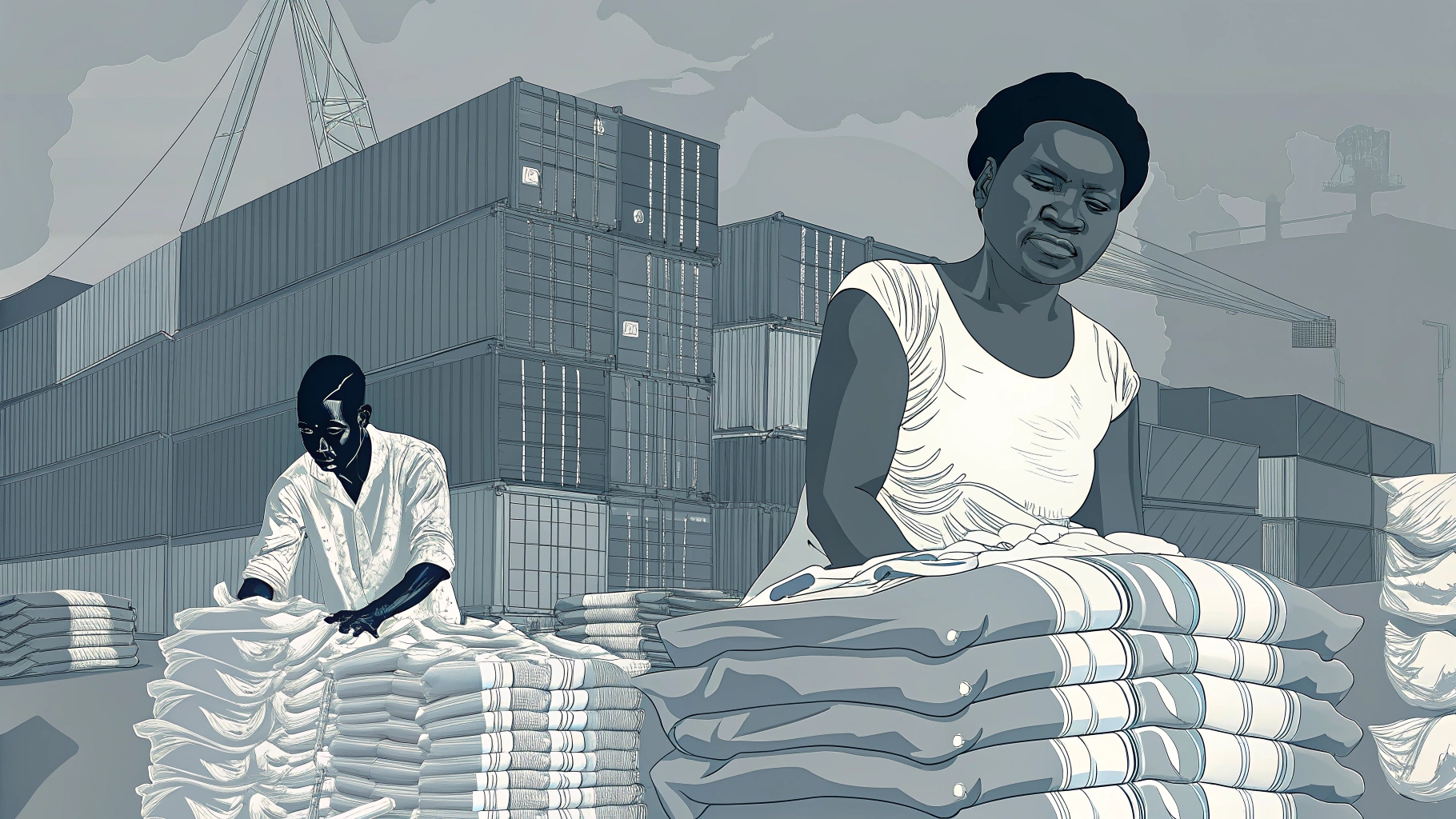
South Africa stands at the center of this dispute. New tariff rates struck South Africa's export pillars such as citrus, wine, and vehicles, with immediate force. The auto industry, which represented about 64% of South Africa’s AGOA-linked trade and generated R28.6 billion (around $1.6 billion) in 2024, collapsed in the first half of 2025 with an 80% plunge in shipments to the U.S. The Reserve Bank Governor Lesetja Kganyago warned that as many as 100,000 jobs could be lost. Agriculture faced similar risks, with the citrus industry alone exposing 35,000 jobs. In places like Citrusdal in the Western Cape, where farming towns depend on U.S. markets, that threat feels personal rather than abstract.
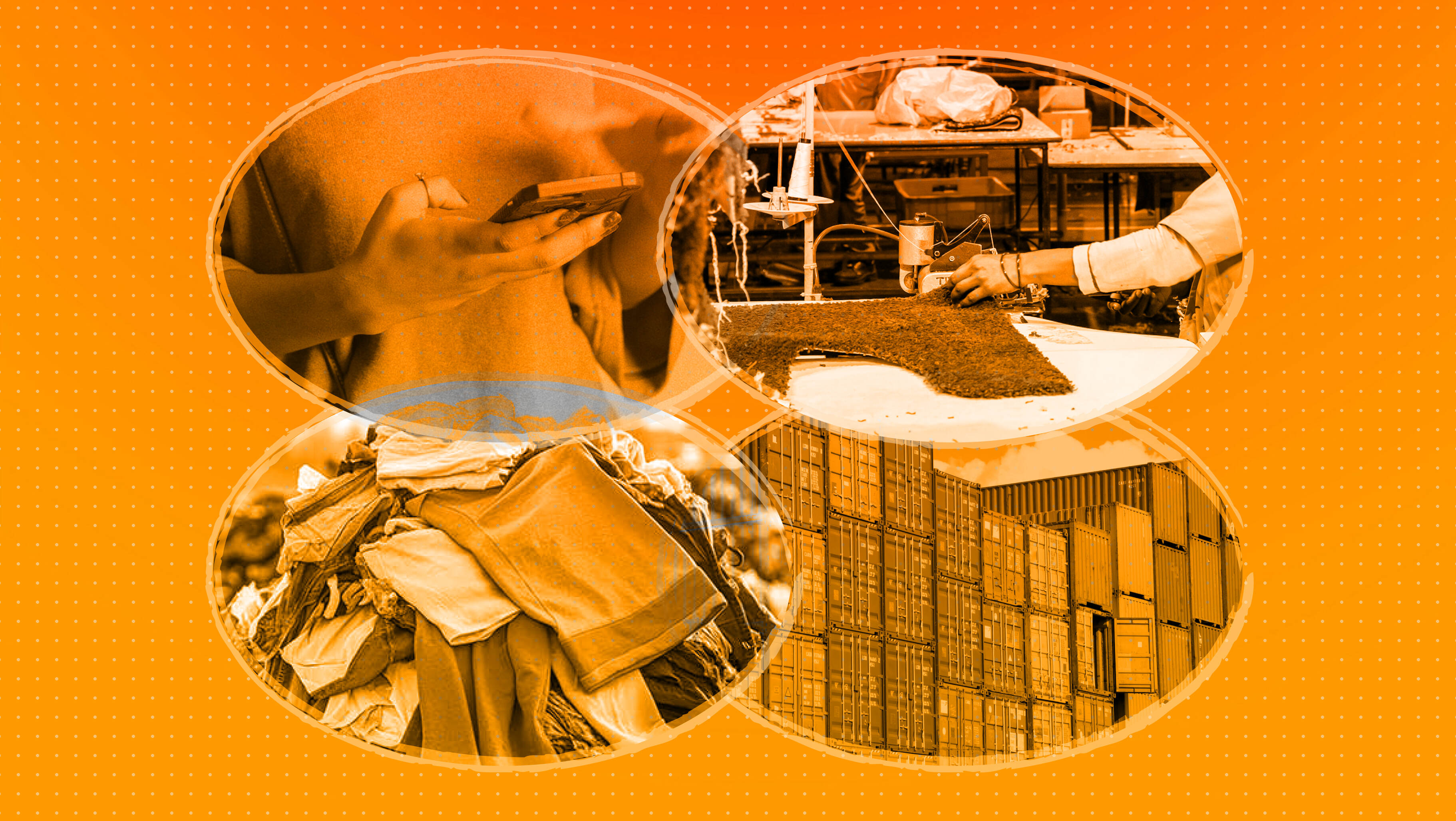
Smaller economies are no less vulnerable. Lesotho’s apparel sector, worth roughly $1 million a year and accounting for 10% of production, relied almost entirely on U.S. duty-free access. An early 50% tariff announcement drove widespread order cancellations and cost nearly 40% of the workforce their jobs. Even after tariffs were reduced to 15%, factories had already shed workers, exposing how fragile export dependence can be.
The shadow of AGOA’s expiration in September 2025 hangs over all this. Over two decades, the program tripled African exports to the U.S. Its uncertain future adds another layer of risk for governments and businesses already grappling with tariffs. The mix of rising trade barriers and potential loss of preferential access leaves policymakers with few certainties, even as Washington continues to frame its policy as a shift toward partnership through commerce.
When Tariffs Hit Home
The burden of these tariffs has fallen most heavily on Small and Medium Enterprises across Africa. Lacking financial buffers or diverse market links, many cannot adjust quickly to new costs or disruptions. Kenyan SMEs illustrate this vulnerability. A 10% tariff now affects tea, coffee, and apparel exports, raising prices and compressing margins. Limited access to alternative buyers outside the U.S. deepens the problem, while delays in machinery and technology imports weigh on production, leaving firms less competitive.
Larger corporations show more resilience but still report major disruptions. With penalty rates already in effect, South Africa's automotive sector saw exports to the U.S. collapse. Major groups faced canceled contracts and delayed shipments, and the ripple spread through suppliers and logistics networks. Planning for investment became more uncertain, with cash flow increasingly fragile.
The human cost behind these numbers is severe. Agricultural regions dependent on citrus exports face existential threats, with entire value chains from pickers to packhouses now vulnerable. Lesotho's experience shows the gendered dimension of trade shocks: factories employing predominantly women shed workers at alarming rates, even after tariff adjustments brought partial relief.
Trade associations and exporters’ councils across affected countries have pressed U.S. officials for exemptions or phased introductions to soften the blow. Many argue that diversification within Africa and beyond is essential, though structural limits and time pressures remain. As incomes fall, local consumption declines, spreading hardship through entire regions. For many communities, tariffs are not abstract policy decisions but lived experiences of lost stability.
Governments across Africa have scrambled to respond, each choosing a path shaped by domestic pressures and trade dependencies. Zimbabwe moved quickly, suspending tariffs on U.S. imports in a gesture of goodwill, hoping to ease tensions and prevent retaliatory measures. The calculation was clear: maintain access and avoid escalation, even at the risk of appearing too conciliatory. Uganda charted a different course, turning inward with an emphasis on self-reliance. Officials there framed agricultural modernization and industrialization as buffers against external shocks, a reminder of how fragile dependence on outside markets can be.
South Africa, Lesotho, and Madagascar leaned heavily on negotiation. President Cyril Ramaphosa entered talks with U.S. leaders, offering a package of $3.3 billion in U.S. industry investments alongside commitments to purchase liquefied natural gas. The approach signals a willingness to trade concessions for relief. Lesotho’s textile sector has been equally active, seeking tariff reductions to safeguard jobs in this distressed industry. Madagascar, though less exposed than its neighbors, has also pressed for more favorable bilateral terms, wary of being left behind in negotiations.
The African Union has advocated for coherence and alignment with the African Continental Free Trade Area, but a single AU‑led, unified negotiating response to the U.S. tariffs has not materialized. Regional integration remains the AU’s preferred shield against dependency on external markets. At the multilateral level, WTO members such as Nigeria have pursued collective channels to challenge tariffs viewed as unfair.
Still, unity is fragile. Each country faces a different tariff rate, and national vulnerabilities often outweigh regional ideals. Wamkele Mene, the AfCFTA Secretary-General, has argued for a collective trade policy, warning that no single African market can hold ground in negotiations with the U.S. The choices now unfolding reveal the push and pull between national survival strategies and the pursuit of continental leverage.
Turning Inward to Move Forward
The search for resilience has pushed many African policymakers to treat the African Continental Free Trade Area as more than an ambitious framework. By 2025, 43 parties had committed, linking a population of 1.3 billion people and a GDP valued at around $3.4 trillion. That scale gives the AfCFTA the distinction of being the largest free trade area in the world by membership, but size alone does not guarantee success. The challenge is translating paper agreements into lived economic gains.
Some progress has taken shape. The Guided Trade Initiative, launched in October 2022, is one such experiment. Its design is simple: stimulate early trade by easing tariff and non-tariff barriers among the most prepared states. Even modest flows signal what could be possible once rules of origin, customs procedures, and product standards are fully harmonized. For businesses that often face fragmented markets, these steps suggest a slow shift toward predictability.
Regional Value Chains are at the heart of this strategy. Rather than exporting raw commodities, the focus has turned toward manufacturing, agro-processing, and building industries around pharmaceuticals, renewable energy, and automotive production. Each sector carries potential not only for job creation but also for diversifying economies still exposed to swings in global demand. Building these chains, however, requires real investment in factories, technology, and above all in SMEs. These enterprises remain the backbone of African industry, yet struggle to scale across borders.
Trade facilitation is another priority. Calls grow louder for stronger trade offices, digital tools such as blockchain in customs clearance, and streamlined logistics to reduce prohibitive costs. The mismatch between ambition and infrastructure is visible everywhere. Major cross-border projects like the Lobito corridor illustrate both the promise of connectivity and the geopolitical competition embedded in infrastructure. On one side, it opens a route for mineral exports and tighter regional links. On the other hand, it highlights the rivalry between the U.S. and China, both seeking influence through African infrastructure.
What emerges from these initiatives is not a single solution but a collection of moves aimed at rebalancing Africa’s place in the global economy. The AfCFTA serves as both shield and experiment, a way to test how far integration can carry economies buffeted by external shocks.
The U.S. pivot from aid to trade has left Africa caught between opportunity and instability. On one side, American investments promise critical infrastructure and modernization. On the other hand, tariffs dismantle gains once secured under frameworks like AGOA, eroding preferential access and exposing millions of jobs to risk. South Africa illustrates the scale of this threat, with potential job losses in the tens of thousands as new barriers cut into agriculture, textiles, and automotive manufacturing.
This paradox teaches a hard lesson. Dependence on a single external partner is a gamble in a geopolitical climate where trade policies shift without warning. Resilience will come only from widening the circle of partners and deepening ties across the African Continental Free Trade Area, which now represents the world's largest trade bloc by membership. Regional value chains in pharmaceuticals, agro-processing, renewable energy, and automotive production can reduce exposure and anchor long-term growth.
Diversification is more than trade maps. It requires investment in logistics, customs modernization, and the education and technology that fuel competitiveness. Policymakers, businesses, and civil society must move in step, choosing strategy over reaction. The path forward lies in Africa’s ability to transform volatility into agency and unity, and practical self-sufficiency.
Written By
Filed Under
Tags