Home•Stories•Fictional Stories
The Rebirth of Lake Lumo
In a battle against despair, a village discovers the strength of innovation and community to restore their cherished lake.
I was twelve years old the first time I heard the whispers of the vanishing lake. My grandmother, a woman of resilient spirit and endless stories, often spoke of Lake Lumo as if it were a living being, a friend from a long past. I sat on the worn wooden porch of our home, the evening sun casting long shadows, listening to her tales of the lake that once stretched to the horizon.
"Lake Lumo was not just water, Zuri," she said, her voice rich with nostalgia. "It was life itself. It provided for us, nourished us, and connected us to the world beyond our village. Traders from far-off lands would sail its waters, bringing stories and goods from places I could only dream of."
I leaned in, captivated by her words, imagining a vast expanse of shimmering blue, teeming with boats and bustling with life. But as I grew older, the reality of our situation became painfully clear. The lake was shrinking, its once mighty waters receding year by year, leaving behind cracked earth and a sense of despair that hung heavy in the air.
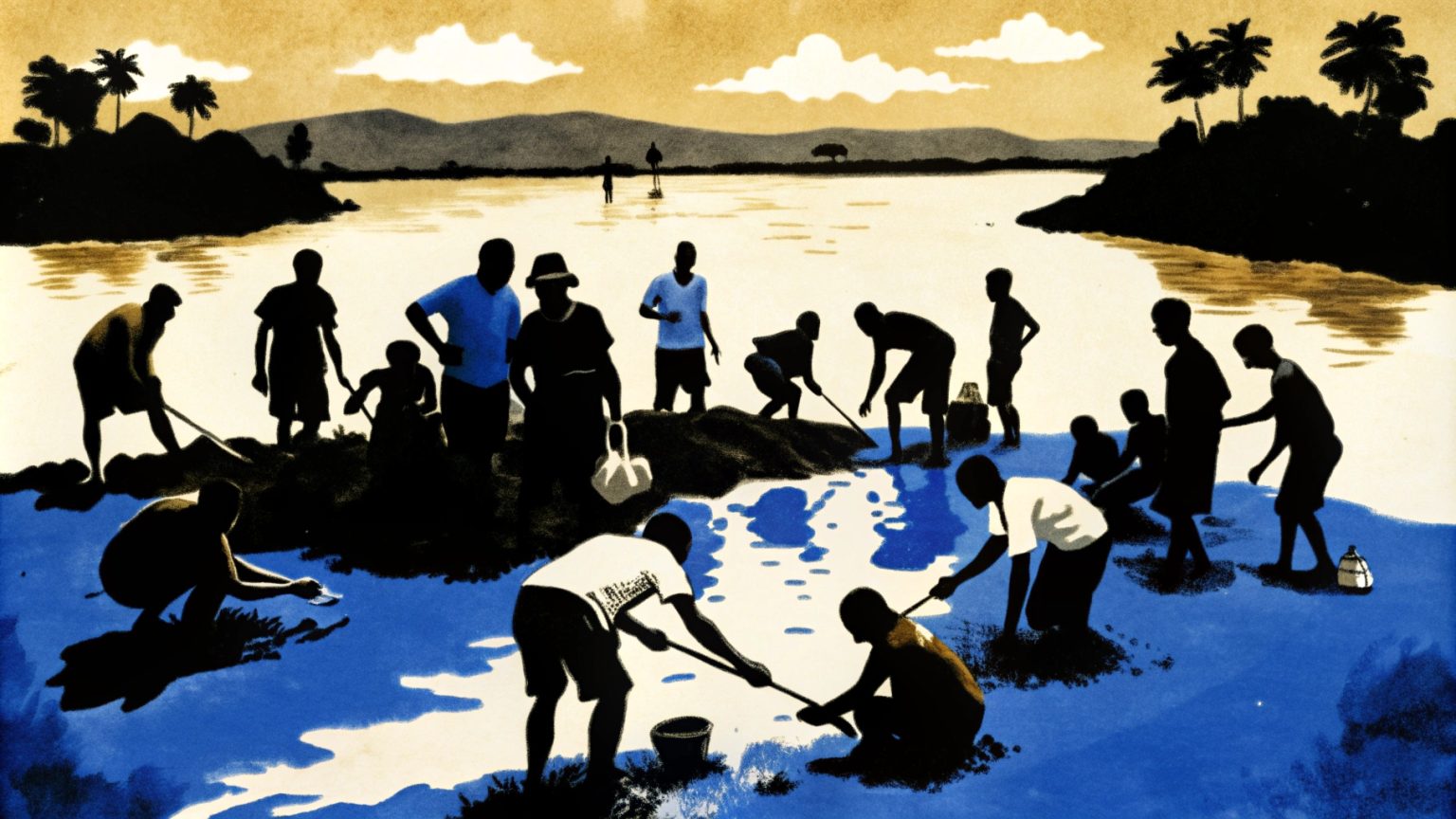
Now, at sixteen, I stood at the edge of what remained of Lake Lumo. The water, once a majestic expanse, was now a mere puddle, surrounded by desolation. The sun beat down mercilessly, reflecting off the parched land. My younger brother, Kofi, and I had come to fetch what little water we could for our family.
"Zuri, do you think the lake will ever come back?" Kofi's voice was small, filled with hope that I struggled to share.
I kneeled beside him, dipping our worn jug into the shallow water. "I don't know, Kofi. But we must believe it will. We have to keep trying, for Grandmother's sake, and for everyone else who depends on it."
As we filled the jug, a shadow fell over us. I looked up to see Amina, a friend from the village and an ardent believer in the power of change. Her eyes sparkled with determination, a stark contrast to the bleak landscape.
"Zuri, Kofi," she said, greeting us with a nod. "I've been looking for you. There's a meeting tonight at the community center. They're discussing new ways to save the lake. You should come."
I hesitated. "Do you think there's anything that can be done?"
Amina's expression hardened. "We can't just sit and watch it disappear. We have to do something, anything, to make a difference. Please, Zuri. We need everyone."
Her words echoed in my mind as we made our way back to the village. The community center was a small, humble building, but tonight it was filled with people, their faces lined with worry and hope. I spotted Dr. Kendi, a scientist who had dedicated her life to studying the lake's decline and finding solutions.
"Welcome, everyone," Dr. Kendi began, her voice carrying a sense of authority and urgency. "We all know the situation is dire. But there is still hope. We need to adapt and innovate. We need to come together as a community."
She outlined plans for new irrigation techniques, the introduction of drought-resistant crops, and the importance of sustainable water management. It was a lot to take in, but as I looked around, I saw the glimmer of determination in the eyes of my neighbors.
"We can do this," Amina whispered beside me. "We have to believe we can."
That night, as I lay in bed, I thought about the lake, my grandmother's stories, and the future that seemed so uncertain. I resolved to fight for our lake and to work alongside my community to bring life back to our land.
The next morning, the sun rose as it always did, but something felt different. There was a buzz of activity in the village, a sense of purpose that hadn't been there before. People gathered in groups, discussing plans and sharing ideas.
I found Amina near the community center, her face lit up with excitement. "Zuri, come with me. There's someone I want you to meet."
She led me to a small, makeshift laboratory where Dr. Kendi was working. "Zuri, this is Dr. Kendi. She's been working on something that could change everything."
Dr. Kendi looked up, smiling warmly. "Hello, Zuri. Amina tells me you're eager to help. I need young minds like yours to assist with this project."
I nodded, feeling a mix of excitement and nervousness. "What can I do?"
Dr. Kendi handed me a small vial filled with a strange-looking liquid. "This is a new type of fertilizer, designed to work with minimal water. We need to test it on different crops and see how it performs. Are you up for the challenge?"
I took the vial, my mind racing with possibilities. "Yes."
Over the next few weeks, our village transformed into a hub of activity and innovation. We experimented with new farming techniques, learning from our successes and failures. Dr. Kendi guided us, her knowledge and passion inspiring everyone.
One evening, as the sun set over the village, casting a golden glow on the fields, I sat with Kofi and Amina, watching our crops grow stronger each day.
"Do you think this will work?" Kofi asked, his eyes wide with hope.
Amina smiled, her confidence unwavering. "Yes, Kofi. It will work because we won't give up. We will keep fighting for our lake, our home, and our future."
As the weeks turned into months, the changes became more evident. Our crops thrived, and the community grew closer, united by a common goal. We still faced challenges, but the spirit of determination kept us going.
The whispers of the vanishing lake had become a roar of determination, echoing through our village and beyond. We were not just saving a body of water; we were reclaiming our future, one drop at a time.
Our village's transformation had not gone unnoticed. News of our efforts to revive Lake Lumo spread like wildfire, attracting attention from neighboring communities and even distant cities. People came to witness our progress, eager to learn from and share their own experiences. The sense of unity and collaboration grew stronger, as we all realized that the fight to save the lake was a battle for our collective future.
One hot afternoon, as I worked in the fields with Amina and Kofi, a group of strangers approached us. They were led by a tall, stern-looking man with a presence that commanded attention. He introduced himself as Dr. Malik, an environmental scientist who had been studying the effects of climate change across Gaia.
"I've heard remarkable things about your community," Dr. Malik said, his eyes scanning our thriving crops. "Your innovative farming techniques and sustainable practices are truly inspiring. I believe we can learn a lot from each other."
Amina, always quick to seize an opportunity, stepped forward. "We'd be honored to share our knowledge, Dr. Malik. But we also need help. The lake is still shrinking, and despite our best efforts, we can't reverse the damage alone."
Dr. Malik nodded thoughtfully. "I understand. My team and I have been working on a comprehensive plan to address water scarcity and environmental degradation in regions like yours. We can offer advanced technologies, scientific expertise, and, most importantly, a platform to amplify your efforts on a larger scale."
The promise of collaboration and support reignited our hope. With Dr. Malik's team on board, we embarked on an ambitious project to restore Lake Lumo to its former glory. The plan involved a combination of cutting-edge technology, traditional knowledge, and community engagement.
One of the first initiatives was the installation of solar-powered water pumps to enhance our irrigation system. These pumps, coupled with the efficient micro irrigation techniques we had already adopted, ensured that every drop of water was utilized to its fullest potential. The difference was palpable; our fields flourished, and the yield increased significantly.
We also began experimenting with rainwater harvesting, constructing reservoirs and tanks to capture and store rainwater during the wet season. This additional water source proved invaluable during dry spells, reducing our dependence on the dwindling lake.
As we worked tirelessly to implement these changes, I often thought of my grandmother's stories. Her tales of a vibrant, bustling lake community motivated me to push forward, despite the challenges we faced. I shared these stories with Dr. Malik and his team, hoping they would understand the deep cultural and emotional significance of Lake Lumo.
"Your grandmother's stories are a testament to the persistence and spirit of your people," Dr. Malik said one evening, as we sat by the lake, watching the sunset. "We must honor that legacy by ensuring that future generations can create their own stories here."
Our efforts were not without obstacles. The unpredictable climate, coupled with occasional resistance from some community members, tested our resolve. But each setback only strengthened our determination. We held frequent meetings to address concerns, educate the villagers, and foster a sense of ownership and pride in the project.
One such meeting was particularly memorable. It was held in the newly renovated community center, which had become a symbol of our collective effort and progress. Dr. Malik presented data showing the positive impact of our initiatives on the lake's water levels and surrounding ecosystems.
"As you can see, the water levels have begun to stabilize," he explained, pointing to a series of charts and graphs. "This is a direct result of our combined efforts. But we must remain vigilant and continue to innovate if we are to achieve long-term sustainability."
The room erupted in applause, a testament to the shared sense of accomplishment and hope. I looked around at the faces of my friends, family, and neighbors, feeling a surge of pride. We were not just surviving; we were thriving, against all odds.
One evening, as I walked by the lake with Kofi, he turned to me with a serious expression. "Zuri, do you think we'll ever see the lake as Grandmother described it?"
I smiled, ruffling his hair. "I believe we will, Kofi. We're already seeing the changes. The lake is healing, and so are we. It may take time, but with everyone's effort, we'll get there."
Our journey to restore Lake Lumo continued to attract attention and support. International organizations and environmental groups reached out, offering resources and expertise. The collaborative effort extended beyond our village, creating a network of communities united in the fight against climate change and environmental degradation.
One of the most significant breakthroughs came when we were invited to present our work at a global environmental summit. It was a chance to showcase our achievements, share our strategies, and learn from others facing similar challenges.
Amina, Dr. Malik, and I traveled to the bustling city hosting the summit. The experience was overwhelming; the sheer scale of the event, with representatives from all over Gaia, was both intimidating and exhilarating. As we stood on stage, sharing our story, I felt a profound sense of responsibility and pride.
"Our journey has been challenging, but it has also been incredibly rewarding," I said, addressing the audience. "Lake Lumo is more than just a body of water; it's a symbol of perseverance, community, and hope. We have learned that by working together, we can overcome even the most daunting obstacles. And we invite you all to join us in this fight for our future."
The response was overwhelmingly positive. People approached us with ideas, offers of support, and words of encouragement. It was clear that our story resonated with many, inspiring them to take action in their communities.
Returning home, we were greeted with celebrations and renewed energy. The success at the summit had bolstered our spirits and reaffirmed our commitment to the cause. We continued to implement new strategies, monitor progress, and adapt to changing conditions.
Months turned into years, and the revival of Lake Lumo was nothing short of miraculous. The water levels, while not back to their historic highs, had stabilized and even increased in some areas. The ecosystem began to recover, with flora and fauna returning to the lake. The economic benefits were also evident; fishing, agriculture, and livestock farming flourished, providing sustenance and stability to the community.
One day, as I stood by the lake, now a young woman of twenty-one, I marveled at the journey we had undertaken. The whispers of the vanishing lake had transformed into a chorus of resilience and hope. My grandmother, who had passed away a year earlier, would have been proud of what we had achieved.
Amina joined me, her eyes reflecting the calm waters. "We did it, Zuri. We saved our lake."
I nodded, tears of joy and gratitude filling my eyes. "Yes, we did. And we proved that together, we can accomplish anything."
As we looked out over the lake, now teeming with life, I felt a deep sense of fulfillment. The fight to save Lake Lumo brought us closer as a community and taught us the power of unity, innovation, and perseverance. Our story was far from over; it was a new beginning, a testament to what could be achieved when people came together with a shared purpose.
"The Rebirth of Lake Lumo" is a tale set in a fictional world inspired by the Lake Chad region in Africa. It follows Zuri, a young girl who grows up witnessing the dramatic shrinking of Lake Lumo, a vital water source for her community. The story explores themes of environmental conservation, community resilience, and sustainable innovation through Zuri's journey. With support from her friend Amina, mentor Dr. Kendi, and later Dr. Malik, Zuri becomes part of a collective effort to save the lake and revitalize her community.
The narrative weaves together elements reminiscent of the Sahel region, traditional African wisdom, and modern scientific approaches. It portrays a community dealing with climate change as Zuri and her peers work to implement innovative solutions. Through perseverance, collaboration, and the power of both traditional knowledge and new technologies, Zuri and her community achieved significant progress in restoring Lake Lumo. The story culminates in a message of hope, showcasing how determination, unity, and adaptive strategies can transform environmental challenges into opportunities for sustainable development.
"The Rebirth of Lake Lumo" is inspired by the article "Lake Chad: Understanding Nature's Retreat," which discusses the real-world environmental crisis of Lake Chad's shrinkage and its impacts on surrounding communities.
Written By

The Editors at Susinsight collectively use 'The Publishers' as a pseudonym for their collaborative contributions to special columns, including Event Focus, Expert Opinions, Fictional Stories, and Founder's Corner.
Filed Under