Home•Stories•Insightful Articles
Africa’s Startup Model Isn’t Broken. It Was Built for the Wrong Continent.
A Silicon Valley playbook is being forced onto fragmented markets, where patience, not speed, is the key to survival.

The Graveyard Grows Bigger
In Nairobi, the buzz around Sendy used to feel electric. Its bright-orange delivery bikes zipped through traffic, symbolizing possibility and speed. Then the silence came. Investors pulled back, growth slowed, and the company, once backed by Toyota and valued at tens of millions, folded. Stories like this are no longer rare. In just the first quarter of 2025, four African startups, including Lipa Later, shut down despite raising over $15 million.
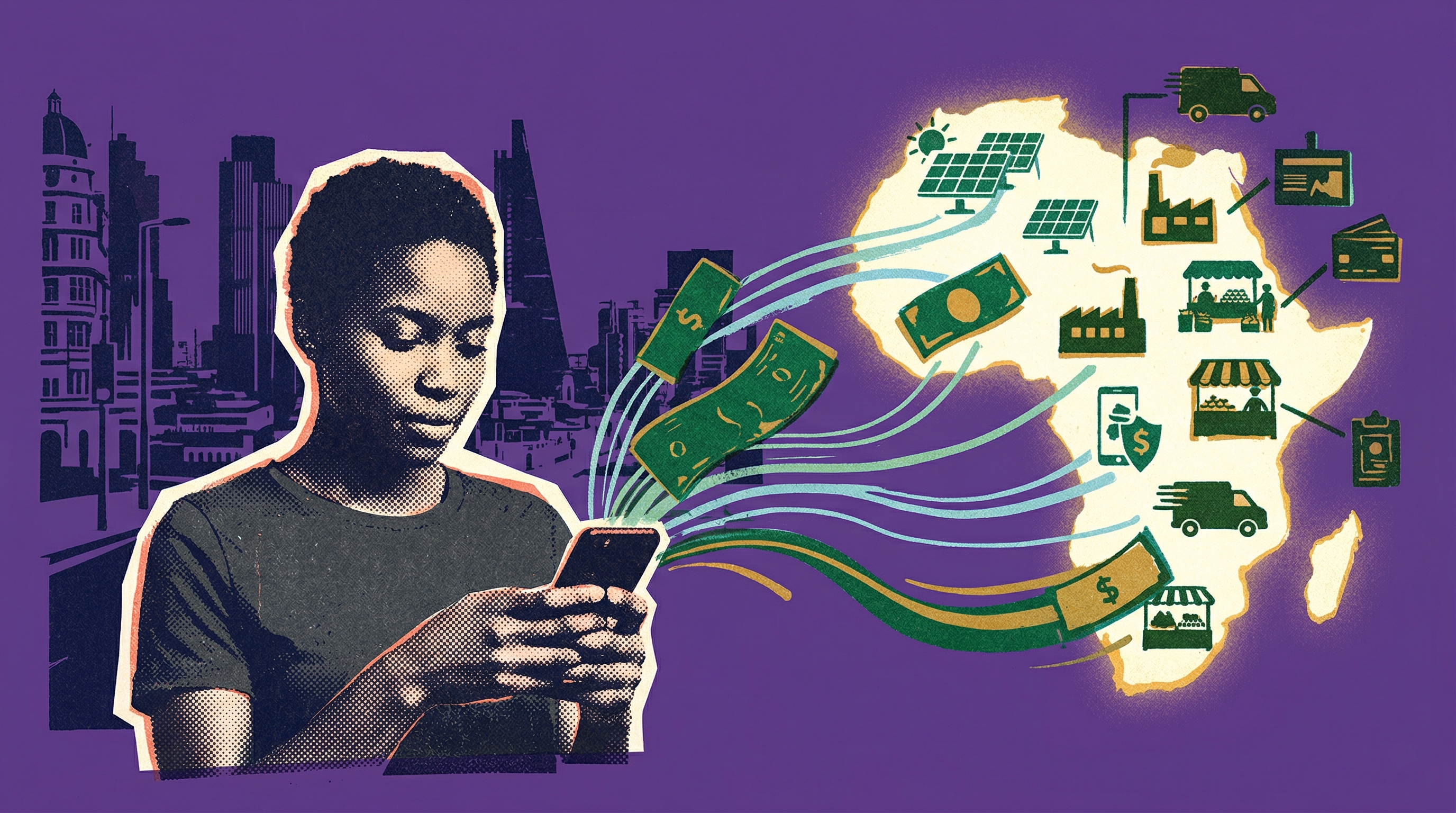
The dream sold by venture capital has started to fray. African startups attracted $3.6 billion in Venture Capital (VC) funding in 2024, even after a 20% decline from the previous year. On the surface, this looks like momentum. But underneath, the numbers tell a different story. More than half of these startups fail. In some countries, failure rates approach 75%. Why? Because the VC model wasn’t built for Africa. It expects speed, scale, and exits. Africa demands patience, context, and staying power.
A Silicon Valley playbook designed for mature markets with deep pockets is being forced onto fragmented economies where infrastructure gaps are wide and consumer spending is thin. WhereIsMyTransport burned through $27 million and still couldn’t make it work. The issue wasn’t the quality of the ideas, but that the model didn’t fit.
This shows a mismatch of models. We need to rethink what success means for startups on the continent. What kind of capital actually helps founders build for longevity, not just headlines? And who gets to decide what growth should look like?
The cracks were visible early, even as global names rushed in. SoftBank poured $400 million into Nigeria’s OPay, betting big on digital payments. The International Finance Corporation IFC launched multiple accelerator partnerships across Nigeria, Kenya, South Africa, and Egypt. Y Combinator, after first backing Wave in Senegal in 2012, had funded 31 African startups by 2022, most of them fintech. Everyone wanted in. Africa looked like the next breakout market.
From 2015 to 2022, investment in African startups surged from $0.4 billion to $6.5 billion. This flood of capital carried promises: fast growth, job creation, market disruption. Silicon Valley’s playbook—rapid scale, early exit—was repackaged for a continent still figuring out infrastructure and logistics.
The problem wasn’t just optimism. It was the assumption that what worked in California would work in Cairo or Nairobi. Large consumer markets, deep financial systems, and fast internet weren’t in place. What existed were fragmented economies and low-margin realities. Many startups spent their funding racing toward scale, often before confirming product-market fit or profitability. The push to replicate unicorn trajectories often ignored the pace at which African markets move.
Even with growth, unicorns stayed rare. The high expectations for returns clashed with local complexities. VC promised speed, but Africa’s success stories tend to move slowly, build trust, and then adapt locally. That tension created pressure. Founders were told to grow faster. Investors expected exits that rarely materialized.
VC did drive innovation. It funded fintechs, healthtech, and e-commerce ideas across the continent. But the cost of trying to copy-paste a model has become harder to ignore.
The slowdown didn't just show up in funding charts, it showed up in shutdowns. Over 50 African startups folded between 2013 and 2024. Almost half were in Nigeria, where ThePeer, HerRyde, MVX, and Quizac shut down between 2022 and 2024. Dash and Lazerpay joined the list too, along with Kenya's Copia Global, MarketForce, and Gro Intelligence. StartupGraveyard confirms the count: 53 shuttered ventures so far, and more are still teetering.
54Gene was more than a startup, it was a symbol of biotech potential in Africa. The company raised $45 million across three rounds. It wanted to fix the continent's genomics data gap. Instead, it fell apart by July 2023. Leadership changes, strategic missteps, and operational challenges, especially in its diagnostics unit, wrecked internal stability. Salaries were slashed, layoffs began, and eventually, operations froze.
Then there's Lazerpay. Over 3,000 businesses onboarded. It still shut down in 2023 after failing to secure more capital. Emmanuel Njoku, the founder, was candid: they tried to stay alive, but the money ran out. Dash collapsed in late 2023 with $86.1 million in backing amid financial misconduct and regulatory troubles.
The wave didn't stop in 2024. Early 2025 brought even more high-profile collapses. Nigerian fintech Okra had raised over $16.5 million with global backing and a strong promise around open banking. But regulatory inertia killed momentum. Nigeria's open banking framework remained unenforced, and banks had little incentive to share data. Meanwhile, infrastructure costs surged due to the naira's sharp depreciation. The product quietly disappeared from the market in May 2025, without formal closure. Former CEO Fara Ashiru and analysts pointed to a core issue: banks lacked the regulatory pressure to cooperate. Edukoya folded in February 2025 after raising $3.5 million, citing low demand, poor runway, and market headwinds.
Across the board, the reasons echo: currency depreciation, lack of follow-on funding, regulation delays, poor product-market fit, among other challenges. H1 2024 numbers are telling: African startups raised only $780 million, a 57% drop compared to the same period the year before. Even quarterly, funding declined by 5.4% between Q1 2024 and Q1 2025, signaling that the downward trend hasn’t stopped. Startups that couldn't survive the gap burned out.
The numbers don't just reflect isolated mistakes. High ambition met hard markets. The spread of failures hasn't killed the appetite for innovation, but it's forced a shift in how success is defined, and who stays standing when the hype clears. Nigeria, Kenya, and Ghana were all affected.
Why Copy-Paste Never Works
This mismatch is playing out across boardrooms, term sheets, and pitch decks. A model shaped in California doesn’t easily map onto realities where 85% of people work in the informal sector and half the GDP comes from it. In Sub-Saharan Africa, most consumers remain unbanked, broadband is costly, and more than 50% of the population lacks electricity. That’s not an edge case—that’s the environment.
Mobile penetration was just 46% in 2021, and forecasts only push that number to 50% by 2025. So when founders pitch digital-first ideas to investors with scale-driven expectations, the gap is already baked in. Infrastructure limits reach. Policy shifts blindside planning. Founders can’t plan three years ahead when tax rules change overnight or regulators freeze entire sectors like fintech or health with one memo.
The startup playbook built on "burn and scale" hasn’t adapted. Instead of measured experiments, we see premature scaling. Instead of learning from the ground, founders feel pressure to show traction early, even if the market isn’t ready. No surprise, then, that 54% of African startups fail within their first few years. In some countries like Ethiopia and Rwanda, estimates suggest failure rates can reach 70–75%. These aren’t outliers; they reflect a system designed for other economies.
The obsession with unicorns and market dominance just doesn’t translate. Most sectors across Africa, like logistics, health, and edtech, are so localized that one player rarely wins. Investors hoping for monopoly-style returns end up disappointed. The likes of Lazerpay or Edukoya didn't collapse for lack of ambition, the model itself demands outcomes that ignore context.
Currency swings make it worse. Nigerian startups saw their revenue slashed in half when the naira dropped. Investors expecting dollar returns found their portfolios shrinking fast. Efayomi Carr, principal at Flourish Ventures, points to this clearly—five of their companies operate in Nigeria, and inflation alone hits their returns hard. Nadia Kouassi, Head of Research at the African Private Capital Association (AVCA), also flagged how currency volatility now distorts risk assessments entirely.
Tomi Davies, president of the African Business Angel Network (ABAN), has been saying this for years. Building in Africa is more about adapting than blitzing. That advice keeps getting sidelined, and founders are left carrying the weight of a framework that was never built with them in mind.
Building Without the Hype
The break from Silicon Valley logic is already happening. Across Africa, founders, communities, and capital providers are building systems that don’t rely on exits or blitzscale tactics to stay alive. These alternatives aren’t just filling gaps, they're responding to how African businesses actually work.
Impact investing leads that shift. ShEquity has backed six women-led ventures across Sub-Saharan Africa, reaching 13.5 million people through sectors like health, climate, and education. Acumen has committed over $80 million to African companies since 2006, working in off-grid energy, agriculture, and healthcare. In East Africa alone, those investments have touched 123 million lives. Their next move, a $250 million effort, focuses on energy access and climate response. Pauline Koelbl, founder and managing partner of ShEquity puts it plainly: smart capital has to create lasting value, not just returns.
Blended finance helps take on bigger risks. The African Development Bank points to a $130 billion yearly shortfall in infrastructure funding. Blended models use public, private, and philanthropic capital to close that gap. Development finance institutions and foundations absorb early risk, making large projects more attractive to commercial investors.
There’s also a push toward ownership. Cooperative tech models let workers participate in decision-making and share profits. In Ghana, delivery riders are testing new cooperative platforms. In Tanzania, Maasai women are using digital credit tools through co-ops to build financial history. These shifts don’t just protect workers, they give them power.
Community-backed ventures are going local with funding too. Crowdfunding platforms like M-Changa in Kenya and Crowdfund Africa in Nigeria use mobile money and USSD codes to raise funds without needing smartphones or bank accounts. Diaspora capital adds to this pool, often moving through informal syndicates more responsive than banks.
Revenue-based financing is catching on. Startups borrow against future revenue, giving up no equity. That flexibility matters in markets where predictability is rare. With the global RBF market headed toward $14.5 billion by 2034, African founders are paying attention. ThriveAgric’s move to debt-backed funding and Sokowatch’s hybrid credit model show what this can look like in practice.
Then there’s the Catalyst Fund. It’s supported 61 startups across emerging markets, including Africa, helping them raise $573 million and serve 13.2 million low-income customers. Ventures like Crop2Cash, HealthDart, and Kazi show how hands-on support and catalytic capital can drive serious reach. Marvin H. Coleby, investor and founder of Raise, puts it plainly: ask how to fund your business without losing control. Many are already doing that.
That shift in capital models only makes sense when paired with a new definition of success. Not the billion-dollar exit, but the ability to stick around, solve real problems, and scale what works. Agriculture, for instance, employs 60% of Africa’s workforce and generates 40% of the continent’s GDP, yet attracts only 4% of long-term financial investment. That’s nowhere near the 40–50% required to meet actual demand.
Patient capital becomes non-negotiable. Hello Tractor used this kind of support to expand access to farm equipment, helping improve yields and incomes. In healthcare, the African Development Bank’s $3 billion plan to grow local vaccine manufacturing over ten years is one of the few examples of capital flowing with the kind of patience systemic change needs.
Looking outward can help. China’s long-term infrastructure investment or India’s frugal innovation offer lessons, not as templates but as reminders that slow, grounded progress is often more durable. Frugal approaches like India’s turn constraints into scalable, low-cost solutions that meet people where they are.
Africa doesn’t need to replicate someone else’s growth path. Aligning finance with long-term outcomes, especially in climate, health, and education, builds systems that don’t collapse when the hype fades.
So if we're serious about building something that lasts, the obsession with unicorns has to stop. Africa doesn’t need more billion-dollar stories with no staying power. It needs businesses that can survive volatility, serve real people, and generate steady returns over time. Dr. Houda Ghozzi, founder and CEO of Open Startup said it succinctly: the real signal is when more people are willing to try, and more ventures start earning revenue and actually grow.
Quick exits don’t build economies. They inflate egos, not employment. Job creation, profitability, and long-term usefulness should matter more than sky-high valuations. Chasing Silicon Valley’s formula doesn’t make sense when the context is completely different. What works in Menlo Park won’t automatically work in Lagos, Nairobi, or Dakar.
Investors who care about long-term returns should lean into patient capital and back teams that are close to the ground. Policymakers should rethink what they’re rewarding. Founders should stop pitching what sounds impressive and focus on what works.
What comes next depends on who is willing to fund and build differently. The real success story won’t come from the biggest exit, but from the businesses that stick around, hire local, and make life better. That’s how Africa wins, one useful, enduring business at a time.
Written By
Filed Under