Home•Stories•Insightful Articles
What Happens to a Pad After It's Used? In Nigeria, the Answer Is Complicated.
With no clear disposal path, menstrual waste becomes a silent threat, polluting land, water, and communities.
Counting What's Discarded
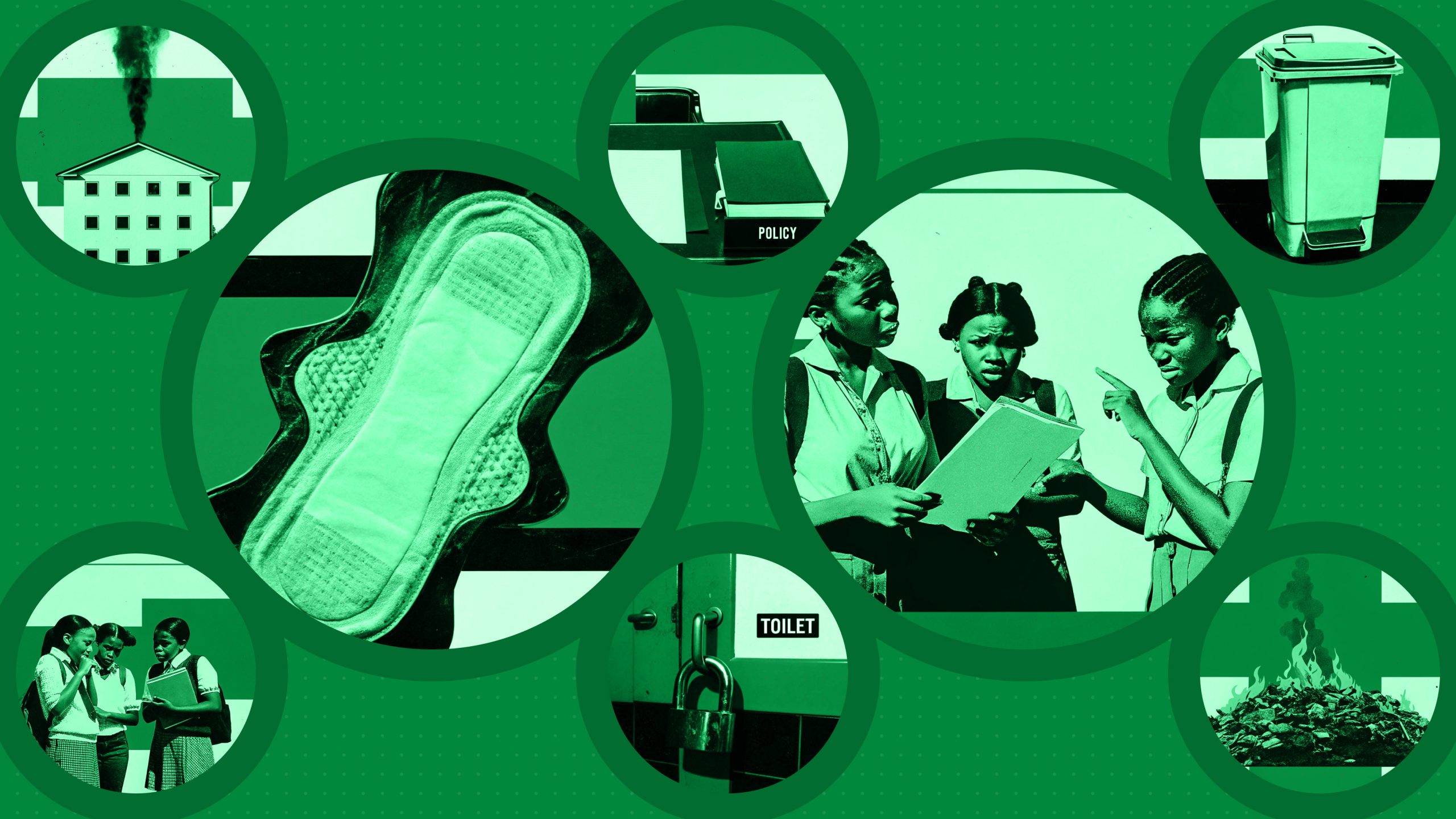
Used pads don’t vanish, they end up somewhere. Most people don’t think about where. That silence hides a growing problem. In Nigeria, the number of people using disposable menstrual products is rising fast. But there’s no clear plan for managing the waste left behind. A 2018 PMA2020 survey found that 52% of users aged 15 to 49 tossed used products into bins. Others threw them in latrines (22%), flushed them (13%), tossed them into bushes (7%), or burned them (10%). None of those options is safe.
I’ve met people who don’t even consider used pads as waste, just something to hide. But these items are often plastic-based. They can take between 500 years and 800 years to break down. Along the way, they leach chemicals, release microplastics, and spread disease. Pathogens like hepatitis and HIV survive on them, exposing waste workers and entire communities to health risks.
Comfort and convenience only go so far. What matters is what happens after use and how little control most people have over that process. Without access to clean water, proper bins, or education on safer alternatives like reusable pads or biodegradable ones, the cycle continues. And nobody’s really ready for where that leads.
The number, 740 million pads every month, doesn’t just disappear. It piles up. Quietly, invisibly, and dangerously. With an average of 20 disposable pads used per cycle, Nigeria adds around 8.8 billion pads to its waste stream every year. The scale becomes hard to ignore once you realise how long each pad lingers.
Around 37 million women and girls in the country deal with period poverty. Most depend on disposable pads, tampons, or panty liners. And most have few safe options for getting rid of them. People throw used products into pit latrines, flush them down toilets, dump them in the open, or burn them. In urban areas, some of this waste ends up in landfills. In rural or lower-income areas, it often ends up in the wrong place. School hostels sometimes don’t have disposal bins. So girls burn their used pads behind dorms or bury them nearby. That smell, the smoke, the pollution—it becomes part of normal life.
Surveys from Nigerian universities show how students manage their waste: burning, burying, and hiding. These methods create other problems: skin reactions, infections, polluted water, and airborne chemicals. Plastic pads don’t break down. They sit in the soil, in rivers, in dumps. The problem isn’t just poor waste habits. There’s often no infrastructure to support better ones. No dedicated bins. No one is explaining what safer disposal looks like.
In a country already struggling to manage 32 million metric tonnes of total waste each year, including 2.5 million tonnes of plastic, menstrual waste slips under the radar. According to the 2024 Environmental Performance Index (EPI), Nigeria ranks 105th globally in waste management, with a score of 29.7 out of 100. Weak policies, limited investment, and little public awareness feed the crisis.
Still, this isn’t unique to Nigeria. Countries like Kenya and Niger face similar issues. But national campaigns, better policies, and investment in school infrastructure are starting to make a difference. Their examples show that change is possible, even if it’s slow, uneven, and full of small steps.
Reality Check: New Options
The pressure builds differently in different places. Urban areas may have collection trucks and visible waste systems, but menstrual waste still disappears into general refuse. There's no separation, no labeling, just bags of waste with everything thrown together. Most waste workers don’t know what they’re handling, and even if they do, there’s no protocol for dealing with used pads or tampons. Segregation isn’t built into the system.
Rural communities, on the other hand, often don’t have waste systems at all. People burn their waste or toss it behind buildings. Menstrual products get buried with kitchen scraps or dumped into bushes. No bins, no disposal guidance, no safety checks. What starts as private care becomes a public health problem. Sanitary bins are rare. You’ll barely find them in public toilets, offices, schools, or even some hospitals. In their absence, women and girls find whatever option is available—flushing, hiding, burying. These aren’t choices; they’re survival tactics.
Then there’s the silence. Cultural stigma and discomfort around menstruation keep people from asking questions. Many girls only learn about periods through whispers from classmates. There’s no formal guidance on how to manage the waste, only trial and error. And when something goes wrong, when the toilet blocks or the water smells, no one links it back to menstrual products.
Nationally, no law speaks directly to menstrual waste. The Federal Environmental Protection Agency (FEPA) Act once focused on general waste, but FEPA itself was dissolved in 1999. Its duties moved to the Federal Ministry of Environment (FME), and today, the National Environmental Standards and Regulations Enforcement Agency (NESREA) handles environmental regulation. Still, none of these bodies have carved out space for menstrual waste in their policies. That leaves a legal void. Kenya is an example people often point to. Their national menstrual hygiene policy supports safer disposal, access to reusable products, and public education. Nigeria doesn’t have anything like that yet. Reusable pads and menstrual cups could help, but they depend on reliable water and clean bathrooms. Without those basics, even the best product becomes hard to use.
Still, access alone doesn’t change habits. You can hand someone a menstrual cup, but if they’ve never seen one used, or worse, if they’ve heard it’s unsafe or shameful, it ends up untouched. In many Nigerian communities, especially rural ones, reusable and biodegradable options feel foreign. Not because they aren’t useful, but because they don’t fit into the rhythm of what people already know. Cloth pads, menstrual cups, and organic products made from banana fiber or cotton might offer safety, savings, and fewer chemicals, but without context or conversation, they stay on the sidelines.
Affordability is another hurdle. Even if a menstrual cup costs less in the long run, the upfront price makes it inaccessible for many. Some women are still using newspapers, old clothes, or leaves, not out of preference, but because that’s what’s available. A pack of commercial pads, if you can find one in a remote town, might cost more than a family’s daily food budget. Go! Pads and BanaPads have tried to change this by turning banana stem waste into pads that are cheaper and easier to produce locally. They’re also creating jobs while doing it, which matters when you’re trying to convince a community to shift its practices.
But there’s a problem with the “biodegradable” label. Pads made from organic materials still need the right environment to break down. Nigerian landfills don’t offer that. They’re low-oxygen, methane-producing spaces where even biodegradable pads won’t degrade properly. Composting is a better option, but very few places are set up for it. That gap keeps the environmental promise of these products out of reach.
We’ve seen solutions work elsewhere. Rwanda’s SHE initiative, which mixes education with access to reusable pads, shows what’s possible. Nigeria could adapt something similar—school-based programs, village workshops, hands-on demonstrations. Not just handing out products, but talking openly about how they work and why they matter. Real change depends on more than what’s in someone’s bag. It depends on what they’ve been told, what they believe, and who’s willing to talk with them without shame.
Is Nigeria Ready Yet?
That kind of hands-on engagement doesn’t happen in isolation. The 234 Impact Tour 2024, for example, didn’t just hand out products and leave. It moved through Lagos, Jos, Ibadan, and Abuja, working directly with over 1,000 young people, most of them schoolgirls who needed more than supplies. They needed the chance to ask questions, share stories, and learn in spaces where periods weren’t treated like secrets. In Jos alone, more than 100 girls received reusable menstrual pads, which didn’t just help with money but also gave them a better, safer option they could trust.
You see similar energy in efforts like Pad-Up Creations. This isn’t just another NGO. They collect textile waste and turn it into washable sanitary pads. Real fabric, real sewing, real local hands. What makes it interesting is how they’ve blended recycling, education, and employment. They don’t just talk about menstrual hygiene—they make the pads, teach people how to use them, and create jobs along the way. Their work has drawn attention globally, not because it’s flashy, but because it’s working in places with very little.
In Abuja, the “Plastic for Pads” project flips the script again. Plastic trash becomes currency. Drop off your collected bottles, and you get a pack of reusable pads. It sounds simple, but the idea brings environmental cleanup and menstrual access into the same conversation, something we don’t see often enough.
Still, these efforts can’t grow without real support. The Danida Business Partnerships project is one example of what’s possible when international partners collaborate with local businesses. Danish organizations are bringing in recycling tech while Nigerians provide the know-how and context.
Projects like these need more than applause. They need policies that make it easier to do this kind of work at scale. They need schools on board, businesses willing to invest, and public conversations that stop treating menstruation like a side topic.
This kind of action doesn’t happen from policy papers alone. Real change starts when everyone, governments, schools, businesses, and communities, treat menstrual waste as the public issue it actually is. Nigeria can’t afford to keep menstrual hygiene tucked away in silence or handled through piecemeal solutions. Poor disposal isn’t just an inconvenience. It clogs sewage, pollutes water, spreads disease, and deepens stigma. Girls burning pads behind schools or flushing them in toilets already know this. They live it.
Regulations need to catch up. Gender-sensitive disposal systems, not vague mentions in outdated waste laws. School bathrooms with bins, not locked stalls. Products that biodegrade or can be reused safely, not just more plastic.
We’ve seen what works. Those aren’t pilot projects anymore. They’re proof. So if you’re in government, push for policy. If you’re in business, create better options. If you’re in a school, talk openly. Every effort counts. Menstrual waste isn’t someone else’s problem. It’s ours. All of us.
Written By
Ezinne Okoroafor is a contributing writer at Susinsight, exploring systems and progress across Africa.
Filed Under