Home•Stories•Insightful Articles
Namibia's Daring Quest to Decarbonize the Steel Industry
In a bold move, Namibia’s Oshivela Project aims to reshape steel production by cutting emissions entirely, marking a historic shift forward.
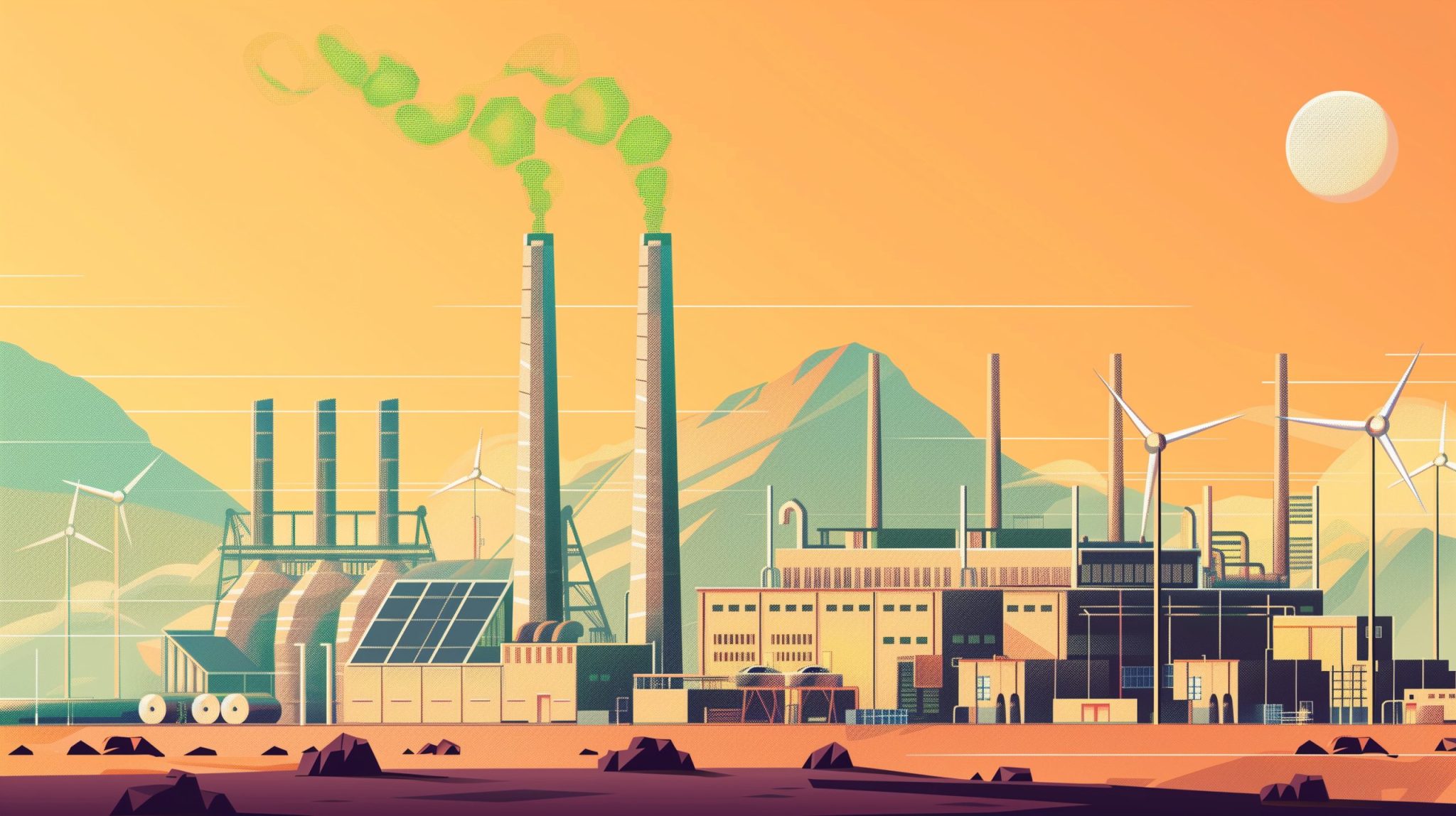
Embarking on a new era of sustainable industrial practices, the Oshivela Project, also known as the HyIron Oshivela Project, is ready to make its mark in history. Scheduled to start operations in the latter half of 2024, this pioneering initiative will reveal Africa's first industrial production of iron with a net zero emissions footprint. Using the ingenious HyIron technology, a process that utilizes renewable energy resources, the project is set to produce an annual output of 15,000 metric tons of Direct Reduced Iron (DRI) during its initial phase.
This groundbreaking endeavor is not merely a showcase of technological prowess; it represents a crucial step toward meeting the global iron demand, which is projected to rise to 2.2 billion metric tons per year by 2030. The project's innovative approach not only reduces greenhouse gas emissions but also serves as a symbol of hope for a sustainable future in industrial production.
Embodying the spirit of international collaboration, the Oshivela project stands as a testament to the unity of nations in pursuit of a common goal. It is a partnership between two continents, with Namibian and German companies joining forces in a shared sustainability vision. Led by CO2GRAB, HyIron GmbH, and TS Elino GmbH in Germany, and supported by the German Federal Ministry of Economics and Technology, this endeavor has garnered a substantial commitment of over €13 million ($13.8 million) over the next two years, solidifying the unity of innovation and dedication.
The Green Industrial Awakening
As Africa stands at the precipice of the fourth industrial revolution, navigating the United Nations' 2016–2025 Third Industrial Development Decade (IDDA III), the continent finds itself at a pivotal crossroads. The clarion call for a green industrial revolution resonates with urgency, driven by the far-reaching impacts of the climate crisis that continue to reverberate across the African landscape.
Manufacturing is key to Africa's development, presenting unparalleled opportunities and formidable obstacles. As nations embark on the pursuit of economic transformation, they face a daunting dilemma: how to industrialize while simultaneously reducing carbon emissions? The answer may lie in an unwavering embrace of a green industrial revolution, a systematic transition of carbon-intensive industries toward sustainable practices, facilitated by environmentally conscious policies and strategic investments.
Yet, the path to sustainable industrialization is fraught with hurdles, especially for sectors like steelmaking, where traditional dirty processes inflict grievous harm upon the environment. The energy-intensive steel industry stands as a major contributor to climate change, with 1.83 tons of carbon dioxide released into the atmosphere for every ton of steel produced. In the year 2020 alone, global steel production spewed 1.86 billion tons of CO2, accounting for 7-9% of all human-caused emissions—a sobering statistic that underscores the urgency of the matter at hand.
As Africa contends with the twin challenges of industrialization and climate change, the imperative for a green revolution grows ever more crucial. It is a clarion call for urgent, necessary transformation to ensure that Africa's prosperity does not come at the expense of environmental ruin. Only by determinedly adopting sustainable practices can Africa realize a future where economic development and environmental stewardship walk hand-in-hand, paving the way for a prosperous and sustainable tomorrow.
HyIron's Decarbonizing Innovation
At the heart of the Oshivela Decarbonization Plant lies the HyIron process, an innovative methodology that harnesses the power of green hydrogen to facilitate the processing of iron ore within a rotary kiln. This cutting-edge technology revolves around the direct reduction of iron (DRI), a process wherein iron ore undergoes reduction, shedding its oxygen content in the process. Developed in Germany and now making its debut implementation in Namibia, this technology represents a pivotal stride towards greener industrial practices within the African context.
Traditionally, fossil hydrocarbons, such as cooking coals, have served as the primary reduction agents in iron production processes. However, the HyIron process distinguishes itself by substituting these hydrocarbons with green hydrogen, a crucial shift that minimizes carbon emissions and ushers in an era of more sustainable and eco-friendly steel production methods. As green hydrogen interacts with the iron ore within the furnace at ambient pressure, it reverts to water, which is subsequently recycled within the system. This closed-loop approach not only mitigates environmental impact but also underscores the viability of sustainable industrial practices.
One of the HyIron technology's salient features lies in its modularity, which facilitates the swift expansion of production capacities. Presently, a feasibility study is underway, evaluating the prospects of mid-term capacity expansion to 1 million metric tons of green iron annually. This endeavor stands to curtail greenhouse gas emissions by a notable 1.8 million metric tons of CO2 equivalent each year, a significant stride towards a greener future. In a landscape where solar and wind power reign as the most economically feasible energy resources, it becomes imperative for emerging production capacities to align with these carbon-free alternatives. Such adaptability renders the HyIron technology not only highly scalable but also suitable for adoption across diverse industries within the African continent.
Transcontinental Eco-Partnership
At the core of the Oshivela project lies a robust partnership between Namibia and the German federal government, a union fortified by a shared commitment to environmental stewardship and innovation. With a substantial contribution of €13 million from the German federal government, this venture aims to harness renewable energy sources to produce 15,000 metric tons of iron annually, all while completely eradicating carbon emissions from the process. This feat of engineering prowess and environmental responsibility births a new phase in industrial production, one where sustainability is not just a goal but a guiding principle.
Namibia's agreement with the European Union solidifies its status as a trailblazer: a pioneering force in sustainable energy production. As the first African nation to forge such an agreement, Namibia has strategically positioned itself at the forefront of the global transition towards cleaner energy sources. This partnership, rooted in mutual trust and political dialogue, lays the groundwork for a future fueled by renewable hydrogen and sustainable critical raw materials value chains. It is a testament to the country's dedication to a more sustainable and prosperous future, one built on the pillars of innovation, cooperation, and environmental responsibility.
The significance of international collaborations, such as the one between Namibia, Germany, and the EU, cannot be overstated in the context of advancing Africa's sustainable development goals. Transcending mere economic transactions, these collaborations serve as catalysts for impact, with far-reaching implications for technology transfer, economic development, and environmental sustainability. Through joint research and development initiatives, African nations can leverage the expertise and resources of their international partners to strengthen scientific capabilities and drive innovation. Moreover, the transfer of technology and expertise from developed nations to African countries, as exemplified by the Oshivela Project, holds the promise of unlocking new avenues for economic growth and job creation.
Yet the impact of these collaborations extends far beyond the benefits of economics. By embracing renewable energy and producing zero emissions, projects like Oshivela are paving the way for a more sustainable future, aligning with both global and African sustainable development goals. By investing in local workforce training and capacity building, these projects are empowering communities and fostering a culture of innovation and entrepreneurship, sowing the seeds for a prosperous and environmentally conscious tomorrow.
Socioeconomic and Ecological Gains
The Oshivela project promises major economic and environmental gains for Namibia. Most notably, it's expected to create around 50 new job opportunities for the local populace. This initiative not only boosts employment rates but also equips Namibians with invaluable skills for the growing green economy. Moreover, the venture has attracted a substantial $600 million investment, including the €13 million contribution from the German government. This influx of foreign capital holds the potential to catalyze further economic activity and industrial investment within Namibia.
Industrially, Oshivela is poised to revolutionize Namibia's iron and steel sector. Utilizing local iron ore to manufacture Direct Reduced Iron domestically, will create a ripple effect of job creation along the value chain, driving broader economic development. On the environmental front, the project promises substantial reductions in carbon emissions. Expected to circumvent 27,000 CO2 emissions annually, equivalent to 50% of Namibia's power industry emissions, the project is slated to scale up its capacity to produce 1 million tonnes of green iron annually in the mid-term, thereby curbing greenhouse gas emissions by a noteworthy 1.8 million metric tons per year. Central to these environmental gains is the cutting-edge HyIron process, which uses green hydrogen to process iron ore in rotary kilns. This innovative method slashes emissions while producing more sustainable steel.
Igniting Africa's Green Transformation
The impacts of the Oshivela Project could be felt across other regions, not just in Namibia. Its success has the potential to serve as a driving force that sparks a broader shift of similar ventures throughout Africa. By showcasing the feasibility and viability of green technology adoption, this pioneering project inspires other nations to explore comparable partnerships and technologies. This collective movement towards sustainability heralds a new phase of economic growth, marked by job creation, infrastructure development, and foreign investment inflows.
Crucially, the Oshivela Project not only addresses immediate environmental concerns but also lays the groundwork for a positive impact that reverberates far into the future. Spearheading eco-friendly steel production methods sets a precedent for replication and adaptation across the continent. As other African nations witness the tangible benefits of such initiatives, they are incentivized to embrace similar strategies, fostering a continent-wide transition towards sustainable industrial practices.
Looking ahead, the role of international collaborations in Africa's sustainable development narrative cannot be overstated. The Oshivela Project exemplifies the potential of strategic partnerships in advancing shared goals of environmental stewardship and economic prosperity. As nations pool their resources and expertise, they accelerate progress toward sustainability and foster a culture of innovation and knowledge-sharing, igniting a domino effect that propels the continent towards a greener, more prosperous future.
This catalyst for transformation extends far beyond the confines of a single project or nation. It represents a paradigm shift, a collective awakening to the imperative of harmonizing economic growth with environmental preservation. As the ripples of Namibia's green industrial initiative continue to spread, they carry the promise of a sustainable tomorrow where Africa's industrial ambitions are realized in harmony with the planet's well-being.
Written By
Adetoro Adetayo is a contributing writer at Susinsight, exploring systems and progress across Africa.
Filed Under