Home•Stories•Insightful Articles
Africa’s Smart Cities Are Growing. So Are the Gaps.
While investors fund high-tech hubs and luxury towers, informal settlements are razed and millions remain offline. What does inclusion really look like?
Editor's note: After exploring Africa's innovative approaches to smart cities in our previous article, we now examine the growing challenges of ensuring these digital urban visions truly work for everyone.
Who Shapes Our Cities?
Imagine living in a city where everything works: traffic flows, energy use is efficient, and waste disappears with a swipe. Now imagine that same city, but only a few can afford to live there. That’s the contrast playing out as smart city plans expand across Africa.
By 2050, 70% of the world will live in urban areas, responsible for 70% of global emissions. Half of these people will be in towns with fewer than 500,000 residents, places often overlooked by grand urban tech visions.
In cities like Kigali and Lagos, smart city projects promise cleaner, more connected futures. But who are they built for? These projects often favor digital innovation over affordability, sidelining those already struggling for access to housing, water, and transit. As the continent urbanizes faster than anywhere else, this isn't just about technology. It’s about whose needs are being met and whose are ignored. The answers shape more than cities. They shape lives.
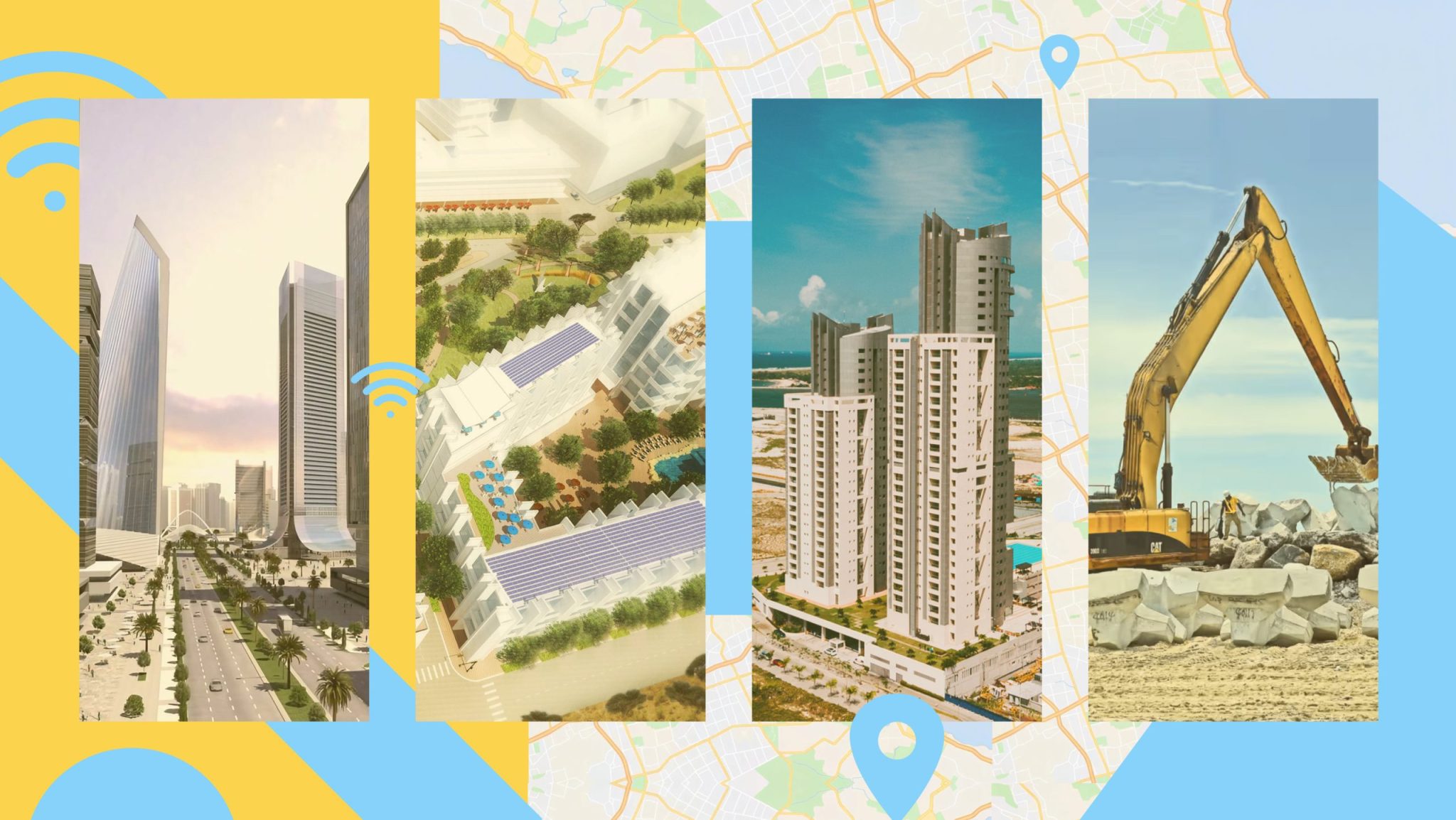
African Cities like Eko Atlantic, Konza Technopolis, and Kigali Innovation City are often highlighted as proof that Africa is catching up with digital urban planning. But the way these projects are imagined and built says a lot about who has power in shaping a city—and who gets left out.
Eko Atlantic, built on reclaimed land in Lagos, promises to fix Nigeria’s real estate shortage. But with luxury towers and high-end infrastructure, it feels far removed from the housing struggles faced by millions in Lagos. Konza Technopolis aims to become Kenya’s Silicon Savannah, yet many Kenyans wonder if a tech hub surrounded by fences can genuinely reflect their day-to-day needs. In Kigali, the Innovation City mirrors Rwanda’s ambition to lead in digital growth, but affordability and access remain major concerns.
Smart cities often lean on digital solutions—apps, sensors, big data—to solve complex urban issues. This sounds promising. But without deep public involvement, these solutions risk being tools for a select few. The idea that algorithms and infrastructure can substitute for inclusive planning is convenient, but not realistic. Urban development shaped mostly by market forces and tech companies tends to drift away from equity, even if it checks all the right boxes on efficiency.
The Invisible Majority
This digital divide doesn’t just exist, it defines who gets counted in smart city plans and who doesn’t. While developers pitch smart cities as answers to urban challenges, the cost of entry shuts out most people. Smart homes, digitized transport, and connected healthcare may look impressive on brochures, but for low-income families, they remain out of reach.
Only 35% of people in developing countries have internet access, compared to over 80% in wealthier nations, according to the EDISON Alliance. That gap isn’t just about devices or connections. It means millions are effectively invisible to systems built to serve the connected. The Akwa Millennium City in Nigeria shows how smart housing can quickly become unaffordable, turning a well-intentioned plan into a gated privilege.
Informal settlements are another layer of exclusion. In many African cities, these communities, home to millions, aren’t part of the plan. They’re treated like obstacles to remove. Between 2010 and 2016 alone, reports show that Nigeria experienced approximately 370 cases of displacements in urban areas, translating into over 3 million project-affected persons (PAPs). In Lagos, over 30,000 people were forcibly evicted from settlements as a result of the government's efforts to redevelop the waterfront communities. In Nairobi, a toll road backed by Chinese investment left over 40,000 homeless.
This isn’t just about numbers. It's about what kind of city gets built when the loudest voices are the ones with stable internet, legal titles, and purchasing power. If you're not online, not in the formal economy, or not living in areas marked for development, you're likely not included in the vision at all.
Many people still don’t have the digital skills or access needed to even engage with smart infrastructure. And when services shift to apps or platforms, those left behind aren’t just inconvenienced, they're excluded from healthcare, education, and employment systems that are becoming more digital every day. That kind of design doesn’t just ignore inequality, it deepens it.
These gaps in access to clean air, water, and public services don’t happen by accident, they’re often baked into the design choices of smart city projects. When tech-forward development starts with upscale goals and high-end infrastructure, someone always pays the price. And usually, it’s those already living with less.
Building smart cities isn't clean work. Massive land clearings and resource-heavy materials like steel and cement drive up emissions and strip ecosystems. According to a joint FAO and UNEP report, 420 million hectares of forest have been lost since 1990 due to land conversion. Right now, about 10 million hectares are still being cleared every year. This is a health risk for people who live near construction zones or who rely on those green spaces for food and water.
Cape Town’s Smart City Initiative, despite its tech-driven push, has done little to change this pattern. Investments have flowed into high-end infrastructure, yet many low-income neighborhoods still wait for clean water and working public transport. In Kigali, Rwanda, the Innovation City’s $2 billion price tag raises questions. High-speed internet and modern buildings look impressive, but when affordable housing and clean water are still out of reach, the priorities feel lopsided.
This is what environmental inequality looks like. One part of the city enjoys green roofs and filtered air. Another breathes in dust and walks miles for water. When clean technology becomes a luxury instead of a basic service, the promise of smart cities rings hollow for many. These trade-offs don’t just reflect policy gaps—they reflect who the city was built to serve.
Building Bridges, Not Walls
That kind of exclusionary planning doesn’t have to be the norm. If smart cities are really meant for everyone, then we need to shift how they’re built and who they’re built for. You can’t call a city smart if whole communities can’t live there, can’t connect online, or can’t participate in decisions that affect them.
Affordable housing is the foundation. The Kilamba New City in Angola gets this partially right. Over 20,000 units offer a mix of options, from modest apartments to high-end villas. It’s not perfect, but it shows that mixed-income housing is doable. Madagascar’s Tsingy De Bemaraha project adds another layer by using energy-efficient designs that lower costs for residents while reducing environmental damage.
But housing is only one part. If people can’t access the internet or don’t know how to use it, they’re still left out. Free or low-cost public Wi-Fi and digital literacy programs can fix that. Without them, smart services stay out of reach. And unless cities start subsidizing data and devices, low-income families won’t catch up.
Upgrading informal settlements and engaging in participatory governance, instead of erasing them, is another step toward fairness. The Utshani Fund in Durban and Rwanda’s Off-Grid Solar Market show how that kind of inclusion can work. People get to stay in their communities while getting better services.
And then there’s green tech—not the fancy kind for rich districts, but things that actually help. Solar mini-grids for homes and businesses, rainwater harvesting for clean water, and city farming that feeds families and creates jobs. These aren’t flashy solutions, but they work. Smart cities won’t work if they only serve the already-connected. The real challenge is building something that includes everyone. That’s where the planning needs to start.
Transparent urban planning only works when people are actually invited into the room and not just to sit and listen, but to speak, shape, and decide. That includes local businesses, residents, and grassroots organizations who often know the area better than any consultant or imported expert. Without their voices, smart cities risk becoming polished products designed for someone else entirely.
Funding matters just as much. The cost of smart infrastructure can’t be passed down to the people it’s meant to help. Creative models like public-private partnerships have potential, but only if there’s real public oversight. Communities shouldn’t wake up to find private companies controlling their public spaces or digital infrastructure. Grants, subsidies, and progressive taxation can help make these technologies accessible where they’re needed most.
Pooling regional resources makes sense, too. Governments across Africa could cut costs and speed up progress through shared procurement and smarter collaboration. Think of cities sharing tools, data, and tech strategies instead of duplicating the same effort over and over.
That’s where international support can go beyond money. Cities don’t just need loans; they need skills, tools, and reliable knowledge. The Smart Africa Initiative offers a working model combining African Union leadership, ITU expertise, and other partners to deliver both digital and practical support. What matters most here isn’t flashy innovation. It’s making sure any help leads to affordable, useful, and inclusive solutions. If smart cities in Africa are going to work, the people who live in them have to be the ones building them, shaping them, and benefiting from them.
That tension between promise and exclusion keeps coming up. Smart cities in Africa can’t just be high-tech showcases with shiny apps and gated communities. They have to respond to the realities on the ground—informal settlements, digital gaps, unequal access, and environmental risks that aren’t going anywhere.
The real test is simple: who gets to benefit? If we’re only building for the wealthy few, then we’re repeating the same pattern that pushed millions into poor housing, weak infrastructure, and digital shadows. Cities like Lagos, Nairobi, Kigali, and Cape Town have shown both the risks and the possibilities.
There’s still time to shift the narrative. Policymakers, planners, investors—you don’t have to start from scratch, but you do need to listen differently, design differently, and share power. You, the reader, get to ask the most important question: Who is this city for? Until smart cities answer that honestly, with solutions that include everyone, they’ll never really be smart enough.
Written By
Salamatu Alabi is a contributing writer at Susinsight, exploring systems and progress across Africa.
Filed Under