Home•Stories•Insightful Articles
The Complex Balance of Tanzania's Ngorongoro Conservation Ordinance
Over six decades after Maasai pastoralists were allowed to live alongside wildlife, this pioneering experiment reveals hard truths about who decides shared land use.
Land of Dual Purpose
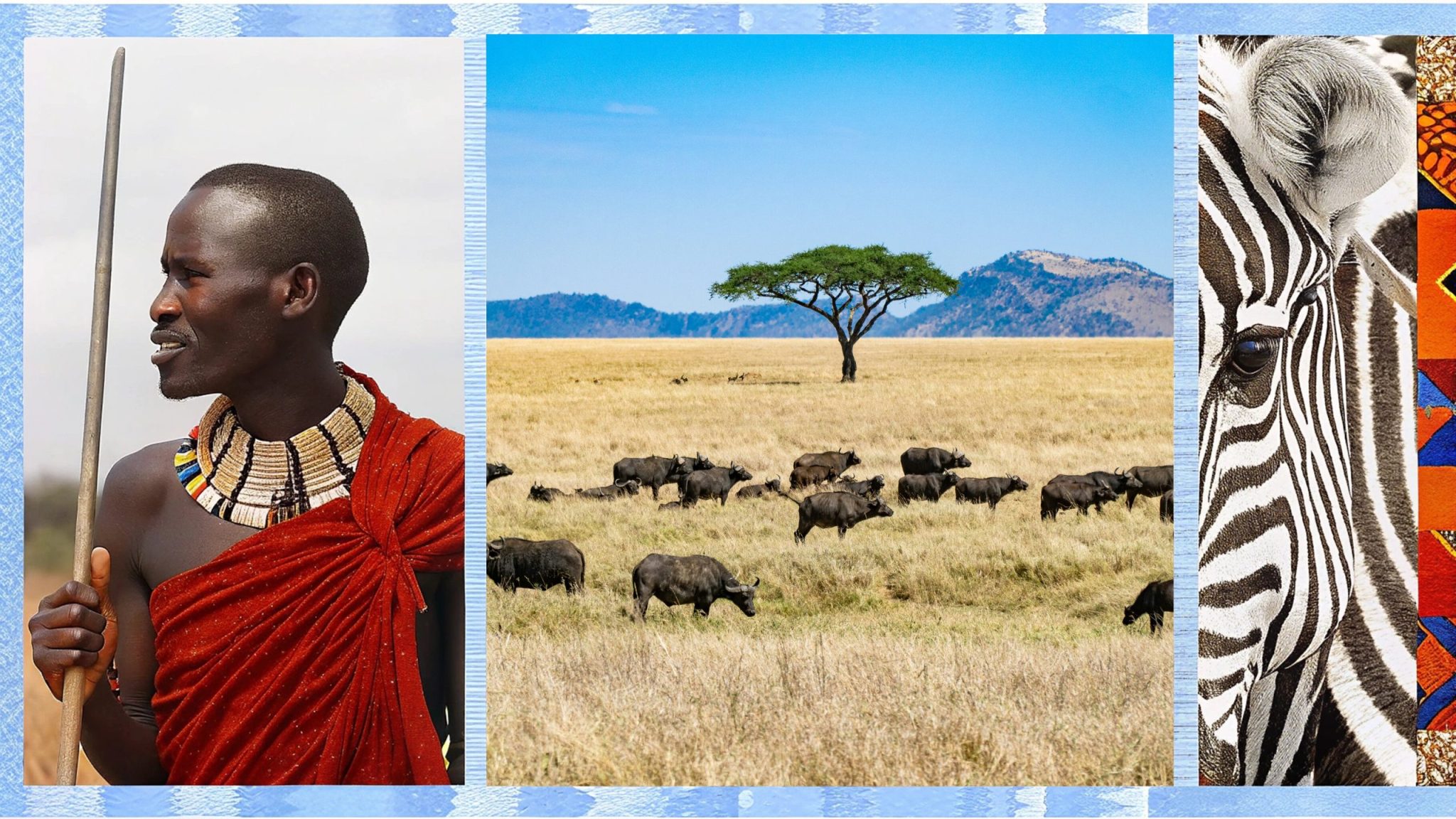
Hard lines between people and nature haven’t always worked. In 1959, Tanzania took a different route. The government passed the Ngorongoro Conservation Ordinance, creating a multiple land-use area across 8,292 square kilometers. The goal was clear: allow semi-nomadic Maasai pastoralists to live and graze their 275,000 livestock alongside some of Africa’s most iconic wildlife, within the same protected space. About 20,000 Maasai were there when this began. Lions, wildebeests, zebras, hyenas, and elephants were, too.
Maasai pastoralism, especially rotational grazing, already helped maintain ecological stability. Rather than move them out like in the nearby Serengeti, officials allowed them to stay, though not always for the right reasons. Conflict had grown since the Maasai’s earlier eviction. Ngorongoro Conservation Ordinance tried to fix that without repeating the same exclusion.
Today, the area is often used as an example. Some call it visionary. Others call it flawed. Both are true. The world still deals with similar tensions. Development expands. Populations grow. Habitats shrink. And decisions keep getting harder.
We’ve heard calls for balance before. But what does that look like? In Ngorongoro, it meant shared grazing lands, collective decision-making, and compromise. It also meant restricted zones, broken promises, and complicated trade-offs.
What happened in 1959 still matters. Not because it was perfect. But because it tried something different and left a record of what worked, what didn’t, and what was ignored. This article reflects on that attempt, not to judge it, but to learn from it. Because ignoring history doesn’t stop the problem. It just makes us repeat it.
The experiment in 1959 didn’t happen in a vacuum. Eight years earlier, the Serengeti National Park had been carved out and declared off-limits to people. Wildlife took priority. Around 3,000 lions, 1,000 leopards, 5,000 elephants, and more than 500 bird species were placed at the center of protection efforts. The park also became the stage for the world’s largest land mammal migration: 1.5 million wildebeest and 250,000 zebras.
But the Maasai were already there. They had grazed cattle across those same plains for generations. They knew the rhythm of the seasons, the migration paths, the safe zones, and the dry times. Losing access to their grazing land wasn’t just an inconvenience. It threatened their survival and identity. And they didn’t accept it quietly. Protests followed. Some vandalized park infrastructure. Others clashed with authorities. It wasn’t about rebellion. It was about being removed from what they knew as home.
Tanzania’s government eventually saw that the tension wasn’t going away. So they tried something different. Instead of forcing the Maasai out of Ngorongoro as well, they passed the Ngorongoro Conservation Ordinance. That decision separated Ngorongoro from the Serengeti and opened the door to something few had considered seriously at the time: letting people and wildlife share space.
This move officially made Ngorongoro a multiple land-use area. The Maasai could stay. They could herd, build, and live alongside wildlife. The land wouldn’t belong to one purpose only. It would serve both. That wasn’t common then. Most protected areas pushed people out. Ngorongoro did the opposite and asked the world to pay attention.
The Ngorongoro Conservation Ordinance didn’t just allow coexistence. It formalized it. Multiple land use wasn’t a theory, it was the law. Maasai pastoralism wasn’t sidelined. It was protected, at least on paper. Their rotational grazing and Alalili system, which set aside patches of land during the rainy season for use in the dry months, became part of a wider conservation framework. At the time, few would have expected traditional knowledge to shape environmental policy. But that’s exactly what happened.
This wasn’t a one-sided decision. The International Union for Conservation of Nature (IUCN) got involved, offering research and land-use plans that tried to merge ecological goals with local realities. They weren’t always aligned with colonial administrators, who mainly sought to calm tensions after the Maasai’s earlier removal from the Serengeti. Maasai leaders, on the other hand, focused on preserving a way of life that worked for them long before outsiders drew new borders.
None of this unfolded without friction. Some critics believed humans would damage habitats no matter what. Others saw the Maasai’s herding as a stabilizing force. Later studies confirmed what many locals already knew when livestock move, overgrazing doesn’t happen in the same way. Vegetation has a chance to recover.
Compared to the exclusion zones of Kenya’s Maasai Mara or South Africa’s Kruger during the same period, Ngorongoro tried a different formula. No walls, no mass removals. Still, there were limits. The plan assumed 8,000 residents. By 2017, there were over 93,000. Water sources were under pressure. So were the grazing zones. And agriculture, technically restricted, kept creeping in.
Population growth wasn’t the only challenge. Governance shifted over time. The original inclusion of the Hadza, Datoga, and Maasai in decision-making faded. Later policies made room for tourism developers, not community voices. Disputes followed—over land, over revenue, over who gets to decide what happens next. The 2007 UNESCO call to “balance people and nature” echoed the ordinance, but daily realities didn’t always reflect that balance.
Recognition came from other places, too. In 2011, the FAO acknowledged the Engaresero Maasai’s agro-pastoral practices as valuable to biodiversity. These weren’t abstract ideas. They were living systems, ones that kept ecosystems functioning. But appreciation often lagged behind action. While global institutions praised coexistence models, local communities continued to navigate restrictions, fragmented access, and decisions made without them.
Ngorongoro showed one thing clearly: displacement isn’t the only path. Conservation doesn’t need to mean eviction. But trusting local systems means giving them space to work, not just naming them in reports. Technical terms like multiple land-use mean little if people aren’t allowed to move freely or influence how the land is managed.
The pressure has grown. So have the expectations. What started as a response to conflict became a test of long-term cooperation. The lessons are there, hard-earned, complex, sometimes messy, but still there. What remains is to keep asking who gets to belong in conservation, and how those answers are chosen. The answers haven’t stayed the same. Neither have the stakes.
Balance Breaking Point
The experiment didn’t unravel all at once. Pressure built slowly, with more than 90,000 people living in the Ngorongoro Conservation Area. Add about 250,000 livestock per year. The stress on land and water became hard to ignore. Traditional grazing paths, once open and reliable, now crossed into restricted zones. Families had to make difficult choices, walk farther for water, or risk fines for entering areas now off-limits.
After the 1959 ordinance, the Maasai were legally allowed to stay. But new policies arrived later, and many of them worked around, rather than with, the community. Grazing permits introduced during the 1980s cut herd access by as much as 50%-70%. Livestock were banned seasonally from crater viewpoints. Pastoral movement, essential to the Alalili system, was sliced into pieces. Meanwhile, safari roads expanded. So did luxury lodges, often placed near watering holes critical for both animals and cattle.
During droughts, survival became a gamble. A 1996 IUCN report described how livestock died in large numbers, with Maasai herds losing a significant proportion of their cattle. Water scarcity wasn’t abstract, it came with real losses. Competition between cattle and wildlife pushed both to their limits. And the tension wasn’t limited to Tanzania.
In Kenya’s Maasai Mara, restricting pastoral mobility led to falling livestock productivity since 1970. Between 1994 and 2004, in Tanzania’s Simanjiro District, around 50,000 hectares of Maasai land shifted to commercial farming. These examples show a pattern. Indigenous groups weren’t treated as co-managers. They were treated as background. In Ngorongoro, that pattern took shape through decisions like the 2018 Loliondo land allocation. The government handed hunting concessions to Otterlo Business Corporation, a firm based in Dubai. Around 70,000 pastoralists were displaced. Their representatives were not part of the conversation.
Then there are the stories that don’t show up in numbers. The FAO gathered oral histories from elders who remembered the 1959 relocation. Some spoke of losing access to burial sites in the Serengeti. Others described rituals disrupted or abandoned. These memories challenge the official record, which framed the Maasai as willing participants. Their words point to a different reality, one shaped by pressure, not choice.
Human-wildlife conflict has also grown. By 2021, attacks on livestock were increasing. Hyenas were responsible for nearly half (48%). Sheep and goats suffered the most. Over 56% of surveyed residents said conservation was failing to address these problems. When resettlement programs were introduced, compensation came to $1,200 total. No amount of cash replaced what had already been rooted in the land. Cultural ties weren’t listed on any form.
The ordinance had tried to make room for shared use. Later interpretations used that same legal language to justify exclusion. The shift didn’t come with fanfare. It came through quiet policy changes, new zoning maps, and broken links between original intent and current practice. That gap between law and lived experience hasn’t disappeared. It’s still growing. And it keeps raising the same uncomfortable question: who decides how shared land gets used?
Those decisions don’t happen in theory. They play out in places like Ngorongoro, where a model imagined in 1959 keeps dealing with new pressures. UNESCO’s recognition in 1979 and again in 2010—first as a World Heritage Site, then as a Cultural Landscape—marked its global importance. But symbolic titles don’t shield it from over-tourism, repeated droughts, or population growth.
Things have shifted. People feel it in their routines, their pastures, and their access to water. Conservation policies that once welcomed pastoralism have been replaced with restrictions. Climate stress doesn’t wait for policy updates. Neither does tourism. In 2016, 1 million visitors brought in $70 million. But money doesn’t reach everyone. Lodges expanded. Crater-viewing zones became off-limits. Some Maasai began to perform for tourists instead of practicing what they know.
This is not unique to Tanzania. Namibia’s conservancies, covering 20% of the country’s land, are managed by local committees. Those committees generated $8 million annually from tourism and wildlife recovery. In Kenya, the Maasai Mara conservancies use livestock grazing plans that leave room for wildlife corridors. These examples show what’s possible when indigenous land use isn't just tolerated but supported.
Ngorongoro's original idea wasn’t far from this. The Alalili system, which preserved grazing land during the rains, was a form of rangeland management long before terms like “climate adaptation” appeared in reports. Now, that system is harder to use. Restricted zones break grazing rotations. Movement is more complicated. Resilience weakens.
Tourism isn’t the problem on its own. The way benefits are shared is. In Rwanda’s Volcanoes National Park, 10% of income goes to community infrastructure. In Ngorongoro, revenue distribution is uneven. Lodges profit. Locals carry the weight. Meanwhile, the 2018 Loliondo land deal gave hunting rights to Otterlo Business Corporation, a firm from Dubai. Around 70,000 people were displaced. No local vote. No explanation that included those affected. That’s the kind of shift that breaks trust.
Tanzania’s 2023 Revised National Land Policy introduced a possibility, legal recognition of communal land tenure. That could change the dynamic. Not symbolically, but practically. Namibia’s democratic conservancy structure already shows how that can work: locals manage the land, make decisions, and build systems that respond to change.
Rigid plans don’t leave room for migration patterns or shifting herds. Climate change doesn’t operate within legal boundaries. And people can’t pause their lives to wait for revisions to outdated frameworks. The conservation world, especially during the 1960s to 1990s, leaned heavily toward exclusion. The Maasai Mara evicted herders to protect wildlife. That approach dominated until the effects became too difficult to ignore.
Ngorongoro didn’t follow that path, at least not at first. Now, the question is how much of that early vision can still be used. Ideas like community-owned eco-lodges, grazing access to Empakaai forests, or co-designed wildlife corridors aren’t about nostalgia. They’re about using what's already known. What's already been done and doing it with people, not around them.
Those questions don’t go away just because policies get revised. Ngorongoro’s story keeps asking them, again and again. The 1959 ordinance didn’t promise perfection. It tried something many still hesitate to try, letting people and wildlife share space, without pushing one aside for the other. That approach wasn’t flawless, but it was real. You can walk through it, hear it in oral histories, and trace it through grazing routes and crater edges.
Today, as the number of residents increase and tourism reshapes the land, the original logic is easy to forget. But it’s still there, buried under zoning maps and hotel licenses. The Alalili system, community knowledge, and shared stewardship didn’t vanish. They were pushed aside. The question now isn’t if coexistence works. It’s who gets to define it.
Anyone trying to design conservation policy, whether in Tanzania, Kenya, or anywhere else, might need to stop looking for new models and start listening to older ones that worked until they were interrupted. Ngorongoro isn’t a failure or a success. It’s a record. And like any record, it asks you to look closely, listen fully, and respond with more than theory. You don’t need to agree with it. But you can’t ignore it.
Written By
Adetoro Adetayo is a contributing writer at Susinsight, exploring systems and progress across Africa.
Filed Under