Home•Stories•Insightful Articles
Lights, Camera, Climate Action: Can Nollywood Save the Planet?
Nigeria's film industry has tackled war, injustice, and pandemics. Now, it faces a new frontier: climate change, pollution, and environmental justice.
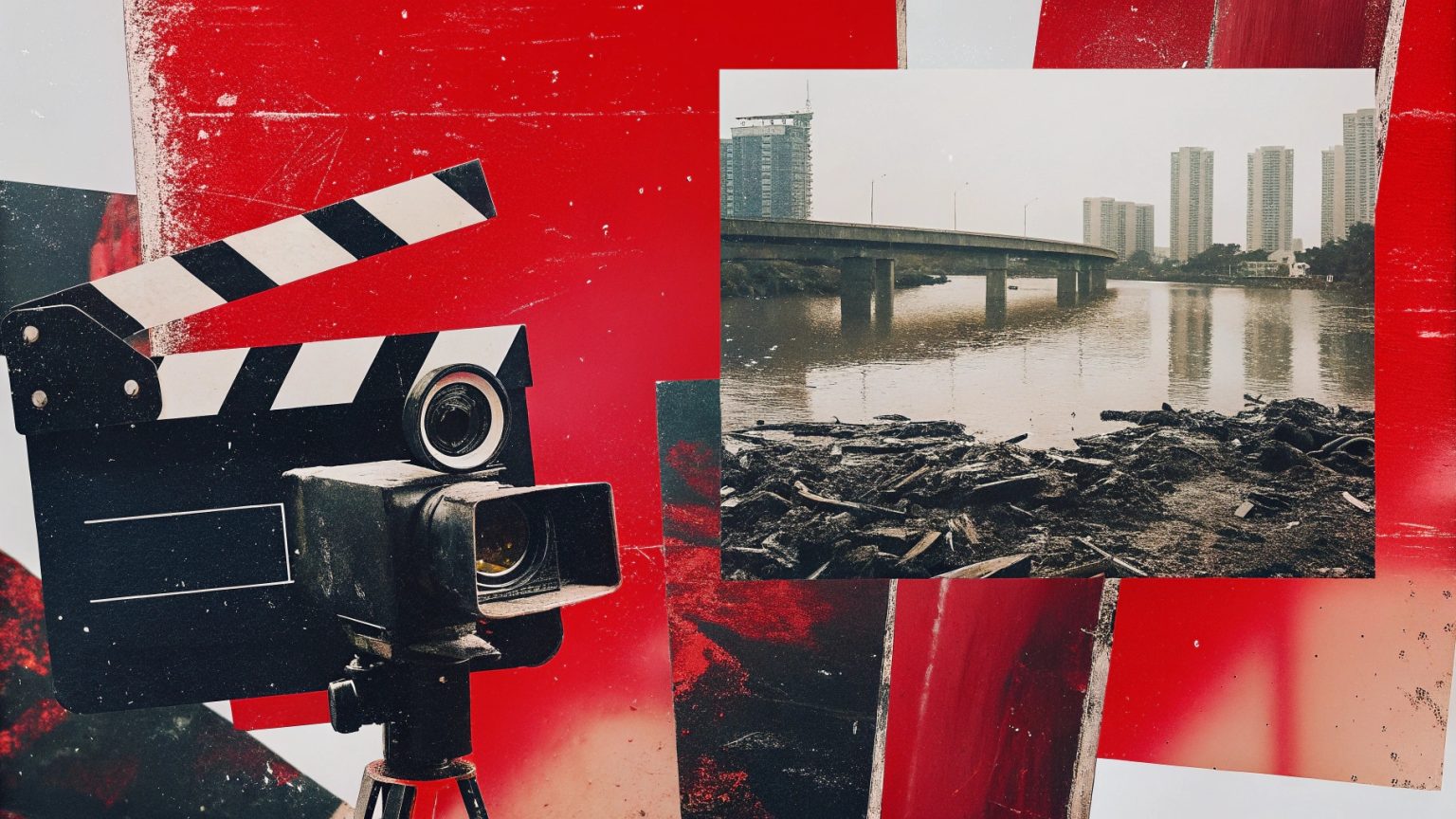

Nigeria's booming film industry has tackled war, injustice, and pandemics. Now, it faces a new frontier: climate change, pollution, and environmental justice.
Camera as Witness
Nigeria faced a deadly Ebola outbreak in 2014, but beyond health officials and awareness campaigns, it was a Nollywood film titled 93 Days that became an unexpected archive of the crisis, documenting both government response and public fear.
Nollywood is Africa's second-largest film industry, renowned for telling vivid local stories. In 2024 alone, the industry generated around $7 million (₦11.5 billion) from ticket sales, a whopping 60 percent increase from the $4.4 million (₦7.2 billion) recorded in 2023, according to the Cinema Exhibitors Association of Nigeria. This highlights Nollywood's ever-growing success.
More than just its commercial and entertainment value, Nollywood serves as an important archive of Nigeria’s social movements, preserving key historical struggles related to politics, public health, gender, and the environment. The more pressing question should therefore be: how does Nollywood shape collective memory and inspire activism? Putting profitability, global recognition, and flashy production aside, can film truly serve as an archive for sustainability efforts in Africa?
The film industry has long been a powerful medium for storytelling, capturing key moments in history while documenting the traditions, people, and social norms of a specific time. In this sense, films are a remarkable source of historical context and audio-visual heritage, as they maintain a cultural dialogue across generations, offering insights into the past, present, and future. Through narrative framing, camera movement, and even character development, films can influence how people perceive certain events and the individuals involved.
Indeed, Nigerian films have had a considerable impact on ethical, social, and political issues in the country, helping to shape public opinion and attitudes towards several themes and salient subjects. Some key social movements reflected in Nollywood films include:
Set at the threshold of Nigeria’s independence, October 1 (2014) directed by Kunle Afolayan, examines the nation’s transition from colonial rule into fragile freedom, while also touching on deeper issues such as tribalism, rape, and the perils of Western education. Early reviews praised the film's detailed cinematography, costume design, production, and acting. However, the film's power seems to be rooted in the quality of writing, as the language, mannerisms, and inflections used are a good representation of the era the film was set.
Half of a Yellow Sun (2013) captures the Biafran War, which took place between 1967 and 1970, and highlights the atmosphere of the historic event through personal narratives. Based on Chimamanda Ngozi Adichie’s novel of the same title, the film leans more towards depicting everyday life with the threat of the war always looming, rather than delving too deeply into the ‘politics’ of the time. The film adds a layer of context to an important part of Nigerian history that was, and in some instances, still is, shrouded in misconception.
Released in 2016, Steve Gukas’s 93 Days chronicles Nigeria’s admirable fight against the 2014 Ebola crisis. Written and produced in honor of the brave physicians, like Ameyo Adadevoh, who lost their lives while trying to contain the virus in Lagos, the movie serves as a reminder of those terrifying months and the sacrifices that were made to keep citizens safe. Furthermore, the depiction of a responsible response to an infectious outbreak is said to have offered valuable insights during the COVID-19 pandemic.
Kunle Afolayan's Citation (2020) tackles sexual exploitation and gender-based violence in African tertiary institutions, going on to portray the stigma that is often attached to women speaking out against abuse. The main theme of the movie is developed around three female characters, who are all victims of the same unjust system but experience different outcomes. As film critic Aremu Adebisi writes:
“The mishandled sexual arrangement of Rachel depicts a society that has lost trust and faith in the authority to carry out justice. The silence and death of Diatta represent a society that upholds silence and believes in the intervention of God. Moremi’s story is the reverberation of the revolutionary voices, the celebration of the women who will not be silenced.”
Highlighting the oil spills and activism in the Niger Delta, Black November (2012) gives viewers a front-row seat into the ongoing crisis plaguing the Southern region of Nigeria. Written and directed by Jeta Amata, the film's themes include environmental degradation, corruption, poverty and deprivation, and the rippling effects of violence.
Films become ‘living archives’ that are accessible to both younger and future generations by documenting historical and even present-day realities.
Speaking Through Film
In October 2019, Kiki Mordi, alongside members of the BBC Africa Eye team, worked on an eye-opening investigative documentary that exposed the abuse of authority in several West African universities where professors boldly request sexual activity in exchange for academic favors. Making use of hidden cameras and audio recording devices, two undercover reporters captured harrowing conversations with four predatory lecturers from the University of Lagos (UNILAG) and the University of Ghana.
The documentary was met with immediate outrage, as hundreds of young (mostly female) students took to social media to share their own lurid experiences with sexual harassment and manipulative lecturers, giving rise to the #SexForGrades hashtag, which quickly went viral. Inspired by the documentary and based on several real-life encounters, Citation (2020) is a Nollywood film centered around an intelligent young student (Moremi) who speaks out against a lecturer (Lucien N’Dyare) who attempted to rape her.
Cutting right to the chase in its unpretentious opening scene, the film successfully portrays the importance of speaking out against abuse but also challenges the narrative that only vulnerable, “lazy”, and academically poor students fall prey to sex-for-grades oppressors. It contextualizes the prevalence and underreporting of sexual violence in African tertiary institutions, as well as the lack of support systems for victims.
According to De Gruyter Journals, film activism refers to the use of film and visual media as a tool for promoting social, political, and environmental change. Leveraging the universally persuasive power of moving pictures, films can be used to address sensitive topics, evoke emotion, and inspire action, effectively connecting storytelling with social movements.
Following the release of Citation, the #SexForGrades movement gained even more momentum, sparking conversation both online and offline, which, in turn, led to more in-depth research on the matter. A study titled ‘Sexual Harassment on Campus: A study in a Nigerian University’ found that, out of 1,408 students at the Olabisi Onabanjo University, Ogun State, who participated in the study, 849 respondents (60.1%) admitted there was sexual harassment on the campus. This corroborated the findings of a 2018 World Bank Group survey, which reported that over 65% of female students from Nigerian tertiary institutions were sexually harassed in school by their coursemates or lecturers.
The film also inspired policy discussions on campus sexual harassment laws in Nigeria, as in July of 2020, a draft titled ‘A bill for an act to prevent, prohibit and redress sexual harassment of students in tertiary educational institutions’ was introduced by the then Deputy Senate President, Ovie Omo-Agege. It prescribed imprisonment of up to 14 years for any academic found guilty of sexual misconduct against students, and although the bill was (unsurprisingly) never officially signed into law, its existence shows that impactful storytelling does have power. As a tool for advocacy, films can reach a wide audience, raise awareness, and even change the world for the better in the long run.
Can more films push governments toward policy change?
New Narratives Needed
Nigeria, like several of its African neighbors, is beset by serious environmental problems like flooding, deforestation, oil spills, soil erosion, and deteriorating urban spaces. To quote directly from Education as a Vaccine: "Nigeria’s population is projected to reach 60% urbanization by 2030, escalating environmental challenges, and already, flooding and climate-induced rise in sea levels have displaced millions, with states along the River Niger and Benue at high risk. In places such as Bauchi, Adamawa, and Jigawa, wind erosion and flooding have swept away houses and farms and intensified the effects of deforestation, drought, and overgrazing."
Unfortunately, despite these challenges, Nollywood has produced very few films on climate change. Gravitating towards the usual dramatic storylines and the same predictable genres, Nollywood misses a crucial opportunity to educate the public about the severity of environmental issues and turn the spotlight on underrepresented communities in the media. While it's true that films centered on sustainability may not be the most lucrative when it comes to box office success, the stories are far more pertinent and are likely to remain relevant in the years to come. A handful of documentaries like Washed Away: The Lagos Erosion Crisis by Arise News correspondent Laila Johnson-Salami have brought attention to Nigeria’s flooding crisis, but environmental themes remain largely absent from Nollywood’s mainstream storytelling.
Perhaps now is the time for Nigerian filmmakers to learn from the example of other African storytellers. For instance, in April 2021, the African Climate Reality Project launched a compelling documentary series, Not on Our Soil – A Climate Justice Reality, to explore themes of climate justice from across the country. This includes stories of the young girls and women challenging historical gender inequities while protecting their environment in KwaZulu-Natal, and communities fighting for their right to access clean, drinkable water in Cape Town, Western Cape. Hoping to bring these stories directly to the affected communities, the African Climate Reality Project partnered with Sunshine Cinema, Africa’s first solar-powered cinema network, to screen the series at the grassroots!
A Kenyan short story called Searching for Amani (2024), directed by Nicole Gormley and Debra Aroko, follows a 13-year-old boy (Simon) as he embarks on a tumultuous journey to uncover the truth behind his father’s murder in a Kenyan wildlife conservatory. As a seemingly endless drought ravages the land, the film confronts viewers with the glaring realities of climate change while still keeping the general plot engaging. By the end of the documentary, Simon is not just a grieving son, but a passionate young activist.
Sparking conversations about what it means to be an active citizen—and what can be done in our communities to address environmental, climate, and social injustices—allows Nollywood to play a meaningful role in helping African societies archive and address environmental crises through film.
Films are not just an artistic heritage, but a fascinating record of humanity. This, in turn, makes the film medium a source of historical documentation. Across genres, many filmmakers have directed their efforts toward using historical events and figures as subject matter for feature film productions. In doing so, they make past events more real for the present generation and preserve collective memories through motion pictures.
The filmmaker, too, has a lot to offer as a communicator and custodian of the past. However, to produce truly powerful work, filmmakers should embrace the role of historian. And, in order to be accepted as a credible historian, one must take responsibility for what they create, presenting the past in its most truthful and authentic light.
Since it entered the African market in 2016, Netflix Africa has invested over $175 million in the continent’s film production, creating over 12,000 jobs and several interesting opportunities for filmmakers. Streaming services are reshaping access to historically significant films and changing the way Nigerians and Africans consume films by acquiring the rights to local, homegrown movies and making classic/legacy films more readily available.
As the Nigerian film industry continues to boom, it's clear that Nollywood must actively document the country’s past, present, and future struggles — but will it rise to the challenge of environmental storytelling?
Written By
Thelma Ideozu is a contributing writer at Susinsight, exploring systems and progress across Africa.
Filed Under