Home•Stories•Insightful Articles
What Global ESG Frameworks Miss About Local African Realities
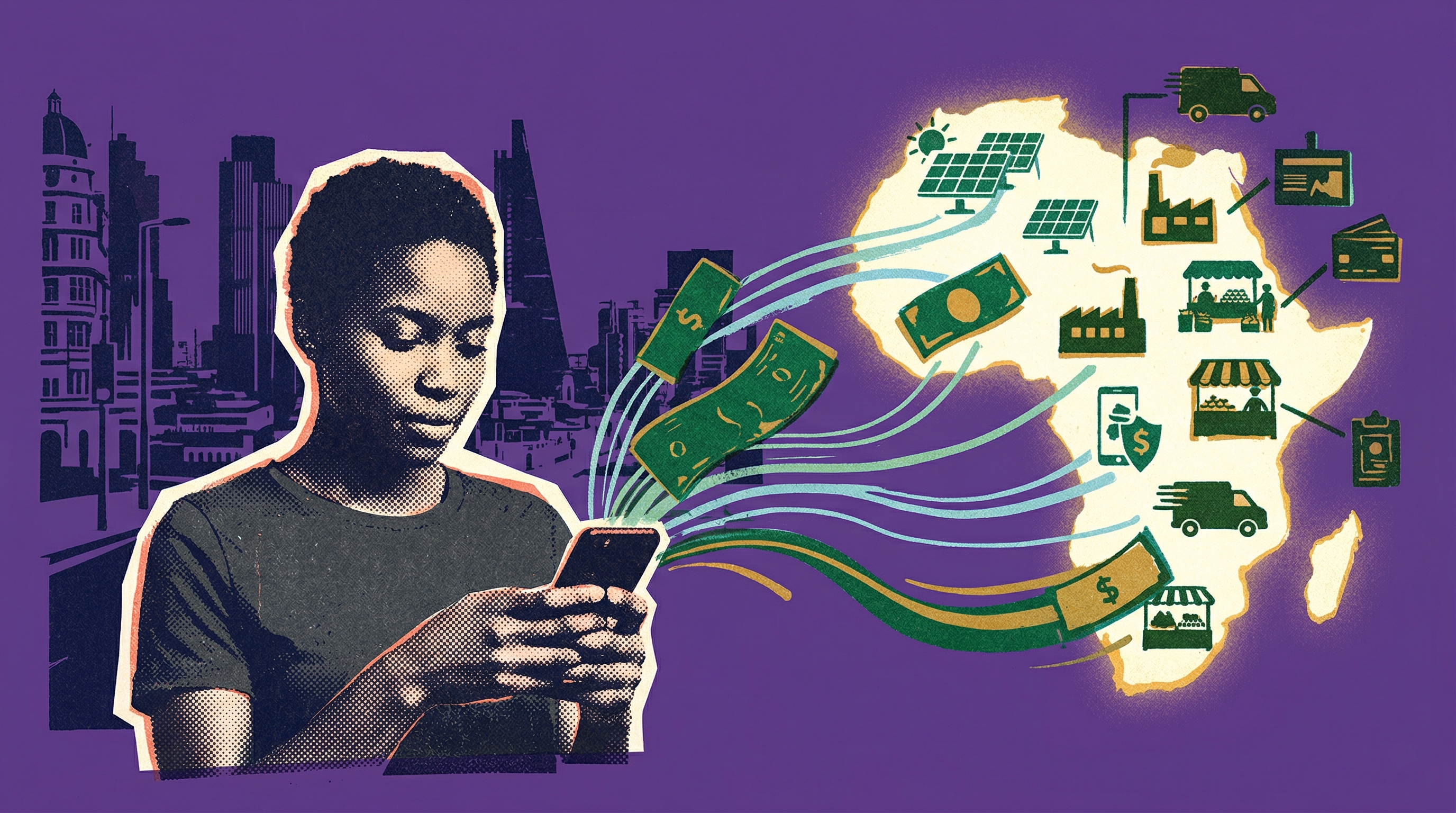
From boardrooms to village markets, ESG frameworks often clash with daily realities that don’t fit into global scorecards.

The Heart of the Matter
Imagine being a business owner in Lagos or Lusaka, trying to grow your company while navigating unpredictable markets, unreliable infrastructure, and intense competition. Now add a new requirement: prove that your business is environmentally and socially responsible by global standards you didn’t help write. That’s the reality for many African companies facing ESG expectations today.
The ESG movement, Environmental, Social, and Governance, has gained serious global momentum. Investors now prefer companies that show they care about the planet, people, and how they’re managed. But for African businesses, this push is more than a checkbox. It raises real questions about cost, readiness, and fairness.
Africa is rich in resources. Yet, it's also where climate change hits hardest. Droughts, floods, and food insecurity are not theories; they’re part of everyday life. The African Union argues that ESG is essential for attracting global investment. That may be true. But who decides what ESG success looks like? And what happens when global rules clash with local needs?
Across the continent, extractive industries still dominate. Companies are expected to create jobs, build infrastructure, and solve poverty, often with limited support. ESG could help them do this better. It could also slow them down. Upfront costs, complex reporting, and a mismatch between global metrics and local realities all create barriers.
This isn’t about rejecting ESG. It’s about asking: who benefits, who decides, and who gets left behind? Some companies are already finding ways to adapt, linking ESG goals with real development outcomes like clean energy access or rural healthcare. Others are struggling to keep up.
If African businesses or companies are to succeed in this space, ESG frameworks must meet them halfway. That starts with acknowledging the continent’s context, not reshaping it to fit someone else’s template. No sweeping answers here, just a real need to rethink how ESG applies on African soil. Otherwise, the very tools meant to drive progress could end up standing in the way. Still, knowing what ESG stands for is one thing. Figuring out how those principles actually apply to African companies is something else entirely.
The environmental side sounds straightforward on paper: cut emissions, manage waste, and protect the ecosystems. But for many African businesses, daily concerns look different. A manufacturing plant in Kano might prioritize consistent electricity over renewable sources because blackouts are frequent. A farmer in rural Zambia may not be measuring carbon output, but is fully aware of how shifting weather patterns affect crop yields. These are environmental realities, too, just not the ones that typically show up in global ESG templates.
The social pillar is equally complex. Metrics often focus on employee rights and diversity policies. Those matter. But in African contexts, social value can also mean building a borehole for the community, paying school fees for employees’ children, or training youth from nearby villages. These contributions don’t always fit neatly into ESG scorecards, but they’re real, measurable, and impactful.
Governance brings its own challenges. Corporate accountability is important, but in countries where informal networks still shape business decisions, the usual checklists, board independence, and executive compensation disclosures may not capture the full picture. That doesn’t mean governance doesn’t exist; it just looks different.
Meanwhile, the global investment community keeps tightening expectations. ESG assets hit $35.3 trillion in 2020, according to the Global Sustainable Investment Alliance. Investors want ESG proof. But how do African companies show they’re serious when the rules weren’t designed with them in mind?
Still, some see ESG as a chance to stand out, not just catch up. A few are already doing this, balancing local relevance with global language. The effort is there. The results vary. But the process of adapting ESG to fit African priorities has started. The question is: who’s paying attention and who’s deciding what counts?
Reality Check for Africa
That tension between ESG ideals and local expectations doesn’t go away. It’s constant, especially for African companies trying to meet international requirements while staying relevant to the communities around them.
Plenty of small and medium businesses across the continent barely have room to think about ESG. Dolfin points out how expensive ESG compliance can be. Think about what it takes: tracking data, hiring consultants, building systems, and learning new standards. All of that costs money. Most SMEs don’t have a team for this. Sometimes, there isn’t even one person available to handle it. And when the basics—keeping the lights on, paying salaries, getting products to market—are still a daily hustle, ESG can feel like a luxury.
The problem gets worse when there’s no solid data. Without reliable information, ESG reporting becomes guesswork. Many businesses operate informally, especially in agriculture and trade. In a rural Tanzanian village, for example, a cooperative growing maize may not even keep formal records, let alone digital ones. No reports, no benchmarks, no way to show progress. Even when data exists, it's often patchy. Urban models don’t always fit rural realities. That makes comparisons messy and targets hard to hit.
And then there’s culture. ESG frameworks often assume that all stakeholders value the same things. That’s rarely true. A global standard might stress net-zero targets, while a local chief wants roads, clinics, or water systems. People want jobs now. Investors want emissions cuts. Those needs don’t always overlap.
The rules aren’t consistent either. ESG guidelines differ from one investor to the next, from one country to another. So what qualifies as strong ESG in Ghana might not meet expectations in South Africa or from a European fund manager. There’s no global scoreboard. Without one, even the companies trying to play fair can end up looking like they’re falling short.
And the informal sector, which dominates many African economies, sits completely outside most ESG conversations. A street vendor in Nairobi, a mechanic in Kumasi, a weaver in Addis Ababa, they’re not tracked, supported, or held to any ESG guidelines. Yet they shape the economy every day. Leaving them out creates a skewed picture.
Then there’s Seplat Energy. It’s a Nigerian oil and gas firm that tried to follow global ESG protocols. They embraced the IFC standards, aligned with the Equator Principles, and reduced carbon output. On paper, it checked all the ESG boxes. But on the ground in the Niger Delta, many locals were still angry. They wanted healthcare, schools, and real jobs. They remembered pollution and broken promises. For them, ESG didn’t mean charts and metrics. It meant showing up, consistently, in ways that mattered to their lives.
Governments aren’t making this easier. Regulations are inconsistent, enforcement is weak, and gaps get exploited. Some companies genuinely try. Others do the bare minimum or cherry-pick what fits their narrative. Without strong oversight, ESG can become a branding exercise instead of a shift in behavior. And that’s where a lot of the current friction sits, between the theory of ESG and the lived experience of those expected to follow it.
That disconnect between ESG scoring and actual impact creates confusion. A company like Java House, which attracted investment from the Neoma Africa Fund III, shows what alignment can look like when things go right. They focused on responsible sourcing, employee welfare, and community involvement, not just ticking boxes but embedding ESG into how they grow. That made sense to investors. It also made sense on the ground.
But stories like Java House are still rare. For many smaller companies, ESG feels more like a locked door than an open invitation. You might run a solid local business, serve your community, hire locally, pay fair wages, but if you don’t have the funds or bandwidth to navigate ESG compliance, you’re shut out of investment conversations. The cost of meeting the standards alone puts you at a disadvantage.
There’s also the issue of what ESG frameworks value most. Too often, they center environmental metrics while treating social and governance issues as an afterthought. In African contexts, that order can feel backwards. Reducing emissions sounds good on paper, but in places where poverty, lack of electricity, or basic healthcare are daily realities, priorities shift. ESG shouldn’t mean choosing between clean energy and jobs. Yet that’s what sometimes happens when these standards are applied without local nuance.
Some argue that ESG is still worth it because it signals long-term thinking and risk management. Maybe. But even that claim is shaky. So far, there's no strong evidence that ESG funds outperform traditional ones. They might have good PR, but that doesn’t always mean better returns. Worse, companies with high ESG scores have sometimes been linked to more labor and environmental violations, not fewer. That raises doubts. Are we rewarding the right behaviors? Or just good storytelling?
Then there's the paperwork. ESG compliance comes with layers of regulation, audits, and reporting. That may be manageable for firms with teams dedicated to sustainability. But for African companies already navigating infrastructure gaps, currency risks, and political instability, this adds more weight. The bigger players can afford to keep up. The rest are left behind.
That imbalance won’t fix itself. ESG needs to mean something in context. Africa’s challenges are specific: unemployment, energy insecurity, and community displacement. ESG goals should reflect that. Local content requirements in resource extraction, for example, can ensure that communities benefit materially, not just through environmental safeguards but through direct economic participation. There’s room for ESG to work here. But only if it starts with what matters most locally, not just what makes sense in boardrooms thousands of miles away.
Building Better Frameworks
That kind of alignment only works when ESG metrics are built around what matters locally. A one-size-fits-all template doesn’t hold up in places where informal businesses, limited electricity, or lack of access to finance are daily challenges. Metrics tailored to Africa should reflect that. Think of rural electrification targets or recognition for job creation in the informal sector. Those aren’t just checkboxes; they're survival strategies for communities trying to grow with limited support.
Anti-poverty goals need to be built into the core of these frameworks, not tacked on as an afterthought. In many African countries, that’s the real pressure point. Measuring how companies help people get access to basic needs—food, education, jobs—should carry weight in ESG scoring, especially when those actions speak louder than a polished report.
Still, none of that works without building capacity. Training programs, strong data systems, and local ESG specialists aren’t optional. Without them, companies can’t track progress or even understand what’s being asked of them. PwC points out that ESG needs to be fully woven into how companies operate if there’s any hope of building long-term trust. But that takes time and serious investment.
Governments and regional bodies have a big role here. If regulations are too rigid or disconnected from how businesses actually function, they won’t stick. The African Continental Free Trade Area (AfCFTA) could help smooth this out. If ESG rules can be aligned across countries, companies won’t face a different set of hurdles every time they cross a border. That makes regional cooperation practical, not just nice on paper.
Global partners need to meet Africa halfway. Collaborations that respect local goals while offering technical and financial support work best. The World Bank’s Scaling Solar program is a good example. It blends international expertise with African energy needs and shows that ESG isn’t out of reach when designed with local input.
That kind of shift doesn’t happen by tweaking a few checklists. ESG in Africa needs a full rethink, one that listens to local voices and doesn’t just copy frameworks built for different systems. Job creation, poverty reduction, and energy access aren't side issues here. They’re the core. Ignoring them in favor of carbon targets and glossy reports misses the point entirely.
A lot of SMEs are already falling through the cracks. They don’t have the money or staff to handle global reporting demands, and yet they drive much of Africa’s economic activity. If ESG rules keep squeezing them out, the system isn’t working. Worse, it could be doing harm.
We need metrics that reward real outcomes, not just paperwork. That means investing in public data, training, and regional cooperation. It also means asking harder questions about how global standards get set and who benefits from them.
This isn’t about rejecting ESG. It’s about owning it. Africa doesn’t need to be on the sidelines. It can set the tone, shape the priorities, and define what responsible business looks like from the ground up. Let ESG serve the continent, not the other way around. That’s the work worth doing. That’s how you build something that lasts.
Written By
Adetoro Adetayo is a contributing writer at Susinsight, exploring systems and progress across Africa.
Filed Under