Home•Stories•Insightful Articles
The Financial System That Works Without Banks
Across Africa, rural communities are building informal networks that lend, save, and support without interest rates or paperwork.
What Banks Can't See
Florence, a single mother in Moyo, Northern Uganda, doesn’t rely on a bank. She relies on people. Every week, she meets with other women in her savings club. With their support, she started a tailoring business which keeps her home running and pays for her children’s school fees, all while saving between 4,000 and 10,000 Ugandan Shillings a week. No loan officer, no paperwork. Just trust and a rotating payout system.
In many parts of rural Africa, stories like Florence’s are more common than they seem. They reflect a deeper truth: in places where formal financial systems barely reach, people have built their own. This is invisible capital, the collective financial strength that lives inside savings groups, cooperatives, and neighborhood lending circles.
These aren’t side options or stopgaps. For many, they’re the main system. In low-income, underserved communities across the continent, they offer structure, accountability, and access. People contribute, borrow, repay, and repeat. It’s not flashy, but it works. Especially where formal finance can’t or won’t. And it’s changing lives, one quiet meeting at a time.
While banks focus on credit scores, formal IDs, and application forms, rural communities across Africa have stayed with what works: contribution, rotation, and accountability rooted in trust. In 2018, the African Development Bank reported that over 70% of Africans were excluded from formal financial services. That’s a staggering number, especially considering there are 25 stock exchanges on the continent. The gap isn’t only about infrastructure. It’s also about relevance. Formal systems demand collateral, literacy, and proximity. Most rural dwellers are locked out before they even begin.
But exclusion didn’t stop them. Cooperative societies, rotating savings clubs, and similar models filled the gap. Tontines, for instance, remain widely used in West Africa. They're not new. Tontines were once common in Europe and North America during the 1700s and 1800s. Though they faded there, they took root in African communities, evolving into mutual, commercial, and financial forms that bring neighbors, relatives, and colleagues together to share risk and circulate money.
South Africa has stokvels, tight-knit, invitation-only savings groups governed by clear rules. Each member contributes a fixed amount regularly. The group decides how funds are distributed, who receives them, and when. These groups often write their own constitutions, not for bureaucracy’s sake, but to preserve fairness.
There’s something very practical happening here. These systems are structured, time-tested, and embedded in daily life. What they lack in formality, they make up for in function. Money moves, needs are met, and no one waits in line to be approved.
Circle of Trust
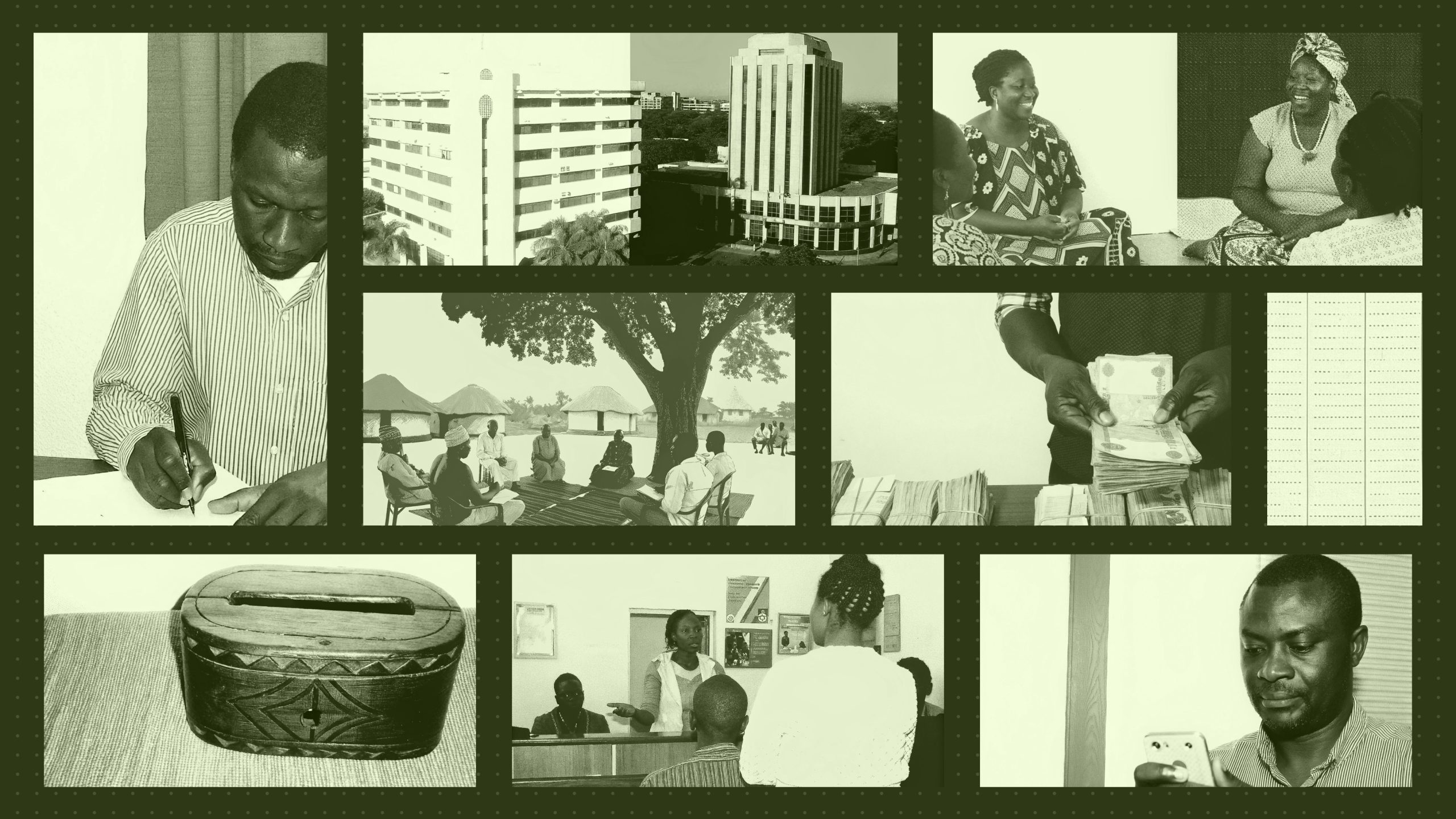
That structure, the cycle, the turn-taking, and the informal record-keeping, is surprisingly consistent, even across borders. In most informal savings groups, someone gathers a few trusted people, usually between 10 and 30, and everyone contributes the same amount regularly. Each member gets a turn to receive the full amount, often monthly, depending on the arrangement. Some join to save. Others join for access to loans. Rules vary, but the rhythm stays the same.
A Rotating Savings and Credit Association, or ROSCA, follows that rhythm closely. One person takes the pot at a time. The next cycle starts after everyone has received a payout. If a member misses their payment or takes the money and disappears, their reputation takes the hit. These groups don’t rely on formal contracts. Social pressure does the job.
Plenty of these groups succeed, and some do more than just function. In Samburu County, Kenya, 60 women-led village savings-and-loans associations support 15 to 25 members each. The women invest their pooled money into farming tools, livestock, and food production. In Yarwa, a small village in Sudan, members of a cooperative called Alwifaq use their pooled funds to buy animals, rear them, and resell them at nearby markets. That money goes back into the group, feeding the cycle.
Still, none of these groups are regulated or recognized as legal financial entities. They operate entirely on community rules and shared values. That freedom brings risk. Cash is often kept in someone’s home, not a vault. Theft and loss are real threats. Trust is everything, and when someone defaults, it shakes the group. Fraud, poor bookkeeping, and disputes over repayments are common.
Growth is another problem. These systems work well in tight groups but don’t always scale easily. Limited capital, no external support, and exposure to shocks like inflation or poor harvests can strain even the most committed group. The structure holds, but it’s tested often.
That same mix of trust and shared responsibility also powers agricultural cooperatives. In rural Africa, where farms are small and resources stretched thin, these groups give local farmers a way to do more with less. Instead of each person buying expensive tools or inputs alone, they pool money, share machinery, and buy supplies together. One tractor might serve a whole village. Bulk seed purchases cut costs. No one is left to struggle on their own.
Community cooperatives help farmers reach markets they couldn’t access alone. They offer better prices, stronger bargaining power, and collective problem-solving. Groups can negotiate with buyers, plan harvests together, and support one another through difficult seasons. It’s a different kind of growth, slower, grounded, and less dependent on outsiders.
While formal loans often come with high interest and harsh conditions, these rural cooperatives are driven by mutual aid. People decide the terms together. Nobody profits off another person’s desperation. This doesn’t erase hardship, but it shifts the power.
Many communities have grown used to waiting for outside help. These savings groups and cooperatives change that mindset. Members make decisions together, learn together, and build systems that reflect their realities. With every loan cycle, they pick up more than financial tools. They learn to plan, to think long-term, and to manage money in ways that feel honest and practical.
This kind of grassroots financial system makes more sense when you think about the realities on the ground. Rural communities aren’t just far from banks, they’re cut off in more ways than one. People often don't have the right documents. Maybe no ID. Maybe no proof of address. Fees feel high. Loan terms feel rigid. Collateral? Not always possible. And even when banks show up, they speak a language many don’t understand , not just linguistically, but structurally. What does APR mean when your income depends on rainfall?
Community-based finance doesn’t try to change how people live. It works with the way they already do. It adjusts to farming seasons, irregular income, and the natural rhythm of rural life. That’s a big reason these models survive where others fail.
You also can’t ignore the education gap. With financial literacy in Sub-Saharan Africa sitting around 32%, most people can’t easily navigate formal systems. Microfinance was supposed to close that gap. It didn’t. The United Nations has already called this out: “Despite the impressive growth of microfinance in Africa, its impact in alleviating poverty remains marginal. The industry still serves only a small fraction of the population and offers loans that are extremely expensive and short-term, thrusting people into debt cycles.”
The loans are expensive. Repayment timelines are short. Only a small portion of the population gets served. And many end up trapped in debt. People notice these patterns. And they move toward what feels safer: small, local systems that protect their savings, offer some level of insurance, and give them the dignity to be part of something built for them.
The Balance Between Worlds
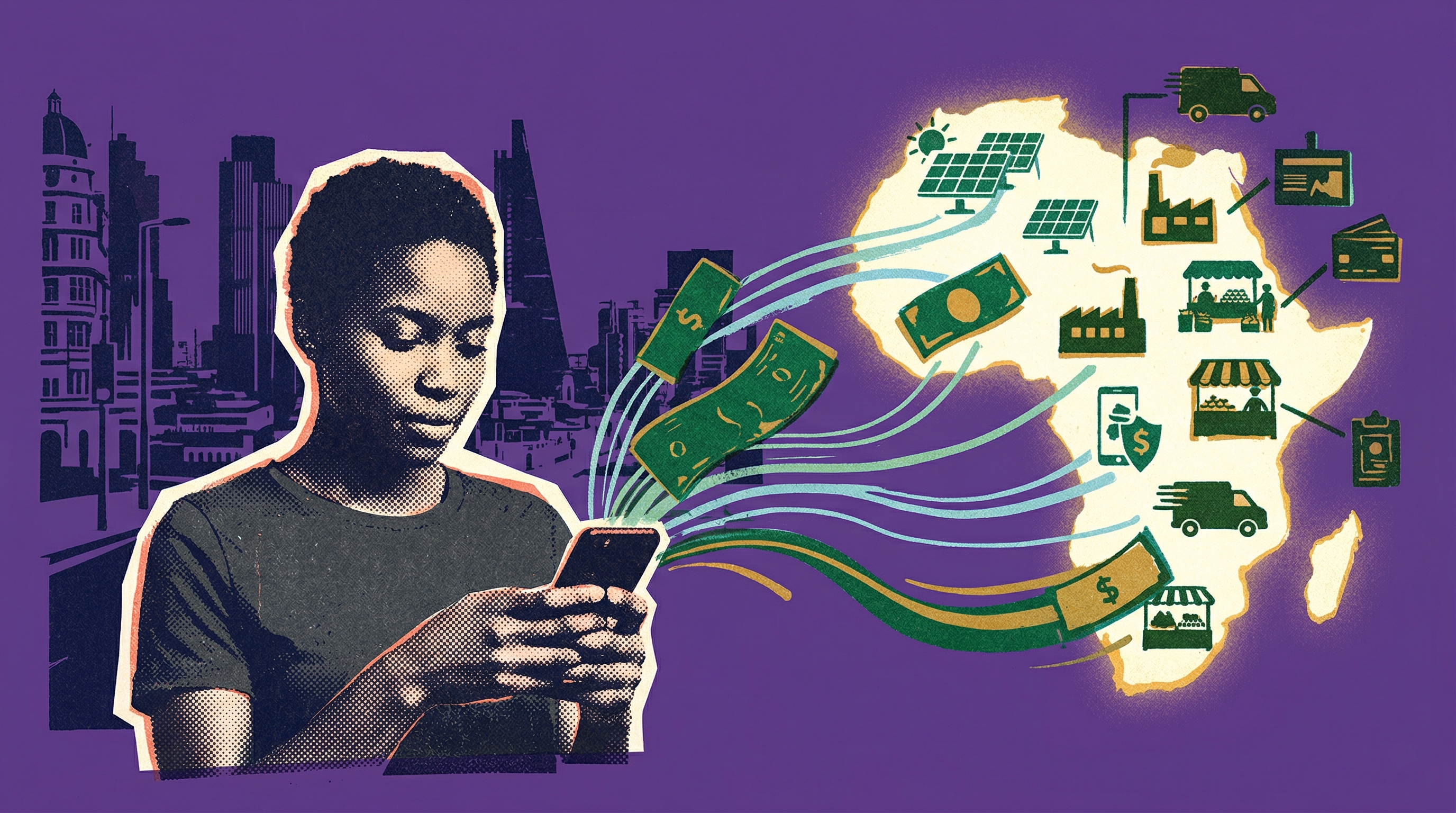
These small groups, once built on handshakes and memory, now find themselves eyeing mobile platforms and financial apps. It’s a strange transition — necessary, but not always easy. Many want to grow. They want better tools, bigger opportunities, and safer ways to move money. But what’s often missing isn’t ambition. It’s the support to match that ambition.
When cooperatives start asking for larger loans or more complex services, the gap between what they need and what they have becomes clearer. The World Bank has pointed out that mobile-based systems could fill some of this space. Mobile money makes contributions safer. A digital record helps track loan behavior. Something as simple as a mobile wallet linked to a group account could take pressure off the treasurer and reduce the risk of fraud. But these tools have to feel natural to use not like another system being imposed from the outside.
There are examples of what this could look like. CARE Australia worked with Vision Finance Company in Rwanda to tailor small loans to rural borrowers. In Kenya and Uganda, it teamed up with Barclays to remove minimum deposit limits. No flashy programs, just practical tweaks. In Tanzania, M-Pesa reached savings groups through a partnership with Vodacom and Mwanga Community Bank.
These kinds of collaborations don’t just increase access. They open up space for community groups to define their own pace of growth, without getting swallowed by red tape or financial jargon. The hard part is finding the balance: using technology to strengthen informal groups without diluting the relationships that make them work in the first place. A loan app can help. But it can’t replace trust.
So much of what works in rural African finance comes down to one thing: trust. People trust who they know, who they see often, and who they’ve saved with before. That’s the part formal systems often miss. When a group of women in northern Uganda meet every week under a tree to contribute to a shared pot, it’s not just a financial act. It’s a social one. That kind of structure can’t be replaced by an app, but it can be supported by one if done thoughtfully.
The simplicity of these groups is part of their power. When designing hybrid financial models, we can’t afford to drown them in forms, fees, or overly technical platforms. Keeping things clear, human, and useful matters more than adding shiny features. Policymakers need to listen closely here. Building a financial system that works for rural communities means working with regulators, telecom providers, and educators not around them. And rural women, in particular, need phones in their hands and tools built with their realities in mind.
Financial inclusion is now high on many national agendas, and for good reason. The World Bank links it to seven of the 17 SDGs. But buzzwords don’t mean much if people can’t access services or understand how to use them. That’s where NGOs and local cooperatives come in. They help bridge this gap, translating policy into practice and making sure new systems reflect people’s actual needs.
When governments recognize informal groups, when companies partner with co-ops, and when financial education is prioritized, things start to shift. These savings groups aren’t just money pools. They’re infrastructure, social safety nets and vehicles for dignity. Invisible capital, in its most basic form, is people looking out for one another. That shouldn’t be seen as a backup plan. That should be the model. And maybe, it already is.
Written By
Thelma Ideozu is a contributing writer at Susinsight, exploring systems and progress across Africa.
Filed Under