Home•Stories•Insightful Articles
Green Goals: Powering African Football with Renewable Energy
As the Africa Cup of Nations (AFCON) grapples with the economic allure of its $1 billion value and environmental controversies surrounding major sponsor Total Energies, the urgent call for ethical sponsorships and strategic renewable energy investments unfolds as a pivotal narrative, urging AFCON to champion a greener and more sustainable legacy.

Football, a cultural cornerstone and societal force, is more than just a sport; it brings people together, promoting teamwork, dedication, and a strong sense of community. As witnessed in the just-concluded Africa Cup of Nations (AFCON), a spectacle that resonated globally with approximately 2 billion viewers, the power of football extends far beyond the exhilarating gameplay. This mass engagement, coupled with lucrative broadcast rights, positions AFCON at the forefront of discussions intertwining socio-economic considerations and environmental impact within the realm of sports.
The economic impact of AFCON 2023 is truly remarkable, with a financial value exceeding $1 billion. This monumental figure not only makes AFCON an attractive arena for local and foreign investors but also serves as a golden opportunity to channel efforts toward substantial investments in the green energy sector. Football, with its immense energy demands, inevitably leaves a carbon footprint, and the continent of Africa, with its untapped potential in renewable energy adoption, currently receives a meager 2% of the world’s total investment in the sector. However, amid the excitement and promise of opportunities, a looming shadow of environmental controversy surrounds the sponsorship by Total Energies.
Total Energies, a multi-energy corporation sponsoring AFCON, has come under fire for allegedly engaging in greenwashing through its 8-year sponsorship agreement with CAF, the governing body overseeing African football. The corporation's presence evokes mixed reviews, raising questions about the authenticity of its commitment to renewable energy deployment and its role in contributing to the sustainability discourse.

Environmental Controversies
While AFCON stands as a testament to African unity and sporting excellence, its alignment with Total Energies has stirred controversy, prominently showcased through the "Kick Total Out of Africa Cup of Nations" campaign. The scrutiny by Greenpeace, an environmental activist organization, has cast a spotlight on Total Energies, revealing a series of questionable environmental practices. Despite Total Energies' claims to prioritize sustainability, emphasizing commitments to lower carbon emissions and environmentally friendly operations, their historical track record presents stark contrasts to such commitments. Greenpeace exposes instances of environmental degradation and reports on oil spills, carbon emissions, and deforestation, underscoring the urgent need for accountability and transparency in Total Energies' sponsorship of AFCON.
The controversy extends beyond a mere dent in AFCON’s image, permeating the broader sustainability discourse. AFCON takes pride in providing a global stage to showcase African talent and excellence, and its association with Total Energies’ environmental controversies compromises the tournament’s credibility and integrity.
The “Kick Total Out of Africa” campaign serves as a poignant reminder of the pivotal role ethical sponsorship plays in sports. In this context, it becomes imperative for relevant stakeholders to hold potential sponsors accountable for their operations that impact the environment. An evaluation of corporate partnerships' ethical implications is not merely a call for scrutiny but a strategic move for AFCON to reclaim its integrity in the pursuit of promoting sustainability.
Renewable Energy Calls
The imperative for renewable energy investments within the sports sector, particularly within the ambit of AFCON and its major sponsor, Total Energies, cannot be overstated. The resonance of such initiatives extends beyond the sporting arena, addressing pivotal challenges facing the entire continent. As the fervor for renewable energy gains momentum, there is an insistent call for substantial investments in projects that intertwine the excitement of sports with sustainable energy practices.
Dissenting voices have raised cogent concerns about the authenticity of AFCON's corporate sponsors, contending that certain entities exploit these sporting events for economic gain without commensurate investments in local communities. A central criticism is directed towards companies, like Total Energies, with questionable environmental track records, accused of leveraging AFCON sponsorships merely as a veneer to refurbish their image within the sustainable energy space without tangible commitments to clean energy practices or renewable energy investments. Environmental activists, notably Greenpeace, consistently advocate for Total Energies to pivot away from fossil fuels, urging transparent and sustainable endeavors in alignment with their AFCON sponsorship.
Spiked Media maintains a steadfast stance, underscoring the imperative for AFCON and headline sponsors to forge partnerships with experts, leveraging the potential of renewable energy in sports. A paradigmatic example is the proposal for solar-powered stadiums, echoing the call for transparent fund allocations to ensure judicious and efficient utilization. These suggestions posit AFCON as a pivotal player in the broader sustainability landscape, capable of influencing positive change through strategic investments and transparency.
Effective implementation of AFCON's investment in the renewable energy sector promises a cascade of benefits. This includes heightened awareness regarding the critical importance of renewable energy, its profound environmental advantages, and its catalytic role in fostering economic growth. Beyond awareness, such investments offer a platform attractive to private companies, international bodies, and government agencies. The ripple effect extends to improved access to clean and reliable energy sources, presenting a transformative force that stands to elevate the quality of life for millions across the African continent.
 Source: Statista
Renewable Energy Alliance
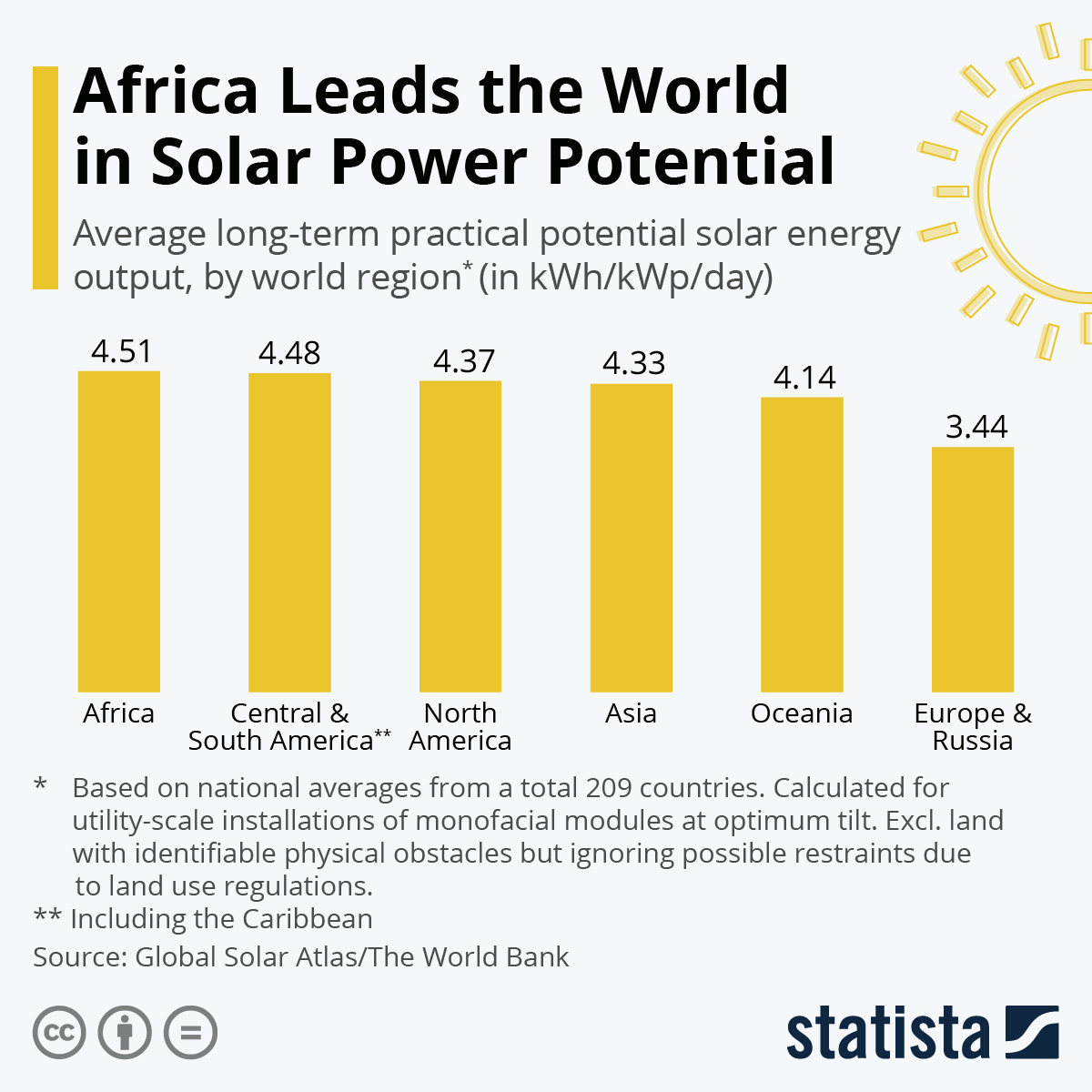
AFCON's strategic collaboration with renewable energy entities marks a pivotal step towards embracing cleaner alternatives in the quest for a sustainable future. The rich abundance of natural sunlight in Africa provides a unique opportunity to delve into solar energy generation, capable of powering expansive stadiums with surplus reserves. This comprehensive energy approach addresses various needs, from lighting and HVAC (heating, ventilation, and air conditioning) to operational processes, ensuring holistic sustainability.
Crucially, photovoltaic (PV) systems constitute a cornerstone of this green initiative. By harnessing solar energy through solar panels and inverters, these systems play a critical role in advancing sustainability objectives and mitigating the adverse effects of climate change, particularly in terms of reducing carbon emissions. Beyond environmental considerations, PV systems contribute to energy security by diminishing reliance on conventional electrical grids and imported energy sources. This proves especially advantageous for remote areas with limited grid access, fostering improved energy self-sufficiency.
The scalability and flexibility inherent in PV systems further position solar energy as an adaptive solution applicable to diverse settings, including commercial buildings and utility-scale power generation. Complementing the PV systems, battery storage solutions play a vital role in storing excess solar energy and ensuring its availability during peak demand periods. This not only promotes energy conservation but also enhances resilience in the face of fluctuating energy needs.
A noteworthy example of such green endeavors can be found in South Africa's Imperial Wanderers Cricket Stadium, where the adoption of solar panels has been met with enthusiasm. This proactive commitment to reducing carbon emissions and mitigating environmental impacts exemplifies the potential positive outcomes of integrating renewable energy solutions into major sports infrastructure.
AFCON’s Renewable Energy Potential
The advantages of renewable energy for AFCON can be classified into environmental, economic, and social benefits. Incorporating solar, wind, or hydropower into operations would significantly reduce AFCON's carbon footprint, aligning it with global initiatives to combat climate change and positioning it as a leader in sustainable sports. Abundant sunshine and wind across Africa also enable long-term cost savings from renewable sources compared to volatile fossil fuel prices, ensuring financial stability. Investments in renewable infrastructure would have enduring benefits for local communities post-AFCON as catalysts for sustainable development. Finally, shifting away from imported fossil fuels enhances energy security for the tournament and reduces reliance on external factors, while embracing renewable energy sends a powerful message of Africa's commitment to sustainability, innovation, and responsible management that resonates globally.
Sustainability isn't a mere passing trend; rather, it stands as a formidable responsibility that organizations, such as AFCON, must wholeheartedly adopt for their enduring legacy. As our collective journey propels us towards a more sustainable future, it is paramount to recognize that the decisions we make today will echo through generations to come. Bearing this in mind, AFCON must persist in spearheading innovative and environmentally conscious initiatives, thereby becoming a stalwart champion of sustainability. In closing, let us not merely witness the game but actively contribute to the playbook of sustainability, recognizing that our shared actions today hold the potential to sculpt an enduring legacy for tomorrow's generations. The ball is in our court, and together, we can play a pivotal role in scripting a greener and more sustainable narrative for AFCON and beyond.
Questions You Might Have
What concrete steps can AFCON take to address environmental concerns and ensure a more sustainable future?
AFCON can adopt several measures to address environmental concerns and promote sustainability. These could include:
- Implementing a sustainability measurement framework to assess and attribute greenhouse gas (GHG), climate impacts, and environmental footprint reduction to their actions and operations.
- Utilizing tools such as risk assessment, life-cycle assessment, benefit-cost analysis, ecosystem-services valuation, integrated assessment models, sustainable impact assessment, environmental justice, and present and future scenario tools.
- Encouraging participating nations and host cities to adopt sustainable practices in their operations.
How do renewable energy initiatives, like solar-powered stadiums, contribute to the broader sustainability goals of AFCON?
Solar-powered stadiums at AFCON are a win-win for the environment and the event itself. By using solar energy, AFCON reduces its environmental impact through lower greenhouse gas emissions and resource conservation. Additionally, solar power can lead to cost savings and promote innovation by showcasing sustainable technology. This commitment to sustainability sets a positive example for future events and contributes to a greener future for Africa.
What challenges must AFCON address when considering the transition to sustainable energy?
AFCON could face two pivotal challenges in its journey towards sustainable energy. Firstly, the substantial upfront investment required for renewable energy infrastructure demands strategic consideration. However, viewing this as a long-term, high-yield investment is imperative for both financial resilience and environmental impact. Secondly, the efficiency and longevity of AFCON's sustainable energy initiatives hinge on a steadfast commitment to meticulous maintenance. It is not merely a necessity but a linchpin for ensuring the enduring success of the tournament's renewable energy systems.
Written By
Jackie Omekara is a contributing writer at Susinsight, exploring systems and progress across Africa.
Filed Under