Home•Stories•Insightful Articles
How Invisible Networks Are Powering the Next Economic Leap
Fiber cables and cloud servers don’t get much attention, but they’re changing lives—from smart farms in Uganda to online classrooms in Nigeria. Can Africa connect the rest before the gap widens?

The Silent Rise
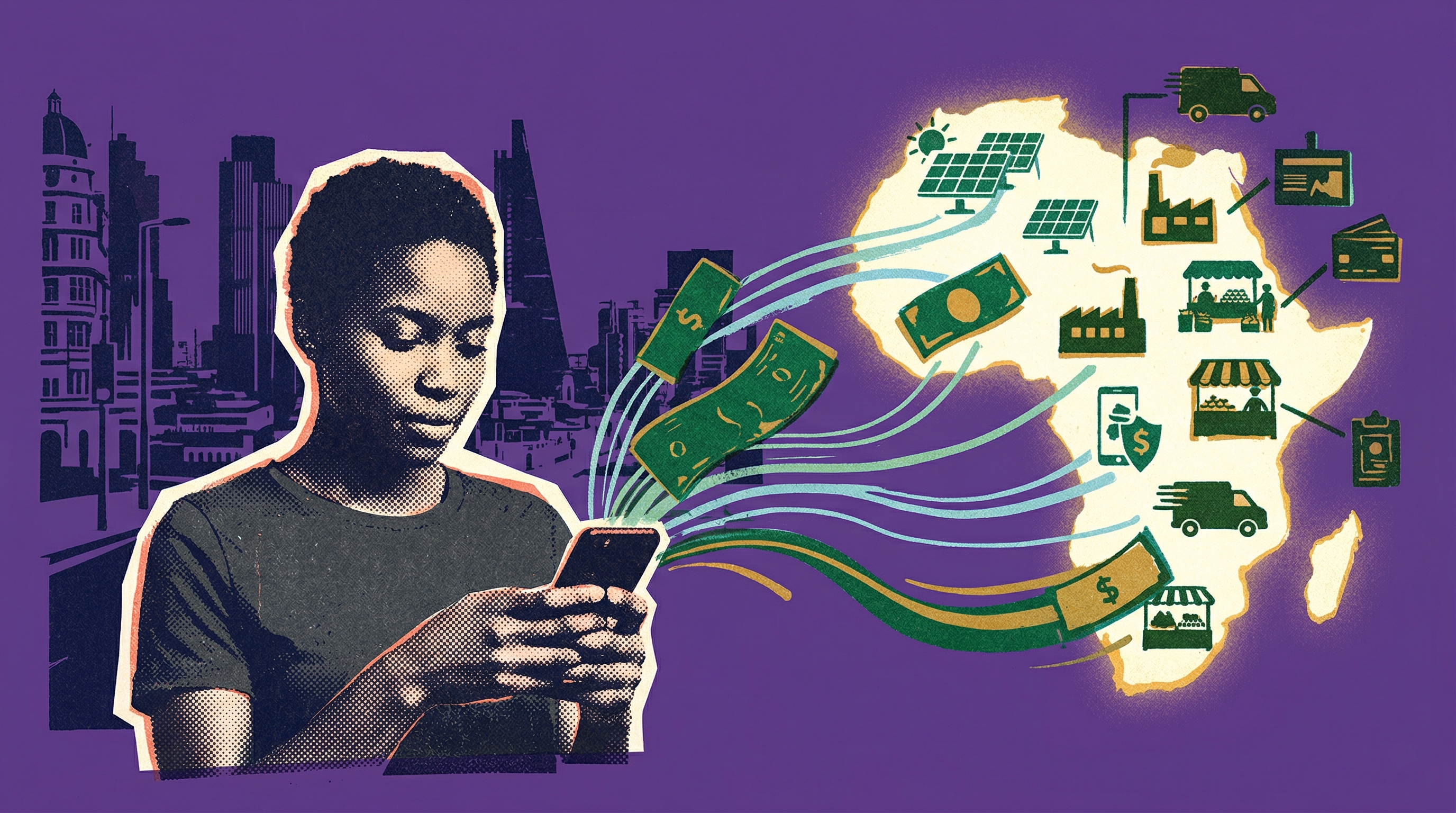
Imagine building a modern economy on invisible roads. That’s what’s happening across Africa. While attention still leans toward bridges and power grids, fiber-optic cables, cloud servers, and mobile towers are doing the heavy lifting. These systems aren’t loud, but they’re working, connecting farmers to buyers, students to lessons, and clinics to data. Mobile connectivity and data centers are reshaping lives from Nairobi to Lagos. Yet over 60% of the population remains offline. That’s nearly 900 million people on the continent without mobile internet access.
Digital infrastructure is expected to add $180 billion to Africa’s GDP by 2025. Still, few speak about it as foundational. It’s often missing from public debates, overlooked in funding conversations, or seen as secondary. But the shift is already here. It’s in how businesses run, how people learn, and how services reach the last mile. This is about building systems that work, quietly, reliably, and everywhere. And Africa is doing that, connection by connection.
That quiet shift is becoming easier to spot when you look closer. Fiber cables are being laid beneath streets and oceans, 5G towers are rising in cities like Lagos and Johannesburg, and local data centers are now handling work that once required servers in Europe or the U.S. You can feel the change in how businesses operate, how people work from home, and how students access lessons from miles away. Projects like Google’s Equiano cable have raised the bar, boosting internet speed along Africa’s western coast and drawing attention to infrastructure that rarely makes headlines.
The rollout of 5G in Nigeria and South Africa is letting industries grow around faster with more reliable internet. Startups in Nairobi can now scale quicker. Retailers in Accra are selling to customers across borders. Work no longer depends on geography. Remote roles in customer service, software development, and digital marketing are letting people earn incomes from rural towns.
Access is power especially in education. With more reliable internet, students in remote regions don’t need to relocate just to learn. Online classes, coding bootcamps, and language apps are now available to anyone with a connection. The result? More people gaining skills that feed into industries that never existed a decade ago. The more connected people become, the more they can participate. That’s not just good for individuals; it strengthens entire economies.
Digital infrastructure is supporting new kinds of growth, especially for sectors that don’t rely on physical movement of goods. The expansion of fiber-optic networks means a small business can go from local to global with nothing more than a website and mobile payments. The rise of e-commerce across Africa isn’t just about convenience, it’s about scale. People are creating markets from their phones.
This kind of growth doesn’t always look impressive from the outside. But the effects are everywhere. More inclusive job markets. Faster learning. Smarter farming. Even renewable energy systems are benefiting from smarter data management made possible through cloud services and stronger networks. The physical wires may be hidden, but the change is visible if you know where to look.
What Networks Unleash
That shift in how things work is also changing how we think about environmental impact. Building digital infrastructure doesn’t demand the same level of physical disruption that roads or power plants do. You don’t need to dig up huge tracts of land or pour concrete for miles. Fiber-optic cables and mobile towers use fewer raw materials and need less energy to operate over time.
Smart systems are now doing what traditional setups can’t. A smart grid doesn’t just move electricity around—it learns. It balances supply and demand more precisely, cutting waste. Artificial Intelligence is improving logistics too. Delivery routes are shorter, fuel use drops, and emissions fall. These tools don’t make noise or draw attention, but they help shrink carbon footprints in real ways.
Still, there’s a catch. Every smartphone, server, and router adds to the growing pile of e-waste. The damage comes not only from what’s thrown away, but also from how it’s made. And data centers? They’re energy-hungry. Many still run on fossil fuels, which makes their environmental cost harder to ignore.
Some groups are pushing for change. Liquid Intelligent Technologies, for example, is using renewable energy to power data centers in South Africa. That choice matters. It shows the sector doesn’t have to repeat the mistakes of older industries.
Managing e-waste is another urgent step. Recycling systems aren’t strong enough yet. Hardware still ends up in landfills, sometimes leaking toxic materials into the soil and water. Without stronger systems, digital growth risks leaving behind another kind of mess.
Greener options exist, but they need backing. Solar-powered data centers, better recycling networks, cleaner manufacturing, these ideas are on the table. The infrastructure may be digital, but the responsibility is very real. How Africa builds this system will shape not just how people connect, but how the environment holds up under that connection.
That same network of fiber, mobile access, and cloud tools is also giving people the means to build smarter, more efficient systems especially in sectors that depend on land, energy, and weather. Farmers using IoT tools can track soil moisture, adjust irrigation, and respond to changes faster. Instead of watering entire fields, they water exactly where needed. That cuts waste and improves yields. It’s already happening through precision agriculture projects across Africa.
Cloud platforms are helping too. Solar energy companies use them to monitor performance remotely. A single dashboard can track energy usage, flag system failures, and adjust output. That kind of oversight used to take days. Now it happens in real time. Rwanda’s smart city efforts go further by blending digital planning tools with housing, power, and waste systems that are designed to reduce environmental pressure while meeting growing urban demand.
Digital tools are also shifting access. M-Pesa in Kenya changed how people move money. No need for a physical bank or paperwork. Users in remote areas can borrow, save, and trade from a basic mobile phone. That kind of access builds resilience. In Uganda, digital marketplaces give rural farmers the chance to sell produce directly—without waiting on middlemen. They set their own prices and reach more buyers.
Some of the most creative solutions are coming from startups. Across Kenya and Nigeria, companies are building solar-powered energy systems, designing waste-tracking apps, and engineering tools to help small farms work more efficiently. These ventures do more than create technology. They create jobs, train workers, and grow industries from the ground up.
Digital infrastructure isn’t just a platform. It’s helping people take control of their land, their business, their future. That's where real change often begins.
Making It Work Everywhere
That gap between who’s connected and who’s not remains wide and persistent. While cities are moving fast, rural areas are often left to catch up on their own. 38% of people in Africa are online, compared to a global average of 68%. That difference doesn’t just slow down internet speeds; it limits what people can do. Without a connection, there’s no easy way to apply for jobs, join an online class, or even send money.
Some regions still don’t have the infrastructure for reliable mobile coverage. Others have networks but not the devices or digital skills needed to use them. It's not always about access alone. Sometimes it’s about knowing what to do once you're connected. That’s where digital literacy becomes just as important as hardware.
Still, the gap isn’t being ignored. Tools like Starlink are already bringing high-speed internet to places where cables and cell towers haven’t reached. Satellites don’t care about rough terrain. They offer a shortcut to remote villages and isolated communities. Local setups are helping too. Shared Wi-Fi spots in rural schools or marketplaces give people a chance to get online, even if just for an hour.
Some of the most promising work is coming from policy shifts. Kenya’s National Optic Fibre Backbone Infrastructure (NOFBI) shows what can happen when governments and private companies work together. Public-private partnerships like this can stretch infrastructure into places where profit alone wouldn’t go.
Connectivity on its own isn’t enough. People also need to know how to use it. That’s why digital literacy programs especially those that reach youth and women matter. If a farmer in a remote part of Uganda can watch a YouTube video to solve a crop issue, that’s real progress.
Expanding digital access without losing sight of who benefits remains a constant tension. It's easy to focus on big infrastructure projects like fiber cables, mobile towers, and satellite networks but real impact often starts smaller. A smart grid that trims electricity waste sounds great on paper. What matters more is whether communities can actually plug into it.
Tracking emissions with tools like blockchain sounds advanced, and it is. Some governments and companies already use digital ledgers to monitor carbon credits. This helps keep climate pledges honest. But the real value comes when these tools are transparent, easy to use, and built with local input. Without that, they stay out of reach for most.
Regional collaboration helps turn these tools into shared systems. African Continental Free Trade Area (AfCFTA) is a start. This is about digital policies that work across borders. E-commerce and mobile payment platforms need consistency to function across countries. If Ghana and Nigeria can agree on a framework, others may follow. Cross-border cooperation like this could speed up tech adoption, spark regional startups, and build digital networks that don’t stop at national lines.
Inclusivity isn’t a side goal. It has to be part of every conversation around digital infrastructure. Without it, we risk building systems that mirror existing inequalities. A farmer in northern Kenya should be able to access the same digital tools as a business owner in Nairobi. That means investing in digital literacy, rural networks, and community-led tech hubs.
Technology alone won’t fix inequality or climate issues. But when used intentionally—when people are trained, policies align, and access is fair—digital infrastructure becomes a tool for broader economic and environmental resilience.
This kind of change doesn’t start with massive breakthroughs. It starts with choices, sometimes small, often overlooked, that center access, fairness, and long-term thinking. A solar startup in Lagos, a public Wi-Fi hub in rural Uganda, or a digital payment platform helping a market trader in Nairobi. These are more than isolated wins. They’re signs that the groundwork is already being laid.
Digital infrastructure isn’t just about speed or scale. It’s about who gets to benefit and how those benefits ripple outward. If only 28.5% of sub-Saharan Africans have internet access while the global average sits at 67%, then the work ahead is clear. We either build systems that serve everyone or risk deepening the divide.
There’s no single solution. But when governments, investors, and communities align around access, affordability, and local innovation, real progress becomes possible. That’s the kind of shift worth paying attention to and building on.
Written By
Adetumilara Adetayo is a contributing writer at Susinsight, exploring systems and progress across Africa.
Filed Under