Slow Fashion Is Thriving in Ethiopia And It's Anything but Small
Women-led collectives are weaving climate-smart fashion from heritage crafts, creating lasting jobs along the way.
Beyond Fast Fashion's Shadow
In the outskirts of Addis Ababa, tailors and weavers are quietly reshaping fashion. Many of them are women. Some work from small workshops; others are part of social enterprises like Welana and Maraki. These groups provide training, steady pay, and connections to global buyers. The focus stays local—Ethiopian cotton, natural dyes, traditional methods, but the impact reaches far.
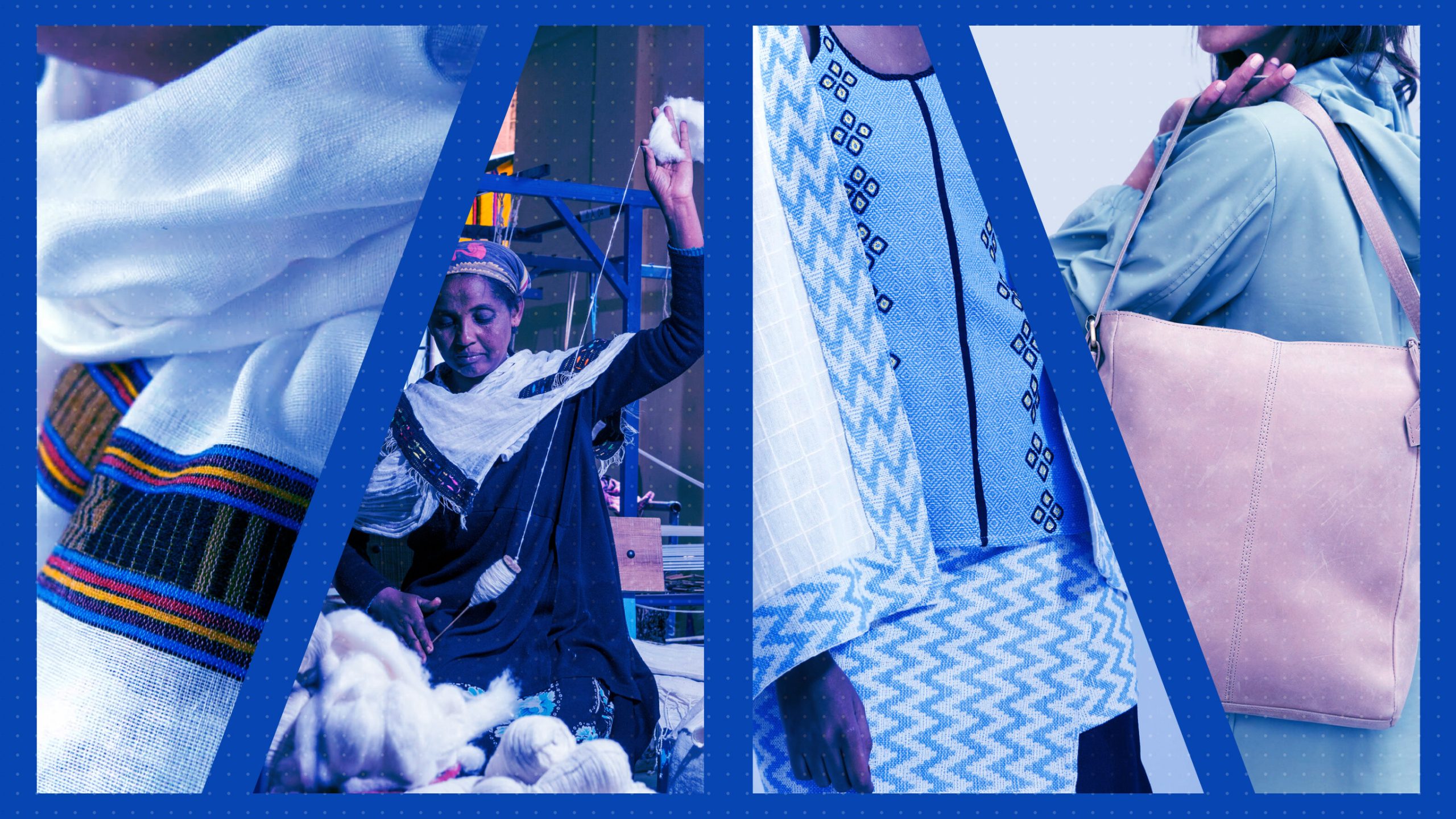
Ethiopia’s weaving tradition goes back over 2,000 years. Today, that heritage lives on in the netela and gabi, but also in new designs meant for international markets. Every finished piece supports a family, keeps a craft alive, and avoids the waste of fast fashion. There’s no marketing push here, no glossy campaigns. Just real work, real fabric, and a slower, steadier way of making clothes, one that values hands, time, and community over speed.
Work continues inside workshops that don’t look like much from the outside—simple buildings, concrete floors, low ceilings. But step in, and the rhythm of real craftsmanship takes over. You’ll see women measuring, cutting, and weaving with full focus. They’re not rushing because each step matters.
What’s happening in places like Welana, Mafi Mafi, and Meron Addis Ababa is not just production, it’s practice built from memory, passed down, and updated for today. Welana sticks to handwoven scarves and textiles made from 100% Ethiopian cotton. The designs feel familiar and new at once. Patterns that go back generations sit beside color palettes chosen for European or North American buyers.
At Mafi Mafi, founder Mahlet Afework has created something rare, a space where ancient weaving and fashion-forward design meet without compromise. Her team includes 55 designers, weavers, and seamstresses working under the same roof. Everything gets used. Upcycled scraps turn into new pieces. Zero-waste isn’t a slogan here; it’s part of the process.
Meron Addis Ababa took another path. Instead of weaving, the focus is on leather. Bags, mostly. Locally sourced material, 80% female staff, and skills training that creates long-term jobs. What makes this stand out is the choice to keep production rooted in the community. These aren’t token hires. This is work people rely on.
Tailors and weavers are not just preserving customs. They’re adjusting them. Techniques shift slightly. Styles lean more global. The essence stays. That’s what makes this different from fast fashion. Nothing here is made to be tossed.
This movement didn’t begin as a statement. It started from need, skill, and care. When people wear these clothes, they’re not just wearing something local or ethical. They’re wearing time, decisions, and something that didn’t have to exist—but does, because someone chose to make it right.
Hands That Shape Dreams
Their choices reflect more than taste, they reflect intent. Mahlet Afework didn’t stumble into design. She built Mafi Mafi with a clear goal: make clothing that honors Ethiopia’s textile history and gives women real opportunities. Her focus on women artisans challenges an industry where weaving has long been male-dominated. At Mafi Mafi, that balance shifts. Ancient spinning and dyeing methods are still present, but the shapes and cuts speak to now. The YALTOPYA line, for example, doesn’t water anything down for a Western audience. It’s rooted in home, but confident on international runways like Africa Fashion Week London.
Afework’s work goes beyond the fabric. She’s been named one of Africa’s 100 Most Impactful Women Entrepreneurs and won the Origin Africa Innovative Designer of the Year award. Her TED Talk, “Ancient Tradition/Modern Fashion,” explains exactly what drives her—revival through reinvention.
At Welana, that drive looks different. Co-founders Anna Papadopoulos and Welella Negussie started small, just an online shop. A few years later, their woven scarves, accessories, and home goods travel far beyond Ethiopia. Their weavers earn at least 250% more than the local standard. That number matters—it means housing stability, school fees, and medical bills paid.
Welana doesn’t chase trends. The designs reflect what’s possible when artisans are given space, tools, and time. All cotton is organic. Partnerships with weaving communities are long-term. Production stays in-country. What the world sees are clean, modern designs. What they don’t always see is the depth of care behind each item.
Then there’s Meron Seid, founder of Meron Addis Ababa. Her focus is on leather bags that feel personal, meant to last. 80% of her workshop staff are women, trained in crafts that many had never touched before. The leather is sourced locally. Waste is minimized. These aren’t mass-produced accessories. Each one carries someone’s learning curve, someone’s progress.
What connects Afework, Papadopoulos, Negussie, and Seid isn’t branding. It’s decision-making. They choose craft and long-term thinking. They create jobs that stick and products that travel, made slowly but meant to go far.
In Addis Ababa, fashion works like a quiet lever, lifting people, shifting norms, and pushing back against long-standing barriers. Social enterprises in this space don’t just create things to wear. They build alternatives to cycles that have excluded too many, for too long.
Jobs are the first shift you notice. Women, often left out of the formal workforce or boxed into low-paying roles, are now running workshops, managing production, and supporting families on their own terms. At Meron Addis Ababa, where over three-quarters of the staff are women, that shift is visible. They’re not only stitching leather bags, they’re learning business, mentoring others, and claiming spaces once closed off to them. That kind of participation matters, especially in a country that lost $3.7 billion in GDP in 2019 due to gender-based economic inequality, according to the World Bank.
Learning is baked into the work. Women who’ve never touched a loom or sewing machine are picking up skills that travel far beyond the studio. Kunjina Tesfaye’s workshops show this clearly. She’s trained women with no prior weaving experience. Some now run their own shops. Others freelance for export brands. And some are designing their own lines.
Support doesn’t end with training. National programs like the Business Women Expo and ITC’s Netherlands Trust Fund (NTF) Phase V Ethiopia Tech program are making sure people gain digital skills too, because reaching global markets now means knowing how to move online.
The ripple effect hits entire communities. Profits often go back into healthcare, school fees, or basic infrastructure. That kind of reinvestment isn’t flashy, but it’s steady. The 2025 Better Work Ethiopia Annual Report shows how factories that center workers’ needs have seen better pay, shorter hours, and stronger benefits.
Traditional textile knowledge also plays a role. Brands keep heritage alive not out of nostalgia, but because these skills still work. Young artisans are learning from elders, then adding their own edge, shaping a style that belongs to now without letting go of what came before.
Threading Global Needle
As Ethiopia’s slow fashion brands reach buyers in Germany, Austria, Switzerland, and the US, the industry is being pulled in new directions. Between 2013 and 2018, Ethiopia’s textile sector grew by 51% on average, fast by any standard. The export value in 2023 alone hit $4.27 million for textile articles, sets, and worn clothing. There’s real demand for what Ethiopian makers are producing, especially from Germany and the US.
Behind those exports are companies like Shimena Enterprise, Enzi Footwear, and Kabana Leather. Each one has faced the challenge of going international without losing its roots. Even during the pandemic, they found ways to grow, securing shelf space in European wholesale shops, making new hires, and staying visible to global buyers.
Much of that success comes down to targeted support. Programs like the Ethiopian Fashion Community, backed by Invest for Jobs and Business Scouts for Development, are doing the heavy lifting behind the scenes. They bring in international experts to help Ethiopian brands with product design, trend forecasting, and market positioning. These are details that often decide whether a product gets picked up or passed over.
Still, the push to scale isn’t simple. Vision 2025 targets $30 billion in textile and apparel exports and aims to create hundreds of thousands of new jobs. That’s ambitious. And it raises real questions about how to protect the slower, community-first values that built this movement in the first place.
While the sustainable fashion market offers opportunities for growth, foreign exchange, and employment, Ethiopia’s government aims to create hundreds of thousands of new textile jobs by 2025. There is also a risk of losing the artisanal, community-based values that distinguish Ethiopian slow fashion. Some designers are responding by sticking close to their networks. They keep production tied to the same weaving and tailoring collectives that shaped their brands from the beginning. Others are reinvesting profits locally to keep that connection alive. The challenge isn’t choosing between staying small or going big. It’s finding a rhythm where growth doesn’t erase the reason people fell in love with these clothes in the first place.
That tension between purpose and growth doesn’t exist in a vacuum. It’s constantly shaped and sometimes strained by structural realities that slow fashion brands in Ethiopia can’t ignore. The biggest obstacle? Money. Access to credit remains out of reach for many small designers and artisan-led businesses. Banks don’t see creative industries as safe bets. Loans are hard to secure, especially the kind tailored to production or equipment upgrades. So even when demand is there, scaling becomes difficult.
Then there’s the sheer volume of fast fashion imports. Low-cost clothing from Bangladesh, Vietnam, and Turkey floods the local market. Most of it sells faster and cheaper than anything handmade in Ethiopia. For brands trying to center craftsmanship and fair wages, this kind of competition doesn’t just squeeze margins, it chips away at public demand. The African Growth and Opportunity Act (AGOA)’s suspension didn’t help. The loss of trade preferences with the US shrunk order volumes, closed factories, and left thousands without jobs. Industrial parks that were once buzzing now feel uncertain.
Supply chain issues add another layer. Many factories are working with outdated machinery and still depend on imported fabrics. That drives up costs and delays production. The roads don’t help either. Poor infrastructure means shipping can be slow, expensive, or both. Even electricity isn’t reliable. Add to that a workforce still adjusting to structured, formal employment, and productivity often suffers. High turnover and absenteeism aren’t rare, they’re expected.
Still, you can feel some momentum building. The government has invested in industrial parks, cotton production, and technical training. Organizations like Better Work Ethiopia are tackling working conditions and upskilling, especially for women. International partners are stepping in with funding, training, and strategy support. The Ethiopian Fashion Community is pushing hard to give local designers the tools they need to compete globally—business plans, branding, and wholesale readiness.
None of this fixes things overnight. But for designers trying to hold on to their values while navigating all this pressure, even small wins feel meaningful. The question now is how long they can hold that balance without losing what made them stand out in the first place.
That pressure to grow without losing purpose shows just how much is at stake. Ethiopia’s slow fashion scene isn’t just building a niche market in Addis Ababa. It’s raising bigger questions about what kind of fashion industry the world wants. The numbers alone make people take notice: $3 billion in expected revenue for Ethiopia’s apparel market by 2025, with over 3% annual growth. That’s not small. But the real value isn’t just in revenue. It’s in the way jobs are being created, skills are being passed down, and communities are being strengthened.
This movement didn’t arrive overnight. It’s been shaped by years of small wins and sharp setbacks. There’s pride in what’s been made possible, despite everything working against it—trade setbacks, funding gaps, old machinery, poor roads. What keeps the momentum going are the people behind the work: women who now lead teams, artisans who’ve taught themselves to code, and designers who work with local weavers instead of outsourcing.
There’s no guarantee the rest of the world will pay attention. But it should. A fashion industry that produces 10% of global carbon emissions can’t keep ignoring places like Addis. There’s something happening here that other cities can learn from: how to link culture, labor, and design in a way that actually serves people.
You don’t have to be in Ethiopia to be part of this. You just have to care about where your clothes come from and who makes them. This is the part where intention starts to meet action and where fashion starts to mean something again.
Written By
Adetola Adetayo is a contributing writer at Susinsight, exploring systems and progress across Africa.
Filed Under