The Hustle Economy That Keeps Harare Moving
From street stalls to repair shops, Zimbabwe's informal workers are proving that hustle is more than survival; it's the city's engine.
Necessity Breeds Innovation
Marjorie Kandawa doesn’t run a tech startup or pitch to investors. She sells secondhand clothes outside the Copacabana bus terminus in Harare, arranging each item with care, calling out to passersby with a practiced rhythm. Her stall is small, but it changed her life. Years ago, she was a clothing designer at a major retailer. When the formal sector fell apart, she didn’t have the luxury to wait for it to recover. Like thousands of others, she built something new from the street up.
“The best thing that ever happened to me is this stall,” Marjorie declares.
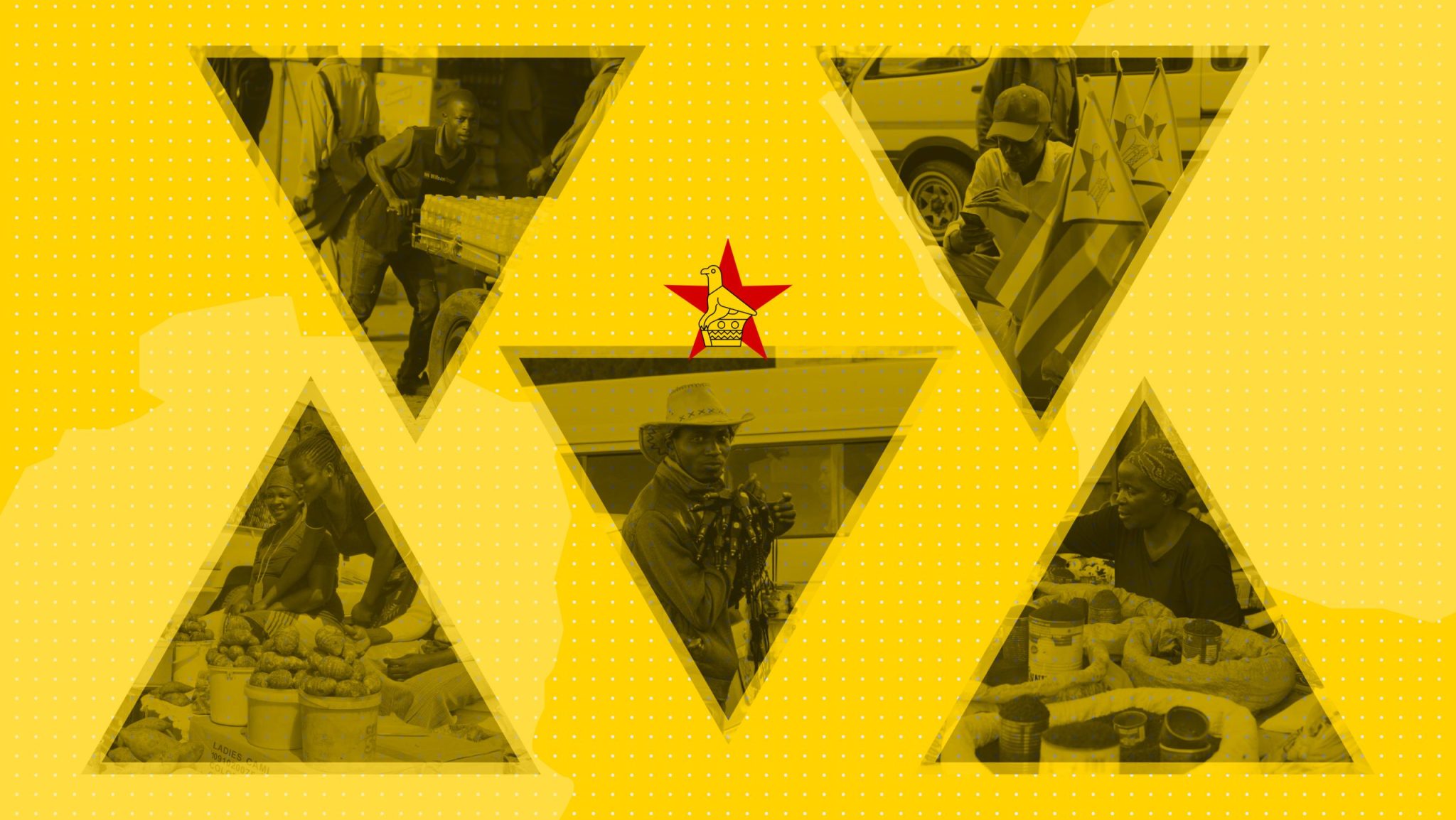
This is the economy that actually works in Harare. Not in boardrooms or government offices, but on pavements, in commuter ranks, outside corner shops. The informal sector, made up of vendors, backyard manufacturers, informal traders, and mobile service providers, now powers the city. It employs a significant portion of Harare’s working population and contributes nearly 40% of its gross value added. Across Zimbabwe, informal business is responsible for half of its GDP.
There’s no glamour here. Just people finding ways to live and keep others alive. Graduates grill maize. Mothers sell tomatoes from plastic buckets. Young men repair phones under umbrellas. In neighborhoods once known for quiet middle-class life, you now find informal carpentry shops and roadside food joints. These setups aren’t makeshift; they’re deeply organized, even if the city doesn’t always recognize them.
With few formal jobs and over 80% of Zimbabwe’s workforce in the informal economy, most people have no other option. But the hustle isn’t just a reaction to hardship. It’s a system. Vendors form associations, share trading spaces, rotate stalls, and negotiate with police. Some earn enough to pay school fees, cover rent, and keep food on the table. In a place where social protection is more theory than practice, the hustle economy has become the safety net.
Still, the city often treats these vendors like a problem to be cleared. There’s harassment, eviction, and fines. But what would Harare look like without them? Who would still be standing? Organizations like the ILO and UNDP have started working with the government to support informal workers, offering legal status, building safer stalls, including vendors in city planning. These are small steps, but they point to a shift.
You start to notice things once you stop seeing vendors as background noise. Some, like Laxon Zvakavapano in Highfield, are running carpentry workshops that employ several young men. Others work solo, fixing laptops on park benches or selling fruit from crates near traffic lights. There’s no single image that captures the hustle economy. It’s a citywide patchwork—fluid, skillful, and deeply woven into daily life.
“I employ five young men who help me out. Business is booming. Even if the economy were to change for the better, I will not seek employment elsewhere,” Zvakavapano says, highlighting the resilience and pride found in these informal trades.
Hustling here isn’t just trading goods. It includes tutoring, private transport, tech repairs, even soccer betting. Many of these activities require training, discipline, and networks. You meet graduates roasting maize, but also computer science students making cash fixing phones or running internet cafés. Betting, for some, is less about gambling and more about mathematics, odds, and mobile payments. This isn’t the kind of work you see on a CV, but it demands just as much effort.
The term “informal” can be misleading. These trades are structured in their own ways. Vendors set prices based on collective agreements. Carpenters fulfill bulk orders for local businesses. Associations help vendors navigate evictions, permits, and fees. People learn from each other. A mechanic might start out cleaning spark plugs and, over time, learn to rebuild engines. There’s a rhythm and a rough logic to it all.
When formal industry shrank, over 6,000 companies closed between 2011 and 2016—there wasn’t time to wait for new jobs to appear. Formal factories now run at just 30% capacity. So people created their alternatives. The city ended up with about 50,000 informal traders and an economy that quietly adapted, without government policy leading the way.
Many of those working informally were once employed formally. Some are former teachers, nurses, or clerks. Some still are. Civil servants sometimes sell goods on the side, blending public service and street trade just to make ends meet. Others never entered the formal system at all, but found opportunity on the street from the beginning.
Over time, the boundary between formal and informal has faded. Retailers source stock from flea markets. Furniture shops stock handmade products from backyard workshops. These aren’t two separate economies. In Harare, they’re the same thing, moving side by side.
You can’t look at Harare’s hustle economy without seeing the wreckage behind it. Every trade on the pavement, every crowded flea market, every young man pushing a wheelbarrow full of goods is a reaction to something deeper: decades of collapse. People didn’t just drift into informality—they were shoved.
Once the formal system broke, everything started unraveling. Hyperinflation in 2008 hit 79.6 billion percent monthly. Salaries meant nothing. Pensions disappeared. The National Social Security Authority, meant to support workers, stopped functioning in any reliable way. There’s no cushion. There’s just the hustle.
Factory closures and a shrinking industrial base forced formal employment below 15% of the workforce by the mid-2010s. That number alone explains a lot. It means most people aren't just choosing this work, they’ve been locked out of everything else. You meet someone like the carpenter who trained formally but ended up training others in informal spaces, not because he pivoted, but because there was nowhere else to go.
The land reforms that wrecked commercial agriculture sent shockwaves through the cities. Harare absorbed the fallout. When rural jobs dried up, the urban population exploded, but the job market didn’t follow. Formal growth stalled, and those arriving in the city found themselves improvising from day one. Over 80% unemployment meant even graduates and engineers ended up vending or trading across borders.
“I trained as a carpenter but found no formal work,” explains one tradesman, echoing a common refrain. “Now I train others in the informal sector because that’s where the work is”.
This migration created a self-perpetuating cycle: overcrowded cities lacked the infrastructure to support formal job growth, leaving informal markets as the only viable option. Policies haven’t helped. Most are designed to punish, not protect. The National Social Security Authority (NSSA), tasked with providing safety nets, has been crippled by mismanagement and inadequate funding, leaving workers without pensions or unemployment insurance. Laws in Masvingo criminalize vending outright. Raids, fines, and evictions are common responses from local councils. At the national level, financial mismanagement—chronic deficits, unrestrained money printing, failure to lure foreign investors—has only made things worse. Inflation was 172% in 2023. Who’s saving under those conditions?
There’s no clear plan. With no meaningful safety nets, limited access to credit, and a formal sector operating at half capacity, Harare’s residents have no choice but to invent their livelihoods. The state leans on this economy when it suits them, then cracks down when it doesn’t. People are left suspended between resilience and neglect, building lives in a system that officially pretends not to exist.
Battling For Daily Bread
Those same cracks in the system that pushed people into the hustle are where the creativity has poured through. Nobody’s waiting for a loan officer anymore. When 40% of adults don’t have bank accounts and only 30% use formal banking, people turn to each other. You see it in mukando—rotating savings clubs that move money faster than any formal bank could. A group of vendors pulls together what little they have, and suddenly, someone can restock tomatoes, fix a stall, or cover hospital fees. No paperwork. Just trust.
Formal finance shut the door, so mobile money became the backdoor. Platforms like EcoCash are doing what traditional lenders won’t. Through WhatsApp chats and word-of-mouth networks, people access microloans, make payments, and run small businesses without ever stepping into a bank.
You learn fast in this economy, or you don’t last. Most micro-entrepreneurs juggle more than one hustle. One person sells vegetables in the morning, second-hand jeans at lunch, then swaps out into phone repairs after dark. This kind of income diversification mirrors the "portfolio livelihoods" strategy seen across informal economies on the continent, cushioning shocks, whether from currency fluctuations or policy shifts, which eroded formal sector stability.
The tech-savvy are carving out their own paths. In places where formal repair shops charge more than a week’s wages, self-taught technicians offer the same service at a tenth of the cost. Internet cafés, while outdated elsewhere, are still busy in Harare, offering access to digital marketplaces and payment platforms for the unbanked. They bridge the gap for those who live offline but work in online markets.
Supply chains here don’t run on spreadsheets. They move through cousins, neighbors, and WhatsApp groups. Vendors tweak prices hourly, juggling USD and ZiG to keep business moving. And with 70% of agricultural commodities absorbed by informal markets, traders depend on that. If formal stores are watching their shelves empty, struggling against "unregulated competition", it’s because the hustle is moving faster, closer, and with fewer middlemen.
That scramble for space isn’t just physical—it’s legal, emotional, and economic. Most vendors aren’t dodging the law for the thrill. They’re trying to survive laws that treat them like a nuisance. The Hawkers Act of 2003, still in force, gives councils the authority to criminalize the daily hustle as if it’s an act of defiance rather than necessity. Enforcement looks like daily raids, goods seized, and bribes demanded. Norest Moyo, who sells along George Silundika Avenue, puts it plainly: “Council is failing to understand that vendors offer valuable services.”
The gap between the rules and reality is wide. Vendors pay $90 a month in bribes just to keep trading. Others face fines from $30 up to $500, sometimes just for dropping litter or occupying space. The Bulawayo City Council’s practice of seizing goods “surrendered to the police” often results in permanent losses, as vendors attest: “We never recover our goods even after paying fines”.
Add to this the physical neglect. Nearly 87% of non-agricultural workers are informal, yet cities still don’t provide enough spaces for them to operate. That’s why you find stalls crammed onto sidewalks, wedged into drains, wrapped in plastic against the rain. People walk past and complain about blocked paths or unhygienic stalls. But where else are vendors supposed to go? Reports like those from Friedrich-Ebert-Stiftung call attention to this, but not much changes.
The tension between formal and informal trade keeps bubbling. Shops complain about unfair competition. Vendors, on the other hand, resist new taxes or licensing schemes that might just end in exclusion. The Zimbabwe Chamber of Informal Economy Associations (ZCIEA) highlights this paradox: informal workers, though critical to urban resilience, remain excluded from social protections and labor laws. Even efforts like Bulawayo’s eGodini Mall, meant to organize vending, often collapse under poor planning and lack of trust. Urban planners are stuck. Migration keeps swelling the cities. Formal jobs aren’t coming back. Public health risks from uncollected waste to cholera outbreaks are exacerbated by the lack of regulated markets, yet evictions only displace the problem. As Precious Shumba of the Harare Residents Trust argues, “Antiquated regulations are incompatible with modern urban realities”. And the bylaws? Outdated, punitive, and still pretending that this economy doesn’t exist.
Reimagining Street Commerce
That shift from crackdowns to construction is subtle but telling. Instead of clearing stalls with riot police, institutions like the National Social Security Authority (NSSA) are now building markets—real ones, with plumbing and roofs. The Makoni Shopping Mall in Chitungwiza stands out. It’s not a fancy mall, but for vendors, it’s a space that offers some dignity. The Sakubva Shopping Mall in Mutare follows a similar idea: get people off the streets without kicking them out of the economy. These aren’t isolated upgrades either. Markets are popping up in Chipinge, Pomona, and Gwanda too, signaling a slow move away from punishment toward structure. By offering secure trading spaces, NSSA aims to reduce vulnerabilities like the 2024 Mbare Musika fire, which destroyed livelihoods and underscored the risks of unregulated markets.
That change isn’t just physical. Financial systems are bending, slightly, toward those who’ve always been left out. Lenderspark Finance, backed by National Building Society (NBS) with a US$5 million fund, is offering small loans without the usual hoops. No land title? No payslip? Doesn’t matter. You can borrow to stock up on tomatoes or to buy equipment for your side hustle. Financial literacy workshops have followed the money, popping up across Bulawayo, Matabeleland, and the Midlands. They’re basic—how to price goods, manage cash, track expenses—but they help. People who finish them say they negotiate better, spend smarter. This mirrors Rwanda’s Ejo Heza scheme, a voluntary savings program that has enrolled 30% of informal workers, demonstrating the potential of tailored financial products to bridge inclusion gaps.
The Zimbabwe Revenue Authority (ZIMRA) is trying too. They’re testing quarterly tax payments for small traders, hoping simplicity will draw more people in. Still, problems remain. Scaling up is hard. Breaking into bigger markets is harder. On the ground, advocacy groups like Zimbabwe Chamber of Informal Economy Associations (ZCIEA) and the Harare Residents Trust are asking for more than token meetings. They want market design to include trader input. Some groups like the Vendors Initiative for Social and Economic Transformation (VISET) aren’t always named, but are actively shaping conversations around fairer rental models and taxes that don’t crush the small guy.
Then there’s this quiet coordination between big players and street vendors. Baker’s Inn, Lobels, Delta Beverages—they’re cutting out the middlemen and dealing with traders directly. Walk through Mbare Mupedzanhamo and you’ll see informal workers making furniture or welding tools that end up in formal retail. You won’t find glossy press releases about this, but the collaboration’s there, working, day by day. The government’s plan to subsidize local manufacturing could further reduce reliance on imports, shielding traders from exchange rate volatility.
Harare’s hustle economy isn’t an accident or a stopgap. It’s a hard-won system of survival, creativity, and quiet resistance, built from the ground up in the ruins of a broken formal sector. From George Silundika Avenue to backyard workshops in Highfield, the city runs because vendors, traders, carpenters, and mobile service providers make it run. They are not waiting to be rescued.
Yet the policies still treat them as temporary, or worse, disposable. Raids continue. Markets burn. Savings vanish overnight. Meanwhile, business continues as usual for those who benefit from informal labor without recognizing its value. You can’t claim to support growth while ignoring the people doing the actual work.
What would happen if these vendors weren’t just tolerated, but empowered to lead urban development? Imagine a Harare where saving clubs, not banks, shaped financial access. Where market design started with vendors, not architects. Where partnerships between formal retailers and informal producers weren’t exceptions but the norm. The building blocks already exist: Makoni Mall, Lenderspark, ZCIEA, and saving clubs pooling $1,000 a day. What’s missing is political will.
To policymakers: stop pretending informality is invisible. To businesses: see partners, not competitors. To researchers: stop framing this economy as a failure to formalize. And to the people who hustle every day: keep building your future, even when the system won’t. The hustle economy is not waiting to be fixed. It’s waiting to be taken seriously. So, who will listen first?
Written By
Adetola Adetayo is a contributing writer at Susinsight, exploring systems and progress across Africa.
Filed Under